






Theodoros Kringou, President of the Nicosia Tourism Board (Visit Nicosia), shares his views on how the capital can be turned into a more attractive destination for visitors.
How would you define your vision for the capital’s tourism future?
Nicosia can and should position itself as a must-visit, short-break destination. Whether for business, culture, gastronomy or leisure, the south-easternmost capital in Europe has the capacity to surprise and satisfy every visitor. Our vision is to make Nicosia a city that combines authenticity with modernity and to position it as a smart, vibrant and inclusive European capital. We want it to be a place where visitors experience living culture, warm hospitality and a creative urban pulse that reflects both its history and its dynamic, forward-looking character. Our mission at Visit Nicosia is simple yet powerful – to reveal the capital’s unique story to the world. We are building a city brand rooted in authenticity, creativity and openness; one that welcomes the world while empowering its people. Nicosia has the potential to become the heart of urban tourism in Cyprus and a model European capital for sustainable, innovative and inclusive growth – and we are committed to making that vision a reality.
What lessons can Nicosia draw from other European capitals that have successfully managed sustainable urban tourism?
The most valuable lesson is what I call “tourist consciousness” – a mindset that treats tourism as part of everyday urban life. Successful European cities manage tourism not as a separate sector but as an integrated part of the urban experience. When a visitor walks through Nicosia, they interact with our daily routines – public transport, cleanliness, accessibility, culture, safety, nightlife and even how we treat one another. All these aspects together form the visitor experience. Therefore, we must plan and design the city with the visitor in mind, ensuring that sustainability, inclusion and liveability guide our development.
That is the essence of sustainable tourism: a city that is pleasant to live in will naturally be attractive to visit.
From a tourism standpoint, where do you see the greatest untapped potential of Nicosia?
Without a doubt, it lies in conference and business tourism (what we broadly define as MICE – Meetings, Incentives, Conferences and Exhibitions). Nicosia stands at a meeting point of continents and cultures and it offers an ideal setting for international dialogue, collaboration and innovation. The capital can serve as a natural host for regional conferences, academic gatherings and creative industry events, bringing together people and ideas from Europe, the Middle East, and North Africa in our vibrant city. What we now need is targeted investment in infrastructure. The capital deserves a new, modern conference and cultural venue capable of hosting international events and exhibitions. This would not only serve tourism but also reinforce Nicosia’s role as a centre of innovation, diplomacy and education. With coordinated planning between the state, local authorities and the private sector, Nicosia can become one of the Eastern Mediterranean’s leading business and conference destinations.
What role do technology and data play in shaping the city’s tourism strategies?
Over the past few years, Nicosia has made remarkable progress in the fields of technology and data. The Municipality’s Smart Nicosia strategy, which has been recognised by the European Union, together with the work of the city’s leading universities and research and innovation centres – including CYENS, the Cyprus Institute, KIOS and the Eratosthenes Centre of Excellence – have transformed Nicosia into a dynamic hub for knowledge and digital innovation. However, we must acknowledge that integrating these capabilities into the tourism ecosystem is still evolving. There is great potential to harness technology for personalised visitor experiences, digital cultural routes and data-driven decision-making. The good news is that both public and private stakeholders are embracing this path of digitalisation – and that fills me with great optimism for the future.
How is the Nicosia Tourism Board (Visit Nicosia) working with stakeholders such as the Municipality, the private sector and various cultural institutions to coordinate tourism development?
The Tourism Boards of Cyprus, established in 2007, are a successful example of public–private collaboration or what we call the “quadruple helix model”, where public authorities, the private sector, academia and the community work together.
This model, which began in Cyprus, has since been recognised as a European good practice by the Interreg Europe Policy Learning Platform. The Nicosia Tourism Board reflects this collaborative spirit in its composition and through its strong partnerships with the Deputy Ministry of Tourism, the Municipality of Nicosia and neighbouring municipalities such as Strovolos and Idalion. We maintain a close and productive relationship with all local authorities, aligning strategies and projects with the common goal of promoting Nicosia and its broader district as a sustainable and attractive destination. Our structure also ensures broad representation from public authorities, rural regions such as Tamassos, Oreinis and Tylliria, the private sector (represented by the Nicosia Chamber of Commerce and Industry), universities and the community (through associations of tour guides, cultural practitioners and local entrepreneurs).
This model guarantees that every strategic decision is shaped collectively – benefiting not only the tourism sector but the city as a whole.
(Original photo by TASPHO)
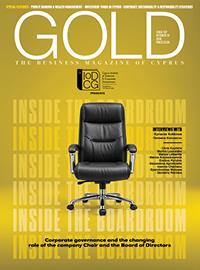
This interview is part of the “Nicosia Goes Global” cover story in the November issue of GOLD magazine. Click here to view it.
