







In recent years, Nicosia has emerged as a compelling destination for global business. Beyond regulatory incentives, the city is being transformed by innovation ecosystems, international talent flows and strategic investment facilitation.
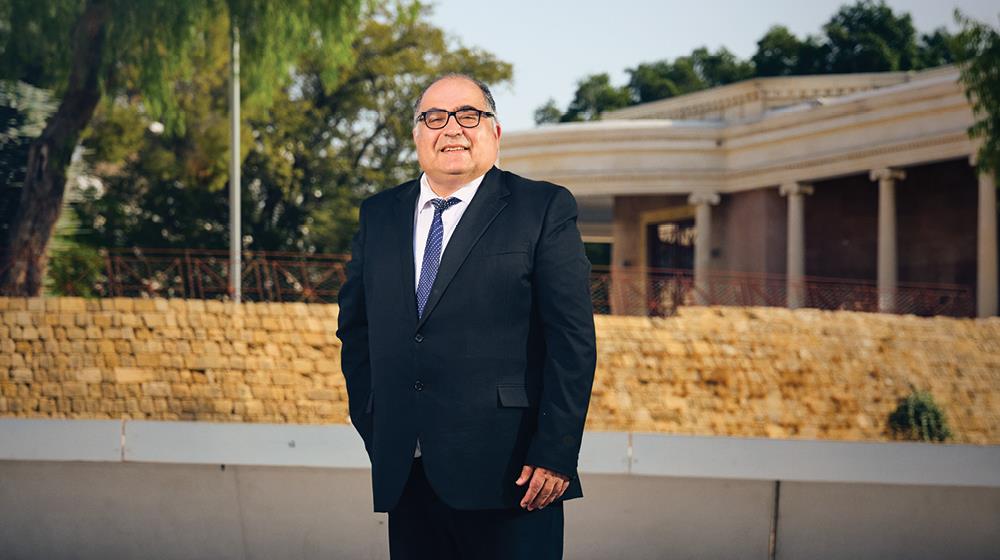
Marios Tannousis, CEO of Invest Cyprus, talks about the shifting focus from investment volume to investment quality, as sustainable economic integration is prioritised and the capital positions itself for long-term competitiveness.
How has Nicosia managed to become a destination of choice for international enterprises?
Nicosia is no longer a capital that simply hosts business – it is becoming a capital that creates it. Over the past decade, the city has shifted in both mindset and structure. It has moved from being a predominantly administrative and domestically oriented economy to a modern, outward-facing hub powered by services, technology, finance, innovation and cross-border collaboration. This evolution was not accidental. It is the result of deliberate policy alignment with the EU, tax competitiveness, progressive regulatory reforms and a growing understanding that, for Cyprus to compete, Nicosia must think beyond its geography and operate as a regional business nerve centre linking Europe, the Middle East and Africa.
International companies have obviously contributed to Nicosia’s transformation. How are they redefining the city’s economic and business character?
What has made the most visible difference is not legislation alone – it is people and momentum. International companies entering Cyprus have brought more than capital flows. They have brought new expectations of quality, pace, governance, digital transformation and workplace culture. They have created demand for advanced technical skills, compliance professionals, engineers, data scientists and financial analysts. They have introduced best practices, global corporate standards and the belief that a team in Nicosia can design, manage and scale products and services that perform anywhere in the world. This has accelerated the growth of startups, encouraged more R&D activity and strengthened our GDP through high-value-adding sectors rather than traditional models. It has also changed the city culturally – cafés, co-working spaces, boardrooms and university corridors increasingly reflect a global rather than a strictly local identity. We are witnessing a city that is no longer importing know-how but exchanging it.
Which targeted initiatives have most effectively enhanced Nicosia’s appeal to international investors?
Fast company registration, strategic licensing frameworks, fintech and tech-friendly regulatory approaches, incentives tied to innovation, incubators, accelerators, university-industry partnerships and structured investment facilitation have all created a foundation of credibility. The next transformation phase will depend on something broader: connectivity, talent retention, smart infrastructure and the city’s capacity to scale without losing quality of life. We know that digital public services must become faster and frictionless, that mixed-use innovation districts matter and that urban planning, housing affordability and cultural energy are no longer “nice-to-haves” but strategic economic priorities. If Nicosia wants global companies to stay, it must be a city where talent wants to live and thrive, not just work.
How is Invest Cyprus working to ensure that inward investment fosters sustainable, long-term prosperity rather than short-term gains?
At Invest Cyprus, our philosophy has evolved and we have stopped viewing success purely through the lens of investment volume. The real question is impact. What does an investor leave behind? Does it create knowledge, skill transfer, jobs of real quality? Does it participate in the ecosystem, work with local suppliers, invest in R&D, integrate Cypriot professionals into global value chains? Does it build something that remains resilient when markets shift? These are the questions that shape our strategy now. Sustainable inward investment is not transactional but structural; it embeds itself in the environment and it multiplies opportunity instead of extracting it.
How successfully are international companies integrating into the social and professional fabric of Nicosia? Are we witnessing a genuine fusion of local and global cultures?
Yes, we are! And there is growing evidence that integration is happening at a human level, not just a corporate one. International companies are no longer operating in isolation or in “parallel economies.” Their teams hire locally, mentor founders, sponsor conferences, collaborate with universities and engage in the city socially, professionally and intellectually. In return, Cypriot talent is becoming more mobile, more adaptive, more competitive and more confident in global arenas. The blend is real – imperfect at times, like any transition, but real. Integration now looks less like coexistence and more like co-creation.
Looking ahead, what will a truly successful Nicosia look like 10 years from now?
Looking ahead, success for Nicosia will not be measured by size but by relevance. A successful Nicosia in 2035 will be a capital that produces technology, hosts regional decision-making hubs and attracts founders, scientists and investors who could choose to be anywhere but choose to be here. It will be a city where global headquarters share the same ecosystem with ambitious local startups, where graduates don’t seek opportunities abroad but build them at home, where innovation sits alongside culture, and where prosperity is durable rather than cyclical. Most importantly, it will be a city that treats investment not as an end but as a vehicle: a way to generate capability, resilience and long-term growth for the people who live and shape this place.
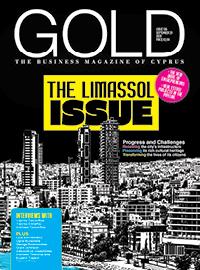
This interview first appeared in the November edition of GOLD magazine. Click here to view it.
