




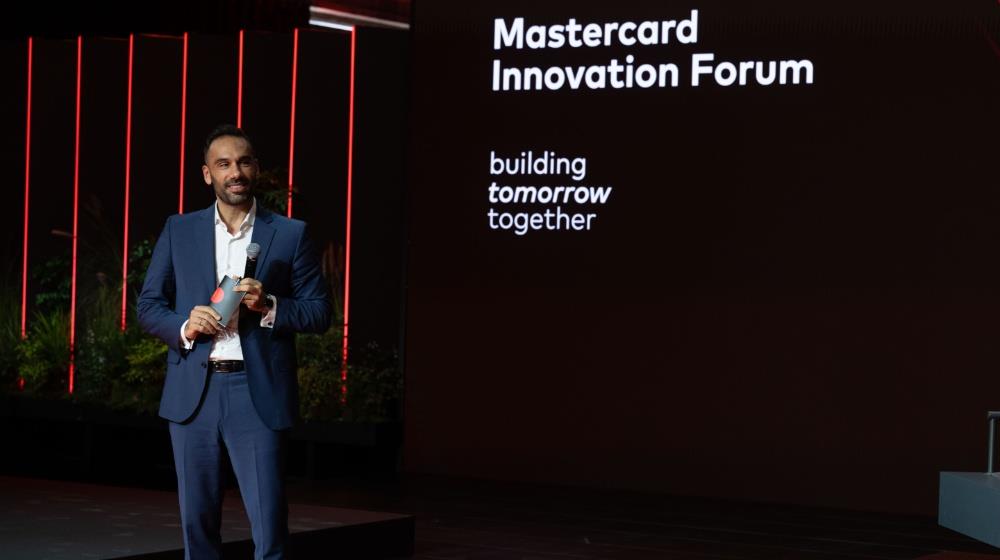
"Change is the new normal, in the context of geopolitics and technology. And it’s certainly true in the context of payments, and especially payments in our own little microcosm of Greece, Cyprus and Malta,” said Panagiotis Polydoros, Senior Vice President and Country Manager for Greece, Cyprus and Malta at Mastercard, during his speech at the Athens Mastercard Innovation Forum 2026.
CBN attended the forum, which explored technological advancements in banking, examining how artificial intelligence could provide solutions while also addressing its potential shortcomings. Panagiotis Polydoros also highlighted Mastercard’s achievements in 2026 and discussed the evolving banking habits of Generation Z.
Reflecting on the period between 2025 and 2026, Panagiotis Polydoros identified three key developments that have shaped the payments landscape.
The first was what Mastercard refers to as the “regulatory pendulum”, a term describing the introduction and expiration of regulatory agreements. During this period, the ecosystem experienced “a lot of regulation that benefited the expansion of the ecosystem, and we also experienced some corrective regulation,” Panagiotis Polydoros noted.
Although the regulatory pendulum will continue to swing, he expects these movements to become less pronounced. “At least the swings will be smaller, and the system will be more stable,” he said.

The second major development identified was the resurgence of prepaid cards. As card payments become increasingly widespread, he explained, they contribute to greater economic transparency. “As card payments proliferate, the economy becomes more transparent,” he said.
He further highlighted the wider economic and social benefits of this development: “The more transparent the economy becomes, the greater the tax revenue, which in turn produces greater fiscal room. With that comes a greater allocation to social benefits for vulnerable groups, and if you have fiscal room, you can allocate it to social benefits for vulnerable groups,” Panagiotis Polydoros said.
Turning to the concept of pluralism, Panagiotis Polydoros said Mastercard would place greater emphasis next year on communicating the benefits available to consumers, particularly in terms of fraud protection and their right to recover money lost through fraudulent transactions.
He also outlined that Mastercard expects card payments to maintain double-digit growth in its outlook. Following year-on-year growth, the company anticipates similar momentum next year. While growth in debit card payments is beginning to moderate, new social disbursements, alongside persistent inflation and geopolitical uncertainty, are expected to support continued expansion. The potential abolition of cash on delivery through legislation could provide an additional percentage of growth.

Another challenge mentioned for financial institutions is Gen Z’s willingness to switch banks. Young consumers are three times more likely to change banks than any other generation, making customer retention particularly important.
The Athens Mastercard Innovation Forum 2026 brought together experts and leaders from across Europe's banking ecosystem to discuss the developments, challenges and opportunities shaping the future of financial services.