




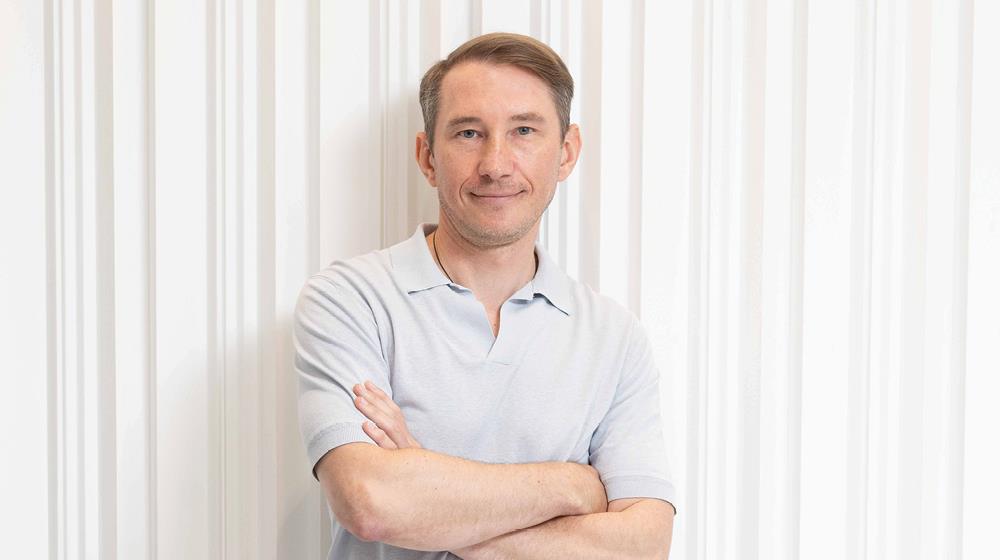
Evgenii Tiapkin, CEO of Freedom24, has first-hand experience of Limassol’s transformation into a competitive regional financial hub, having seen his own company’s personnel numbers soaring from just ten people to several hundred.
Here, he explains what made that growth possible and shares his views on how the city can maintain its edge as it scales further.
Freedom Finance Europe Ltd was incorporated in Cyprus in 2013 and is now headquartered in Limassol. As the city has grown into a broader fintech and financial services hub, what do you feel has been done correctly and what more is needed for it to remain competitive?
I have watched Limassol evolve from being a good location for international business into a city where complex, regulated companies can actually build. That distinction matters. It is no longer simply a place to establish a company: you can hire, develop technology, run compliance, support clients and scale across Europe from here. Limassol got the fundamentals right – EU access, a strong professional-services base, international talent and a business-friendly culture. The challenge now is execution: faster public services, more predictable administrative processes, better infrastructure and urban planning that keeps pace with the companies and people choosing to make the city their home.
As the fintech sector continues to expand rapidly, alongside the adoption of digital financial services, how do you view the relationship between innovation and regulation?
In finance, innovation without trust has very little value. Regulation should not prevent new products from emerging and it should ensure that they can scale without compromising market integrity or client protection. The best regulatory environments are not necessarily the most permissive; they are the most predictable. Companies need clarity, clients need to feel confident that they are protected and regulators need to have a sufficient understanding of new technologies to supervise them effectively. The challenge is to close the gap between the speed at which technology develops and the speed at which regulatory frameworks adapt.
Looking ahead, which areas of fintech do you believe could drive the next phase of Limassol’s growth as a financial services hub?
I think the next phase will be less about launching another financial app and more about improving the infrastructure behind financial services. AI can already make a material difference in compliance, fraud detection, onboarding, risk management and portfolio analysis. Payments, cybersecurity and digital wealth infrastructure will also continue to develop. Limassol has an opportunity to become a European build-and-scale centre for these technologies, particularly where financial innovation meets regulation. It is large enough to have the necessary expertise and international talent, but still small enough for businesses, regulators and professional services to operate in relatively close proximity. That is a competitive advantage.
What is needed to keep Limassol’s fintech sector competitive as regards talent and how can the Government support that growth?
Talent is not attracted by salary alone. For us, the more important question has always been whether talented people can imagine building a life here – not simply taking a job here. That means good offices but also housing, schools, transport and the quality of everyday life. We invested in two flagship offices in Limassol because the working environment is one part of that equation. The Government has a larger role to play in the rest: faster issuing of permits, better transport and a housing supply that can keep pace with economic growth. Ultimately, high-value companies stay where their people want to stay.
What is the change you would like to see in Limassol?
I spend a lot of time on the water and from there you see Limassol differently – particularly the scale of what has been built over the past decade. The city has given us more than we initially expected: a place where our team wanted to stay, where people brought their families and where we grew from ten people to several hundred. If I could change one thing, it would be about traffic. Limassol has grown faster than its transport infrastructure. Better mobility would make a tangible difference to the quality of life for everyone who lives and works here.
This interview first appeared in the September edition of GOLD magazine. Click here to view it.