







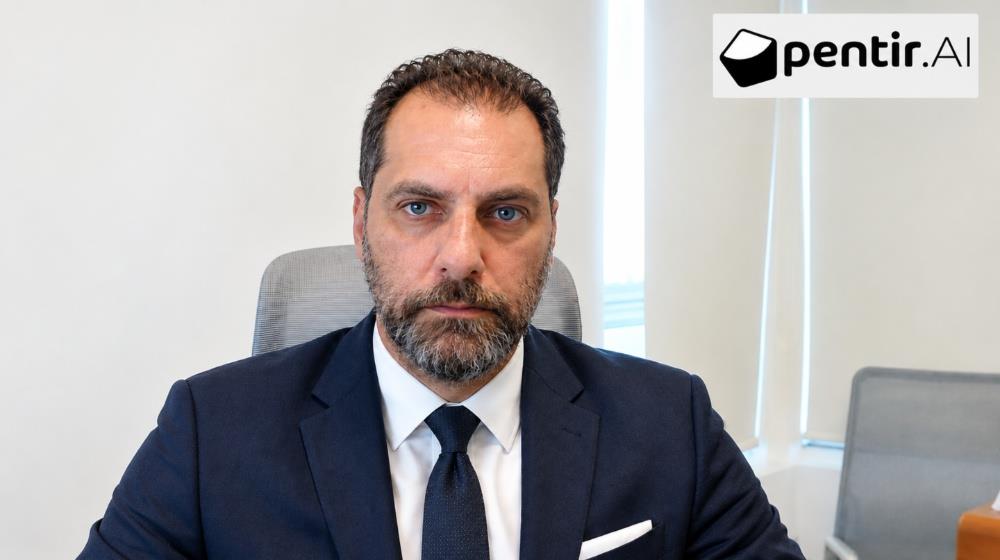
A combination of the team's experience in compliance, regulation, banking, technology, risk management and innovation was behind the creation of Cyprus-based AI-powered compliance and regulatory assistant Pentir.ai, its Chief Technology Officer and Co-founder George Economides reveals.
In a recent interview with CBN, Economides delves into the assistant’s capabilities and services, while also underlining that “We also don't see AI replacing compliance professionals. Quite the opposite. The expertise of the compliance professional remains critical.”
“What Pentir.ai does,” he explains, “is reduce the enormous amount of time spent searching, reading, comparing and documenting regulatory requirements, allowing specialists to concentrate more on judgement, interpretation and risk-focused activities.”
Can you tell us what prompted you to found the AI-powered compliance and regulatory assistant Pentir.ai? With regular changes to legislation and the differences between jurisdictions, compliance is an ever-evolving and complicated sector. What are some of the specific needs the product fulfils?
The idea behind Pentir.ai came from a combination of our team's experience in compliance, regulation, banking, technology, risk management and innovation. We have seen first-hand how difficult it is for institutions to keep pace with an increasingly complex regulatory environment, particularly when requirements change frequently, and organisations operate across multiple jurisdictions. The problem is not simply the volume of regulation. It is the time and expertise required to identify what is relevant, understand what it means and establish how it applies to a particular organisation, product or decision. Traditionally, this involves significant amounts of manual research across multiple regulatory sources and documents.
We wanted to change that.
Pentir.ai is designed as a regulatory intelligence layer that can serve the different functions within an institution that interact with regulation — from Compliance and Risk Management to Financial Crime and AML, Internal Audit, Legal and Regulatory Affairs, IT and Information Security, Finance and even product teams. The objective is to make regulatory knowledge faster to access, easier to understand and, critically, traceable. One of Pentir.ai's most important differentiators is that it is not an unrestricted general-purpose AI asking the internet for an answer. It is what we describe as a "jailed AI". It operates within a controlled and curated regulatory environment and is governed by very strict rules around the information it can use and the way it responds.
This is particularly important in compliance because the quality of an answer is not enough. You need to know where that answer came from. Pentir.ai is designed to provide citations and pinpoint the relevant section or paragraph within the underlying regulation, so that users can go directly back to the source and verify the finding. The platform can pinpoint, summarise and provide direct links to relevant regulatory sections and paragraphs.
That traceability is fundamental to our approach. We are not trying to create an AI that simply sounds convincing. We are creating a regulatory intelligence tool where the evidence behind the answer matters. The platform also supports gap analysis, with an audit log that allows users to track findings, as well as the analysis of very large volumes of regulatory material and user documents. The underlying technology is designed to turn what can be a very time-consuming research exercise into something much faster and more structured.
Most companies and businesspeople have realised that embracing AI is a must for their survival, but some concerns persist. How would you respond to someone hesitant to introduce a new AI-focused product into their business, especially when compliance-related data can be particularly sensitive?
I think that hesitation is entirely understandable. In compliance and risk management, you cannot simply introduce an AI system and expect people to trust whatever answer it produces. Accuracy, security, traceability and accountability are essential.
This is precisely why we took a very different approach with Pentir.ai.
Rather than taking a general-purpose AI and asking it to answer regulatory questions, we have built a constrained, or "jailed", AI environment. The AI is restricted to a curated regulatory knowledge base and operates under strict rules. It is not designed to freely generate an answer from whatever information it happens to find. Most importantly, Pentir.ai is designed around evidence and traceability. Findings are supported by citations that allow the user to identify the relevant regulatory source and pinpoint the applicable section or paragraph. That means a compliance professional can go back to the underlying rule and verify the answer rather than having to take an AI-generated response on trust.
For us, this is a fundamental distinction between using AI as a novelty and using AI as a professional tool. We also don't see AI replacing compliance professionals. Quite the opposite. The expertise of the compliance professional remains critical. What Pentir.ai does is reduce the enormous amount of time spent searching, reading, comparing and documenting regulatory requirements, allowing specialists to concentrate more on judgement, interpretation and risk-focused activities.
Our team understands this because we come from the world we are building for. The team combines decades of experience across compliance, banking, risk, RegTech, technology and regulation. For example, the team includes professionals with extensive experience in banking technology, RegTech and FinTech, risk, compliance and financial crime, as well as former senior regulatory and supervisory leaders. That domain expertise is extremely important when you are building AI for a high-stakes environment.
You have significant experience in management, marketing and innovation. What do you consider to be some of the most exciting developments over recent years, and what are some of the trends you are most excited about and which you predict will be taking centre stage in the future?
The most exciting development has obviously been the rapid evolution of AI, but I think the really interesting story is what happens when AI is combined with deep domain expertise. We are moving beyond the idea of AI as a general-purpose chatbot and towards specialised intelligence — systems designed around particular industries, workflows and professional problems.
Regulatory intelligence is a perfect example. Regulations are highly specialised, they change constantly and the consequences of misunderstanding them can be significant. Simply having access to an AI model is not enough. You need the right regulatory knowledge, the right controls and the ability to trace an answer back to its source. That is why I believe the next generation of enterprise AI will be characterised by trust, provenance and accountability as much as raw intelligence.
We are also going to see a significant move from reactive to proactive compliance. Instead of waiting for a compliance professional to discover that a regulation has changed, technology will increasingly monitor regulatory developments, identify what is relevant and help organisations understand the potential impact. Pentir.ai is already moving in that direction through regulatory horizon scanning and regular regulatory digests, while also enabling organisations to compare regulations across jurisdictions and assess documents against applicable requirements.
Ultimately, I think AI will become an intelligent layer within business infrastructure. It will increasingly sit behind processes, continuously monitoring information and bringing the right regulatory or risk insight to the right person at the right time.
What’s next for Pentir.ai?
We have very ambitious plans.
Pentir.ai is already evolving beyond being simply an AI assistant for regulatory research. Our vision is for it to become a go-to AI platform for regulatory intelligence — helping organisations understand regulation, assess its impact and turn regulatory requirements into actionable intelligence. We are expanding into risk management and other regulated areas, because the same fundamental problem exists across the financial and regulated ecosystem: organisations have to absorb enormous amounts of regulatory information and translate it into decisions, controls and actions.
The platform is already designed to support a broad range of institutional functions. That includes regulatory reporting and accounting interpretation within Finance, regulatory impact assessment and examination preparation within Compliance, capital and prudential requirements within Risk, AML and financial crime, internal audit, legal and regulatory affairs, operational resilience, ICT risk and corporate governance. We are therefore gradually moving from a product that answers regulatory questions to a much broader regulatory intelligence and risk platform.
Our ambition is for Pentir.ai to become the place where regulated organisations go when they need to understand what regulation says, what has changed, how it applies to them and what they need to do about it — with every finding grounded in evidence and traceable back to the underlying regulation. The strength of the company is also the strength of the team behind it. We have brought together deep experience in strategy, regulation and GRC, banking technology, RegTech and FinTech, compliance, risk, AI and data products, and senior regulatory supervision.
That combination is important because we are not approaching this simply as a technology company looking for a use case for AI. We are approaching it as people who understand the regulatory problem and are using technology to solve it. The regulatory landscape is becoming more complex, not less. Our goal is to make that complexity manageable — and ultimately to make Pentir.ai the trusted AI layer for regulatory intelligence, compliance and risk management.