






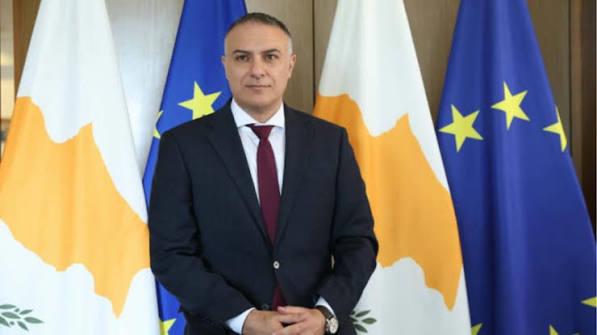
Cyprus’ Ministry of Agriculture, Rural Development and Environment is moving forward with the creation of a Financial Instrument for the primary sector, aimed at facilitating access to finance and supporting sustainable investments, Minister Christos Senekis said.
At the same time, he announced that a broad consultation with the agricultural community on the Common Agricultural Policy (CAP) after 2027 would begin on 8 October, noting that women living and working in rural areas would also be invited to participate in the process.
In his address at an event on the role of women in rural areas, held in Agros, Senekis said the aim was to create the conditions that would enable women’s knowledge and experience to be transformed into greater opportunities for employment, entrepreneurship and development in rural areas.
He added that this was not only a matter of equality, but also a prerequisite for ensuring that rural areas remain vibrant and productive.
Referring to the Common Agricultural Policy Strategic Plan 2023-2027, with a total budget of €454 million, the Minister said it supports investments, the modernisation of agricultural holdings, and young people who choose to enter the primary sector. He noted that more than 1,200 applications were submitted under the recent Major Investment Measure, with the amount requested approaching €200 million, while 267 applications were submitted under the First Installation of Young Farmers scheme.
According to Senekis, the response demonstrates that, despite the challenges, there is a willingness for renewal and to invest in the primary sector.
“Our responsibility is to support this momentum and ensure that the opportunities being created are accessible to women who wish to take the next step,” he said, whether by taking over an agricultural holding or by developing their own business activity in rural areas.
He also referred to the LEADER scheme, which he described as an important tool for mountainous and rural communities, as it supports initiatives originating from local communities themselves. Through the programme, he said, new businesses, jobs and small-scale projects are supported, while additional points are awarded for the participation of women in activities such as agritourism and home-based craft production, thereby strengthening female entrepreneurship in rural areas.
Referring to the contribution of women to rural life, the Minister said that, throughout history, women have participated in every aspect of agricultural activity, from cultivation and harvesting to livestock farming and processing, often without their contribution being recorded as economic activity or receiving the recognition it deserved.
Today, he noted, the presence of women in rural areas is taking on a new form and gaining greater visibility, as they are becoming active in the production and processing of products, organic farming, home-based craft production, agritourism and new forms of entrepreneurship.
