







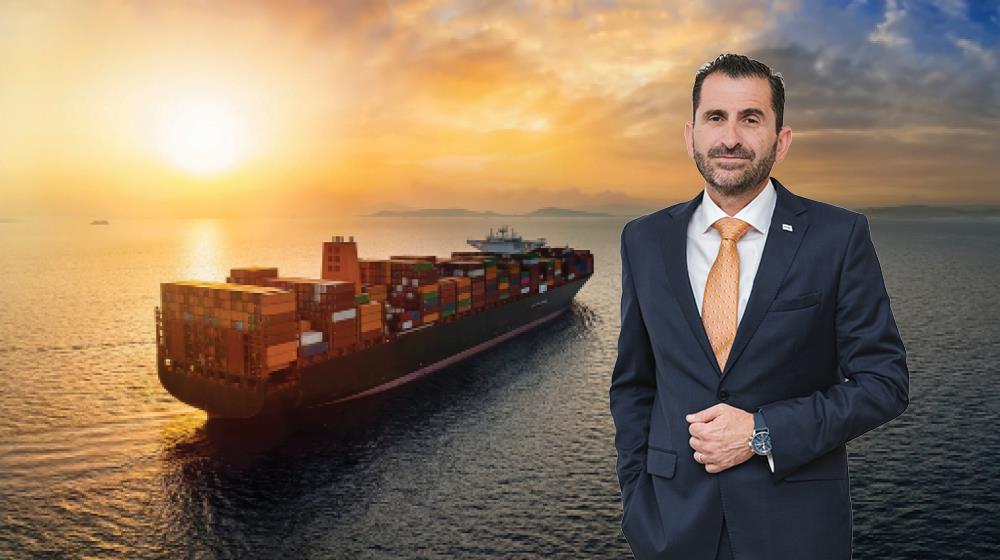
“We must protect the international legal framework that allows global shipping to function. Freedom of navigation and innocent passage are fundamental to international trade,” Thomas A. Kazakos, Secretary General, International Chamber of Shipping, notes.
In a recent interview with CBN, Kazakos weighed in on how the shipping sector is being impacted by geopolitical developments while also commenting on other factors affecting shipowners’ investment decisions, including interest rates, fuel-transition costs and evolving regulations.
Among other things, he also discusses why the availability of skilled seafarers remains an important issue for the industry and reveals how the ICS is working with other stakeholders to help the industry navigate the sector’s challenges.
The Secretary General, in addition, talks about decarbonisation and other technological developments, while also sharing his view of emerging commercial opportunities in the sector.
Kazakos also comments on his recent briefing of the United Nations Security Council, noting, “My central message was that seafarers must not become collateral damage in geopolitical conflicts. They are the people who keep global trade moving, often working in some of the most challenging and dangerous circumstances. Any threat to their safety is unacceptable.”
The shipping sector is one that is particularly impacted by geopolitical developments, including ongoing tensions involving the Strait of Hormuz. Can you tell us more about this impact and how it is currently being managed by the shipping industry?
The 2025–2026 ICS Maritime Barometer risk survey shows an industry operating under intensifying systemic pressure, with political instability emerging as the primary risk driver multiplying other factors including regulatory fragmentation, increasing compliance demands, influencing trade flows, and heightening cyber exposure. We are seeing the impact not only from direct attacks on commercial vessels, but also from the wider uncertainty created by conflict, sanctions, restrictions on navigation, and the disruption of established trading routes.
When vessels are unable to operate normally, companies may have to reroute, delay voyages or take additional security measures. This reduces available fleet capacity, increases costs, and can ultimately affect the movement of essential goods and energy.
The industry's main priority is always the safety of seafarers. Any threat that places seafarers at risk is unacceptable. Shipping companies are therefore continually assessing security risks, following relevant guidance, working with governments and naval authorities, and taking operational decisions based on the circumstances facing individual vessels.
At the same time, we must protect the international legal framework that allows global shipping to function. Freedom of navigation and innocent passage are fundamental to international trade. Attempts to impose charges or selectively control which vessels can transit international straits raise serious questions under international law, including UNCLOS.
How are interest rates, fuel-transition costs and evolving regulations affecting shipowners’ investment decisions, and do you expect to see a significant acceleration in fleet renewal?
Shipowners are making long-term investment decisions in an environment of considerable uncertainty. A vessel can remain in service for 15 years or more, so decisions being made today need to take account not only of today's economics, but also the fuels, technologies, and regulations that will be available over the vessel's lifetime.
The transition to net zero is therefore creating both an investment requirement and a question of timing. The industry is committed to achieving net zero greenhouse gas emissions by or close to 2050, in line with the IMO strategy. But at present there is very limited availability of zero and near-zero emission fuels, and those that are available can be extremely expensive. We also need the necessary bunkering and energy infrastructure to develop alongside the fleet.
This is why regulatory certainty is so important. Shipowners need clear, globally applicable rules in order to make major capital investments with confidence. A fragmented system of regional and unilateral measures risks multiple charges for the same emissions and can reduce the capital available for investment in cleaner technologies.
The availability of skilled seafarers remains an important issue for the industry. What are the biggest challenges in attracting, training and retaining the next generation of seafarers, and how might technology change the skills that will be required in the future?
People remain at the heart of shipping, with the current number of seafarers standing at 2.6 million (data from the recent BIMCO and ICS Seafarer Workforce Report 2026). We have a significant challenge ahead of us because the industry is competing with many other sectors for talented people, while also facing a shortage of trained officers.
The current global supply-demand position is estimated to include a shortage of approximately 39,100 officers, alongside a surplus of around 56,890 ratings. The solution is not simply to recruit more people. We need to create a career path that young people genuinely want to pursue and ensure that seafaring is recognised as a skilled and essential profession. Governments, industry, and unions all have an important role to play in recruitment, training and retention.
Technology will change the skills required, rather than remove the importance of the seafarer. Digitalisation, automation, alternative fuels and increasingly sophisticated onboard systems will require new technical capabilities and continuous upskilling.
That is why the review of the STCW Convention is so important. Training needs to remain relevant and consistent across the industry, but we must also be careful not to create unnecessary layers of training. New requirements should be balanced against removing requirements that are no longer relevant.
The fundamental principle should be that technology supports seafarers. It should reduce workload and improve safety, rather than create information overload or alarm fatigue that could itself introduce new risks.
What are some of the ways the ICS is working, both as an organisation and in conjunction with governments, regulators and other stakeholders, to help the industry navigate the sector’s challenges?
One of the ICS’ fundamental roles is bringing the industry together and ensuring that policymakers understand the practical realities of operating a global fleet.
We work closely with the IMO, ILO, governments, regulators, trade unions and other maritime organisations across a very broad range of issues, from decarbonisation and safety to seafarer welfare, security and digitalisation.
A central principle is that shipping is a global industry and therefore requires a global regulatory framework. The IMO is the appropriate organisation to establish that framework. Without it, we risk a proliferation of regional and unilateral requirements, creating complexity, additional costs and, ultimately, barriers to global trade.
Beyond decarbonisation, what technological developments do you believe could have the greatest impact on shipping over the next five to ten years? In particular, how do you see artificial intelligence, automation and digitalisation changing the way ships are operated and managed? Are there other sector trends you consider to be particularly significant?
Artificial intelligence, automation, and digitalisation will all have an important role to play, but I think the most significant change will be the increasing integration of these technologies into everyday ship operations.
We are already seeing greater use of digital technologies onboard to streamline operations and improve efficiency. AI has the potential to support areas such as predictive maintenance, voyage optimisation, data analysis, decision support, and the management of increasingly complex information.
But technology must remain a tool for the people operating ships. The human factor cannot be overlooked. If technology generates excessive alerts or information, it can create alarm fatigue and information overload rather than improving safety.
Looking specifically at the commercial outlook, what are the areas of the global shipping market that you believe offer the greatest opportunities over the coming years, and where do you see the greatest risks? What role do you anticipate that Cyprus specifically will play in this?
The underlying outlook for shipping remains closely linked to the continued growth of global trade. Maritime transport moves around 90% of goods traded worldwide by volume, and the amount of trade carried by sea is expected to continue growing through the end of the decade.
There are therefore opportunities across the traditional shipping markets, but also in the transition taking place across the industry. Investment in newer and more efficient vessels, alternative fuels, onboard technologies, digitalisation and the infrastructure required for the energy transition will all create opportunities.
At the same time, the risks are considerable. Geopolitical instability, disruption to established trading routes, protectionism, tariffs, regulatory fragmentation and uncertainty around the energy transition can all affect trade flows and investment decisions. Rising protectionism is particularly concerning because shipping depends on goods being able to move freely between markets.
Cyprus has a particularly important role to play because it has developed into one of Europe's leading maritime clusters. That gives Cyprus an important role not simply as a Flag State, but as a centre for ship management, ownership, finance, insurance, technology and other maritime services. I see Cyprus continuing to be an important European and international maritime hub, particularly as the industry navigates the twin challenges of geopolitical uncertainty and technological and environmental transition.
You recently briefed the United Nations Security Council on the critical importance of protecting maritime security, freedom of navigation, and the established international legal framework governing the world’s oceans. Can you please comment on the significance of the ICS being asked to brief the Council and also share the main messages that you wanted your address to convey?
It was a significant opportunity for the ICS to represent the shipping industry directly before the United Nations Security Council. As stated before, shipping is responsible for moving around 90% of world trade, so maritime security is not simply a sectoral issue. It is fundamental to the functioning of the global economy.
My central message was that seafarers must not become collateral damage in geopolitical conflicts. They are the people who keep global trade moving, often working in some of the most challenging and dangerous circumstances. Any threat to their safety is unacceptable.
I also wanted to emphasise the importance of protecting the international legal framework and the ICS ‘No Tolls, No Charges, No Control’ campaign. Freedom of navigation, innocent passage, and the application of international convention and law are essential to shipping. When those principles are questioned, selectively applied or bypassed, the result is greater uncertainty, higher costs and disruption to global trade.
Commercial shipping and seafarers must not be held to ransom.
Finally, I wanted to make clear that shipping cannot solve these security challenges alone. Governments, international organisations, naval authorities and the industry must work together. Our shared objective must be to preserve a rules-based order.