








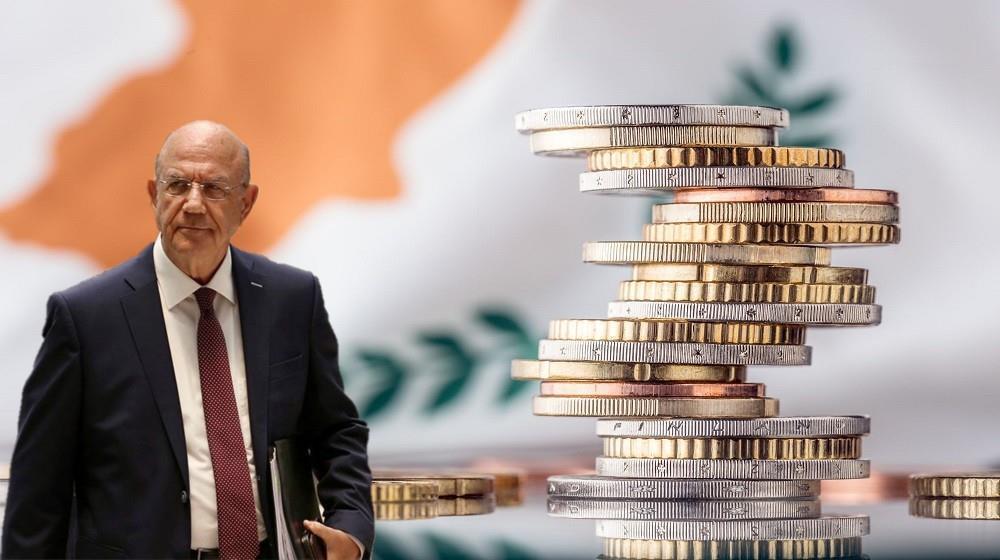
Finance Minister Makis Keravnos on Wednesday described the 2027 State Budget as balanced and development-oriented, following its approval, together with the Medium-Term Fiscal Framework (MTFF) 2027–2029, by the Council of Ministers. The relevant bill is expected to be submitted to the House of Representatives for approval in December.
In his remarks following the end of the Council’s session, Keravnos said that the 2027 budget amounts to €11,160.5 million, excluding debt servicing costs, representing an increase of approximately €470 million compared with last year’s 2026 budget.
He also said that the growth rate in 2027 is expected to be around 2.9%, although there are encouraging indications that it could exceed 3%, while unemployment is expected to remain at current full-employment levels, with a downward trend.
He added that the fiscal balance for 2027 is projected to remain in surplus and is expected to reach 2.8% of GDP, compared with 2.3% in 2026, while the primary balance is expected to reach 4% of GDP, compared with 3.6% in 2026.
Regarding inflation, he said that it is immediately affected by fuel prices, with the forecast placing it at around 4%.
The Finance Minister’s statement in full: The 2027 Budget is balanced and development-oriented, with a significant emphasis on social cohesion and social policy. In addition, the 2027 Budget and the MTFF place particular emphasis on, and provide for an increase in, defence expenditure.
The objectives of the State Budget for 2027, as well as the Medium-Term Fiscal Framework 2027–2029, are to maintain a surplus fiscal balance, continue to contain public-sector employment, further reduce public debt over the medium term, promote the green transition and digital transformation, create sustainable growth in key sectors of the economy, and maintain a robust financial system.
In the 2027 Budget, development expenditure is expected to amount to €1,165.274 million, while capital expenditure is expected to increase by 2.1% in 2027 compared with 2026.
The Government continues its efforts to contain the public-sector wage bill as a result of specific measures and policies implemented by the Ministry of Finance. True to our commitments, we are achieving a reduction in public-sector employment for the third consecutive year, as the 2027 Budget provides for a reduction of 51 positions compared with the 2026 Budget.
The medium-term outlook for the Cypriot economy remains positive, as recognised by international rating agencies and the European Commission. However, due to adverse geopolitical developments, a degree of uncertainty remains.
The growth rate for 2027 is expected to be around 2.9%, while the unemployment rate is expected to stand at 4.5% of the labour force, with a downward trend. In other words, our economy is expected to continue operating under conditions of full employment this year.
The fiscal balance for 2027 is projected to remain in surplus and is expected to reach 2.8% of GDP, compared with 2.3% in 2026. At the same time, the primary balance is expected to reach 4% of GDP, compared with 3.6% in 2026.
The achievement of surpluses, as a result of improved economic activity, will contribute positively to the Government’s financing plan and to the reduction of public debt as a percentage of GDP. Specifically, public debt is expected to fall to 46.6% in 2027, compared with 49.9% in 2026.
The State Budget for 2027, as well as the Medium-Term Fiscal Framework 2027–2029, constitute tangible evidence of the Government’s policy for yet another year, based on steady growth, fiscal responsibility and social progress.
The key priorities
According to a statement by the Ministry of Finance, the 2027 Budget and the Medium-Term Fiscal Framework 2027–2029 have as their key priorities the maintenance of a surplus fiscal balance, the containment of public-sector employment, the reduction of public debt over the medium term, the promotion of the green transition and digital transformation, the creation of conditions for sustainable growth in key sectors of the economy, and the maintenance of a robust financial system. At the same time, the implementation of infrastructure projects with significant added value is considered of the utmost importance.
Within this framework, it is noted that capital expenditure is expected to increase by 2.1% in 2027 compared with 2026. Furthermore, social benefits are expected to increase by 2.9% in 2027, including expenditure on education, healthcare and social welfare benefits. Regarding public-sector employment, it is noted that while an increase in permanent positions was observed in the State Budget in previous years, 2027 marks the third consecutive year in which their number is reduced, by 51 positions. As part of the 2027 Budget, efforts to contain the public-sector wage bill continue, including through employment measures, with total employment in the Public Service having decreased by 2,242 persons during the period 2012–2026. Despite the reduction in employment in the Public Service, employment in the Education sector increased by 3,342 persons over the same period.
According to the baseline macroeconomic scenario, the medium-term outlook for the Cypriot economy remains positive but subject to a significant degree of uncertainty. Therefore, both the growth rate, which is expected to be around 2.9% in 2027, and the unemployment rate, which is expected to be around 4.5% of the labour force in 2027, remain approximately at the same levels as in 2026.
The fiscal balance in 2027, according to the preliminary macroeconomic forecasts of the Ministry of Finance, is projected to remain in surplus and is expected to reach 2.8% of GDP, while the primary fiscal balance is expected to reach 4.0% of GDP.
Maintaining surpluses in the fiscal balance for 2027, as a result of improved economic activity, is expected to contribute positively to the Government’s financing plan, resulting in public debt as a percentage of GDP remaining on a steady downward trajectory. Within this context, public debt as a percentage of GDP is expected to fall to 46.6% in 2027, compared with 49.9% in 2026.
Noteworthy are the conclusions from the credit rating assessments conducted during 2025 and 2026, which were particularly positive for the Republic of Cyprus, demonstrating the steps taken towards stability and progress in the Cypriot economy amid a broader environment of instability and volatility. Ensuring macroeconomic stability and further improving the financial system are key to achieving a further upgrade in the credit rating of the Republic of Cyprus.
Regarding fiscal risks, the risks arising from the deterioration of geopolitical developments are highlighted, which could have a negative impact on economic activity in the country. Furthermore, there is a possibility of a deterioration in the State’s fiscal position due to unforeseen circumstances that may arise from climate change, such as natural disasters, the need for compensation in the primary sector, and investments in infrastructure and prevention and preparedness projects. At the same time, the potential impacts that may arise in relation to the natural gas terminal at Vasilikos will also need to be managed.
