








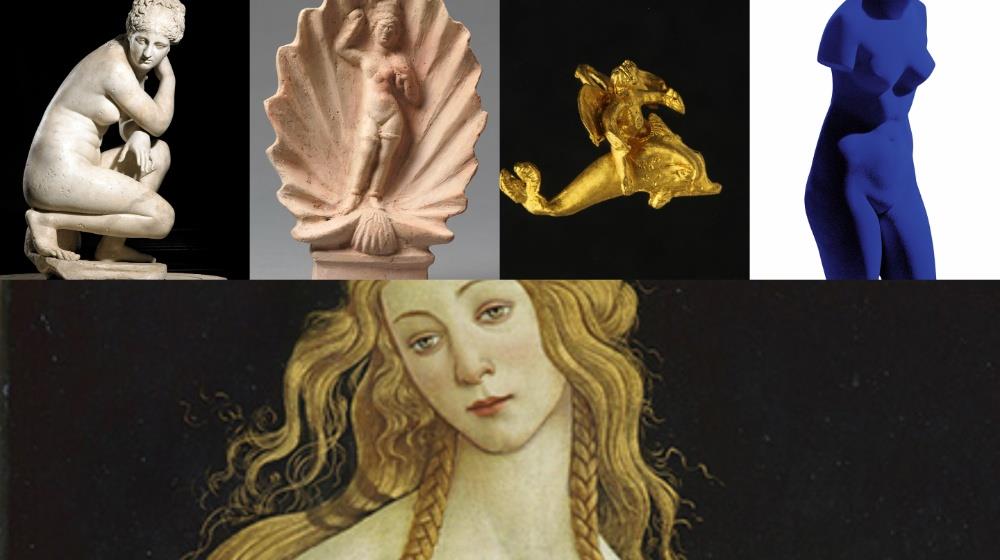
Antiquities from Cyprus, will be exhibited for the first time outside of the country in the autumn exhibition at the University of Oxford’s Ashmolean Museum “The Making of a Goddess”, that traces Aphrodite’s journey and transformations, spanning 5,000 years, from her earliest origins in Cyprus, to-date.
According to a press release by the Museum, the Ashmolean’s autumn exhibition explores “one of the ancient world’s most enduring cultural icons”.
“Bringing together archaeology, sculpture, painting, contemporary art and fashion, The Making of a Goddess traces Aphrodite’s journey and transformations from her earliest origins in the eastern Mediterranean, through the ancient Greek and Roman worlds, via Renaissance Europe, to our continuing fascination with her today”, it said.
Highlights include iconic ancient sculptures such as the Crouching Aphrodite (c. 199 CE) from the Royal Collection, a Capitoline Venus (c. 160 CE) on loan from the Louvre, Botticelli's Venus (c. 1490) from the Gemäldegalerie, Berlin, modern works by Yves Klein and Michelangelo Pistoletto, and Jonathan Anderson’s Loewe dress, worn by Beyoncé. “These will be joined by exceptional loans from Cyprus itself with many works never before shown outside the country”, it adds.
Aphrodite’s story, it said, “begins in Cyprus, the island where she emerged as a goddess and where visitors and immigrants from the Greek Aegean first encountered her. From these origins grew the myths that made Aphrodite famous, told and retold by the great writers of the ancient world, including Homer, Hesiod, Euripides, Ovid and Virgil. They recounted her birth from the sea, her role in the Judgement of Paris that led to the Trojan War, her love affairs with the beautiful Adonis, and with Anchises, the father of her son Aeneas, the Trojan War hero whose descendants founded Rome”. The exhibition explores these myths with ancient vases, sculpture, jewellery, and other “spectacular antiquities” like the Louvre’s mosaic from Tunisia (200–250 CE) showing Aphrodite sailing on a barge, it adds.
“The exhibition goes on to explore the cult of the goddess in ancient Cyprus and how she evolved from a much older tradition of female deities worshipped across the eastern Mediterranean, including Astarte and Ishtar” it said, adding that this evolution followed centuries of cultural exchange linking Cyprus with the Near East, Egypt and the Greek world. According to the press release, visitors will see the earliest known representation of Aphrodite, “a unique copper alloy figurine from the Ashmolean’s collection dating to around 1200 BCE – one of the oldest objects in the exhibition”.
“A recreation of an Aphrodite sanctuary using exceptional loans from Cyprus and major international collections will show how Aphrodite was worshipped as the all-powerful goddess across the island and the surprising ways she was depicted in ancient Cypriot art”, it adds.
Rediscovered during the Renaissance, such ancient sculptures of Venus inspired generations of artists, collectors and rulers, it adds, while the exhibition closes with modern and contemporary visions of Aphrodite, whose image has long served as a focus for society’s changing ideas about women, femininity and female beauty.
The exhibition is curated by Dr Anja Ulbrich, “a leading expert on Cypriot archaeology and female deities of Cyprus”. “I first became fascinated by Cyprus while studying archaeology as a student, and I have spent much of my career exploring the island's ancient culture, religious traditions and Mediterranean connections. Aphrodite has been at the centre of my work. This exhibition brings together antiquities and European art, which I have studied and admired for many years, to tell the remarkable story of how a goddess worshipped in ancient Cyprus became one of the most enduring and recognisable figures in human history” she said.
Dr Xa Sturgis CBE, Director of the Ashmolean, expressed gratitude “to the many institutions and colleagues who have helped make this exhibition possible, particularly the Department of Antiquities, Cyprus, whose support has been invaluable”. “Bringing together exceptional loans from across Europe and North America alongside objects from our own collections, the exhibition traces more than 5,000 years of history, offering an exciting perspective on Aphrodite”, he adds.
The exhibition will be open between 8 October 2026 and 11 April 2027.
