








Cyprus-headquartered game developer Playkot is reshaping its operating model around autonomous studios, long-running games and practical AI adoption as the global mobile gaming market enters a more mature phase.
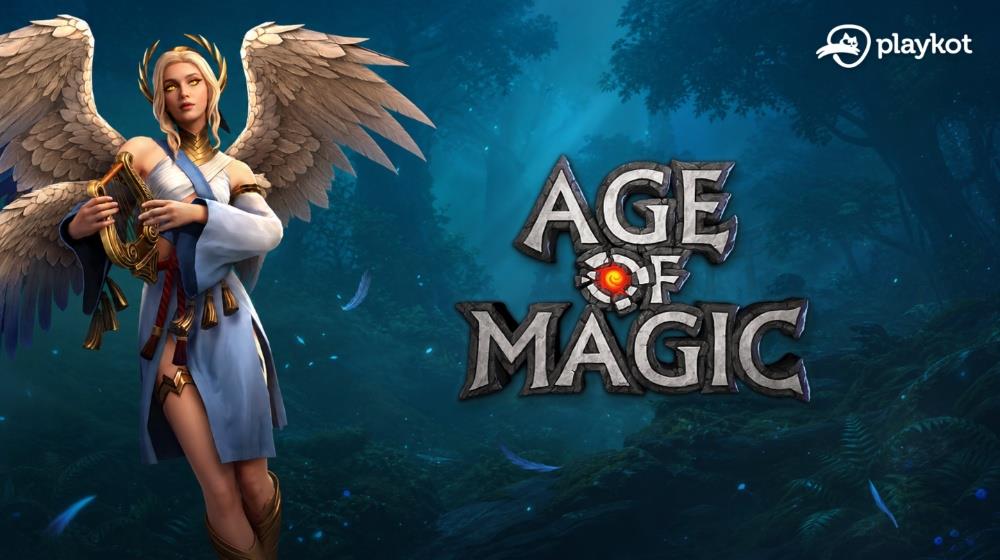
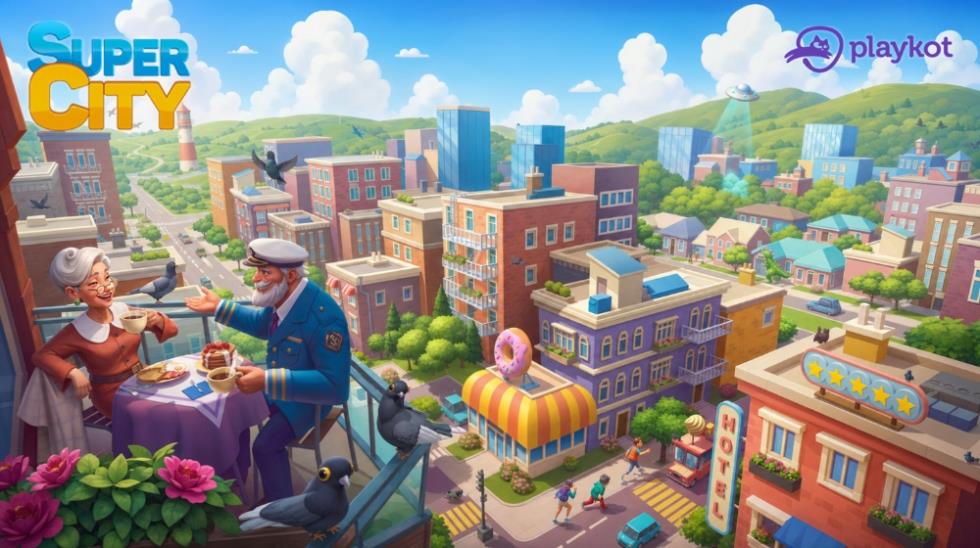
Headquartered in Limassol, Cyprus, Playkot has spent more than 17 years building and operating games for international audiences. Today, its portfolio includes SuperCity, Age of Magic and Spring Valley, while the company’s two main product teams - SuperCity and Age of Magic - operate as autonomous studios within Playkot.
Over the past several years, the company has also gone through a significant business transformation. Rather than continuing to expand headcount and its R&D portfolio, Playkot has moved toward a more focused operating model built around financial discipline, product ownership and long-term investment in games that have already earned years of player trust.
Playkot Co-Founder Alexander Pavlov describes the current stage as a return “back to the roots”: smaller teams that are deeply involved in their products, combined with a stronger culture of ownership, curiosity and genuine product involvement.
From Expansion to Focus
Like many mobile game companies, Playkot expected the market to continue expanding.
The assumption was understandable. Mobile gaming had grown rapidly for years, and the pandemic-driven surge of 2020 reinforced expectations that this momentum would continue. Studios across the sector were hiring, expanding pipelines and building structures designed for further growth.
Playkot followed the same logic, investing in development capacity, R&D projects and organisational infrastructure intended to support larger teams and a broader portfolio.
The market changed. As pandemic-era growth normalised, user acquisition became more expensive, competition for attention intensified and successful global launches became harder to achieve. Games were no longer competing only with other games, but with an increasingly fragmented digital entertainment landscape that included TikTok, YouTube Shorts, Instagram Reels and other always-on content platforms.
For Playkot, this created a mismatch between the organisation it had built for future scale and the reality of its product portfolio.
“We realized that our structure, processes and the costs of maintaining them no longer matched the challenges facing the company, the market environment, or our goals and vision,” says Oxana Timanovskaya, Playkot’s Co-CEO.
“We wanted to become a leaner, more dynamic organization that could move faster - sharing information more efficiently, empowering product teams to make decisions, and giving people a clearer understanding of how their work contributes to the company’s success.”
For Alexander, one of the central lessons was focus. “The most important lesson was not to spread our focus and attention too thin,” he says. “If you have created a successful product, you should invest in growing it rather than immediately trying to repeat that success across several new projects.”
A Studio Model Built Around Accountability
That thinking shaped a major organisational change that Playkot began in early 2025.
Over the following year, the company shifted from a more centralised structure toward a studio model built around autonomous and accountable product teams.
The SuperCity and Age of Magic studios now own their respective product strategies, roadmaps, P&Ls and day-to-day execution. Playkot HQ, based in Limassol, continues to provide shared capabilities including finance, HR, analytics, server infrastructure and IT infrastructure.
The principle behind the structure is relatively simple: decisions about a game should be made as close as possible to the people who understand that game, its audience and its economics.
At the same time, autonomy does not mean duplicating every corporate function inside every studio. “We want studios to have ownership and business context, but we also need standards, quality benchmarks and processes that support sustainability,” Oxana says. “Autonomy does not mean that every studio should solve every organisational problem on its own.” This balance between autonomy and shared infrastructure is particularly relevant to Playkot’s current stage.
Rather than measuring success by organisational size, the company is increasingly focused on whether teams can make informed decisions quickly, understand the financial consequences of those decisions and sustain their products over the long term.
According to Oxana, predictable cash flow from the company’s established titles allows Playkot to set its own priorities, invest in teams, experiments and make long-term decisions.
Evergreen Games as a Business Model
That long-term perspective is closely connected to how Playkot thinks about its mature products.
SuperCity turned 15 in 2026. Age of Magic celebrated its eighth anniversary. In an industry that places enormous attention on new launches, games of this age can easily be described as legacy products. Playkot takes a different view.
For the company, an evergreen game is a product that continues to maintain a loyal core audience while evolving enough to remain relevant over many years. These games are both creatively active and strategically important because they combine established player communities, accumulated product knowledge and continuing commercial performance.
“When I speak to people outside the games industry and say that we have a game that has been running for more than a decade, they usually say, ‘Wow, that is incredible,’” Alexander says. “Inside the industry, the reaction can be much more sceptical. I think developers sometimes do not give enough respect to evergreen games because they are attracted to novelty.”
Running such products is not passive maintenance. Long-lived games accumulate years of economic design, technical history, player habits, LiveOps systems and community expectations. A seemingly small product decision can affect years of player progression or undermine trust that has taken a decade to build.
Vlad Vatsek, Playkot’s Co-CEO, says this requires a different analytical approach. New games are heavily focused on early-game behaviour, acquisition and scalability. Evergreen games must also understand long-term users, late-game systems and recurring LiveOps behaviour.
“Evergreen games can adapt again and again to a changing market,” Vlad says. “This requires a combination of game design and analytics. Game designers understand possible product directions, while analytics helps identify where effort can create the greatest leverage.”
SuperCity provides one example. At 15 years old, the game continues to evolve through systems such as expeditions, which have become an important part of its modern product loop. Age of Magic, meanwhile, is also looking beyond its recurring LiveOps calendar and testing larger product hypotheses designed to extend the game’s trajectory.
AI as an Operational Advantage
Another part of Playkot’s current operating model is AI.
The company does not frame AI as one transformational feature or isolated experiment. Instead, it is increasingly being introduced as an operational layer across development processes.
In the Age of Magic studio, AI already supports coding, documentation, game design and product analytics. For example, the programming stage for standard hero logic has fallen from roughly 24–30 hours to around eight hours in one workflow. The studio’s internal AI-powered “Brain” system also allows game designers to query product data and receive an initial interpretation within seconds rather than waiting several days for a standard analytics request. The intention is not to remove specialists from the process.
Instead, Playkot wants to reduce the amount of time spent on repetitive work and give developers, analysts and designers more capacity for architecture, complex research and creative decisions. AI-generated results remain subject to human review and validation when they inform significant product decisions.
SuperCity is following a similar direction in QA and internal production workflows. One LLM-powered service can generate testing documentation by analysing a task description together with the related code changes and producing a structured checklist. Another internal system monitors player-support requests, identifies unusual spikes and connects them with recent releases, helping the team investigate which product changes may be behind emerging problems.
The studio has also developed tools for validating game configurations and uses controlled AI-agent access to internal game-design systems to automate routine multi-step tasks.
For an evergreen game, the economics of these improvements can be especially meaningful.
A modest productivity improvement may not seem transformational in a single release. Repeated across dozens of production cycles and multiple years, however, its cumulative effect can become substantial.
That is why Playkot is also investing in the less visible side of AI adoption: improving the quality of internal data, formalising context for agents and building stronger review and validation mechanisms around their output.
A Cyprus-Based Company Operating Globally
Playkot’s model is also part of a broader technology and game-development ecosystem that has been taking shape in Cyprus.
In recent years, Cyprus - and Limassol in particular - has become home to a growing number of international game developers and publishers. For Playkot, Limassol serves as the company’s headquarters while its products and teams operate internationally.
The Cyprus base sits behind a business whose players, platforms and product ambitions are global - but whose current strategy increasingly reflects a broader question relevant to many technology companies on the island: how do you build for long-term resilience once growth itself is no longer enough?
For Playkot, the answer is not simply to become larger again.
It is to become more focused.
Focused on Today, Prepared for What Comes Next
For the Limassol-headquartered company, the next chapter is therefore less about chasing scale for its own sake and more about building an organisation capable of sustaining successful products, adopting new technologies and responding quickly when the market creates the next opportunity.
Years of accumulated product knowledge, player trust and operational experience give Playkot’s studios a foundation to shape what comes next for their games - while the shared company around them provides the infrastructure and independence to keep looking beyond the next release.
