







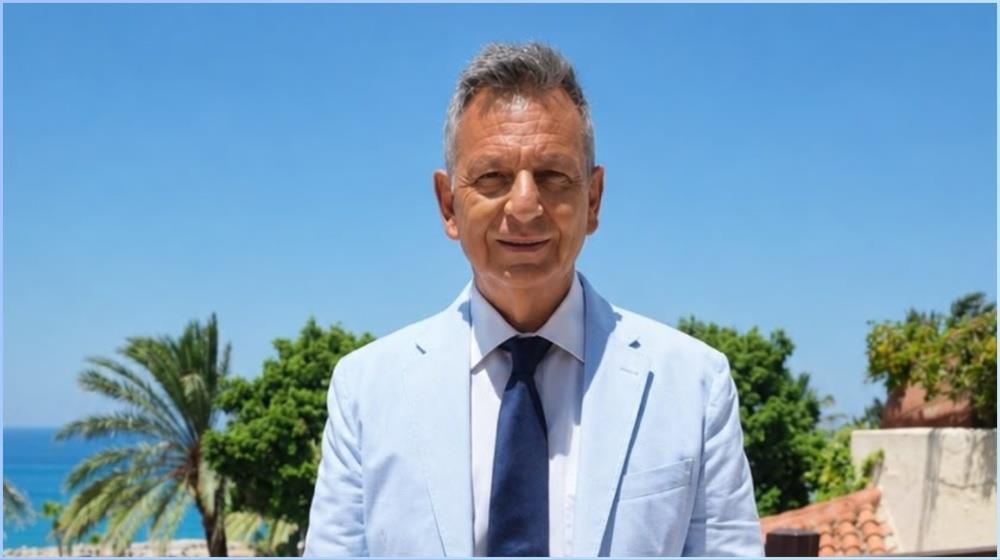
Yiannos Pantazis, who has taken over the reins of the Cyprus Hotel Association (PASYXE) at a particularly critical juncture for Cypriot tourism due to the situation in the Middle East, has outlined his goals and priorities as President-in-Office of PASYXE.
At the same time, in his first interview in the PASYXE Newsletter 'Xenosdochos' (Hotelier), Pantazis presents his own proposals and thoughts with the aim of tourism not only maintaining, but also further strengthening, its position.
Specifically, after emphasising that in order to strengthen the position of Cypriot tourism, a plan is needed, he indicates that - among other things - Cyprus must invest in quality, proceed substantially in lengthening the tourist season and invest in human resources.
At the same time, in the July edition of the newsletter, Pantazis notes the need to reduce operational burdens that affect competitiveness, such as energy costs and bureaucracy, and to invest in new and emerging tourism markets.
At the same time, the new President of PASYXE, after referring to the prospects for this year's tourist year, makes it clear that he believes in realism, but also in ambition, emphasising that we must "say things as they are, without exaggeration, but also without fear. To identify the problems, seek solutions and work collectively."
In addition to the above, Pantazis sends the message that "Cypriot tourism has a present. But it also has a future. And we will build this future with unity, professionalism, quality and faith in the potential of Cyprus."
At the same time, he also expresses his readiness to work hard, together with all the hoteliers-members of PASYXE, to strengthen the hotel industry and Cypriot tourism more broadly.
Objectives and priorities
First of all, congratulations on your election. As the new President of PASYXE, what goals and priorities have you set?
Thank you very much.
I take on this position with a sense of responsibility, but also with great faith in the potential of Cypriot tourism.
Our first priority is to focus on this year. To monitor daily the progress of reservations, airline connections, markets and the behaviour of travel agencies. To have an overview. To react in a timely manner. To not waste time.
The crisis in the Middle East has created pressure and uncertainty. So today, stability, calm and coordination are needed.
Our goal is to support this year's season and ensure that Cyprus remains strong within the programs of our partners.
For 2027, the goal is clear: to regain the momentum of 2025. And this goes through maintaining and strengthening flights, opening new markets and continuously promoting Cyprus as a safe, reliable and quality destination.
At a strategic level, the big wager is to extend the tourist season. Cyprus cannot think only seasonally. It can and must develop into a destination for year-round, or at least ten-month, tourist activity.
This is a goal of national importance. For tourism, the economy, employment and local communities.
To date, as a hotelier, how have you approached new, but also chronic, challenges and what do you bring to the table for the hotel industry?
I believe very much in taking action. In daily contact with the market, with the employee, with the visitor, with the collaborator.
A hotelier does not operate on a theoretical level. He experiences the challenges every day. Reservations, costs, staff shortages, customer demands, competition, the need for continuous upgrading.
What we bring to the table is precisely that practical experience. The picture from the front line.
I believe in realism, but also in ambition. To say things as they are, without exaggeration, but also without fear. To identify problems, seek solutions and work collectively.
PASYXE must be a strong, serious and documented voice. But at the same time, it must also be practical. It must support its members in practice, cooperate with the State and defend the quality and competitiveness of Cypriot tourism with targeted actions.
The challenge is not just to manage difficulties. It is to build the industry's future.
This year's wager
Undoubtedly, this year's tourism season is quite difficult, especially for hoteliers. What do you think needs to be done further in order to reverse the negative climate that has been created and somehow save the year?
This year is difficult. That's a fact.
The hit from the crisis in the Middle East was severe. Cancellations, mainly in March and April, affected months that were crucial for summer bookings. Significant momentum was lost there.
Today the picture is more stable. Cancellations have returned to normal levels and bookings are improving. However, the pace remains lower than last year.
What is needed now? First, continuous monitoring of the market. To see daily what is happening with reservations, flights and travel agencies.
Second, strengthening Cyprus' presence in markets that can still yield results. We must support last-minute bookings and utilise every available advertising channel.
Third, maintaining the flight schedule. This is crucial. For an island, connectivity is not a detail. It is a condition of survival.
For this year, the realistic goal is to limit losses and close as close as possible to 2024 levels.
But we shouldn't just think defensively. We should already be working towards 2027, so that we can return to the momentum of 2025.
The role of the State
From the State's perspective, what do hoteliers expect most?
What we expect most is coordination, speed and practical solutions.
The State acted promptly in this crisis and substantially helped maintain a significant part of the flight program. We recognise this.
But the challenges don't end here.
We need a stable policy for the connectivity of Cyprus. We need support in the markets. We need faster procedures, less bureaucracy and a substantive approach to the problems that pressure hotel businesses daily.
Staffing is a big issue. Incentives need to be created to attract young people to tourism, train them and give them a perspective.
Energy costs are also critical. For hotels, electricity is a huge operating cost and directly affects the competitiveness of our product.
We therefore expect a comprehensive, realistic and visionary approach. Not piecemeal moves. Tourism is a pillar of the economy and must be treated as such.
Will you seek any meeting with either the Deputy Minister of Tourism or even the President of the Republic himself to discuss the situation and coordinate to address it?
Yes, of course. We will seek meetings with both the Deputy Ministry of Tourism and the government.
And I'm not talking about formal meetings. I'm talking about substantive and permanent coordination.
Crises that affect tourism come with no warning. They can arise overnight. A geopolitical crisis, a problem in air transport, a European decision, a change in costs. All of these directly affect Cyprus.
That is why I consider it necessary to create a permanent Crisis Management Team for tourism. There must be structure, information, speed and a common line.
An institutionalised advisory body for tourism is also needed. The public and private sectors must sit at the same table, not only when there is a problem, but all the time.
To prevent, not just react.
A typical example is the new European framework for state aid to aviation. For Cyprus, air connectivity is not a luxury. It is a condition of survival for tourism and the economy.
We must be present where decisions are made. With clear positions and documentation.
However, in addition to the situation as it has developed mainly due to the situation in the Middle East, hoteliers are also faced with a kind of unfair competition, since many tourists who arrive in Cyprus choose either to go to the occupied areas for holidays or to stay in short-term rental accommodation. Do you have any indications about the percentage of tourists who choose either the occupied areas or self-catering accommodation, and how do you think that should change in order for them to choose our hotels for their stay?
It is an issue that seriously concerns us.
In relation to the occupied territories, the issue is broader. It is not only touristic. It is also political, economic and institutional. What is important is to preserve the competitiveness and credibility of the legitimate tourist product of the Republic of Cyprus.
In relation to short-term rental accommodation, what concerns us is the unequal treatment.
Hotels operate within a strict framework. They have licenses, inspections, tax obligations, safety standards, staff, and compliance costs.
Therefore, there cannot be a parallel market that operates without the same basic rules.
The recent report by the Audit Office showed that there are issues with accommodations not appearing in the registers or being displayed with inaccurate license details. This needs to be checked.
The legislation exists. The first requirement is that it be implemented correctly. There should be controls, transparency, recording and taxation of income.
If it is found that the existing framework is not sufficient, then it must be strengthened.
The point is not to limit choices. The point is to have rules for everyone. Fair competition, protection of the visitor and protection of the quality of Cypriot tourism.
"Tourism has proven that it can withstand challenges"
Despite the challenges over time, tourism has repeatedly proven its resilience and its significant contribution to the real economy of the country. What do you think could be done in order for the sector to not only maintain, but also strengthen its position?
Tourism has proven its resilience. But we should not take its resilience for granted.
To strengthen its position, a plan is needed.
First, we need to invest in quality. Cyprus cannot and should not compete on price alone. It must compete on experience, safety, hospitality, authenticity and the level of service.
Secondly, we must move forward substantially in extending the tourist season. Cyprus has the potential to be a year-round, or at least ten-month, activity destination. This requires flights, events, conferences, special forms of tourism and the cooperation of everyone.
Third, we need to invest in human resources. Without people, there is no hospitality. We need to make tourism an attractive professional field for young people.
Fourth, we must reduce operational burdens that affect competitiveness, such as energy costs and bureaucracy.
Fifth, we need to strengthen new and emerging markets. Poland, Romania and other markets have significant prospects. We should not be overly dependent on a few markets.
Tourism is a real economy. It supports workers, families, suppliers, local communities and public revenues.
So strengthening it is not a sectoral request. It is a national priority.
What message would you like to send to the hoteliers-members of the Association?
My message is simple: we are together, and with the best possible resources to work purposefully and visionarily for the development of the industry.
I know very well the difficulties that hoteliers face today. I experience them myself as a person in the industry. I know the pressure, the cost, the uncertainty, the responsibility towards our employees, our guests and our businesses.
But I also know the power of this industry.
Cyprus' hoteliers have proven many times that they can stand tall in difficult circumstances. They did so after the Turkish invasion, they did so during the pandemic, in all periods of crisis. They do so today.
As PASYXE, we will stand by our members with seriousness, documentation and a clear voice. We will highlight the problems, but we will also propose solutions and targeted actions. We will seek cooperation, but we will also assert ourselves where necessary.
Cypriot tourism has a present. But it also has a future. And we will build this future with unity, professionalism, quality and faith in the potential of Cyprus.
(Source: InBusinessNews)
