







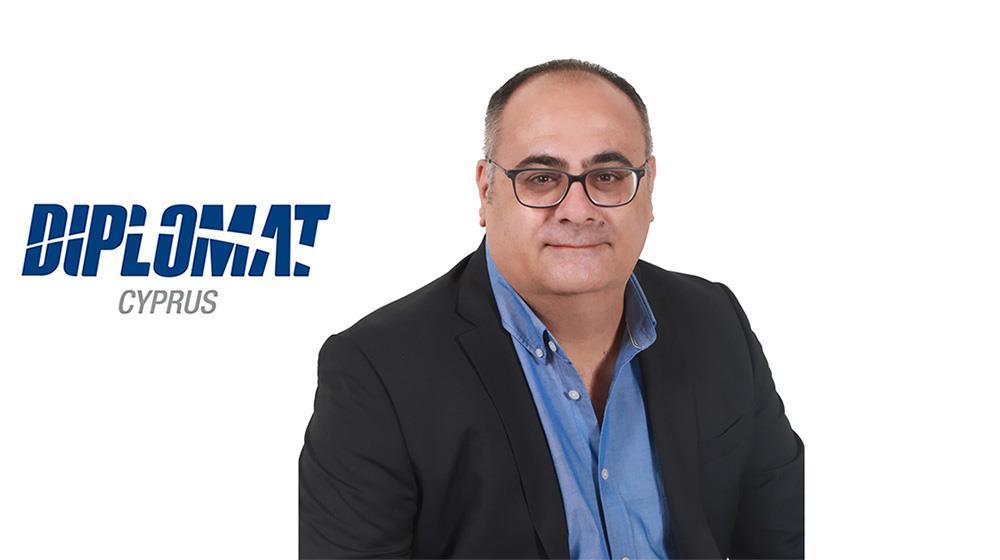
Demand in the FMCG sector remains stable, moderate, but more selective, with increased pressure on prices and profit margins, the CEO of Diplomat Cyprus, Mikellis Christou emphasises, noting that opportunities in innovation and premium categories are emerging for the second half of 2026.
In an interview with InBusinessNews, he explains that although geopolitical developments create more risks than opportunities in the industry, they also accelerate necessary adjustments to inventories, supply chain and commercial strategy.
Asked about possible targeted interventions by the state, Christou suggests supporting energy and transportation costs for businesses and households, as well as subsidizing low-wage earners for vacations in Cyprus in order to keep hotels busy and thus allow the companies that supply the hotel units to work.
How do you assess the course of the Cypriot economy and your sector during the first half of 2026? What developments stood out positively or negatively and to what extent were the predictions you made at the beginning of the year confirmed or overturned?
The first half of 2026 confirmed that the Cypriot economy remains strong and resilient, with healthy fundamentals and positive consumption. However, we clearly see a gradual slowdown, with inflation, increased costs and geopolitical developments affecting market dynamics.
In the FMCG sector, demand remains stable, but more selective, with increased pressure on prices and margins. To a large extent, our forecasts for a year of “steady, but more disciplined growth” are confirmed. However, the need for impeccable execution, efficiency and the right strategy is greater today than ever.
Opportunities in innovation and premium categories
What are your expectations and priorities for the second half of 2026? Where do you see growth opportunities, but also what challenges do you believe will determine the course of the market by the end of the year?
For the second half of 2026, we expect more moderate but stable demand. Our priority is efficiency, commercial discipline and excellent execution. We see opportunities in innovation and premium categories. Inflation, costs and price pressure remain key challenges.
Enhancing efficiency
To what extent have geopolitical developments, and in particular the crisis in the Middle East, affected the economy in general and your industry in particular? Have they created more risks, upheavals or even new opportunities?
Geopolitical developments, particularly in the Middle East, have significantly impacted the economy, mainly through increased energy and transport costs, as well as greater uncertainty, especially in tourism. In the FMCG sector, they create more risks than opportunities, but at the same time accelerate necessary adjustments to inventories, supply chain and commercial strategy.
To enhance efficiency and flexibility, we focus on:
- Inventory optimization and better demand forecasting
- Supplier diversification
- More flexible pricing policy and promo planning
- Investing in data & digital sales tools
In this way, we reduce costs, respond faster and maintain competitiveness.
The need to support energy and transportation costs
If you could point to one intervention from the state or market that would strengthen the resilience of the economy in the second half of the year, what would it be?
A targeted intervention would be to support energy and transport costs for businesses and households. In an economy like Cyprus, this would limit inflationary pressures, boost consumption and improve the competitiveness of the FMCG sector and the economy as a whole.
Also, another example of intervention would be a subsidy to low-wage workers for holidays in Cyprus so that there is traffic in hotels and in this way the companies that supply the hotels will also work.
By giving a subsidy to hotels to pay employees' salaries due to insufficient tourism, you are not helping the companies that are active in supplying hotels and are essentially transferring the problem.
(Source: InBusinessNews)
