







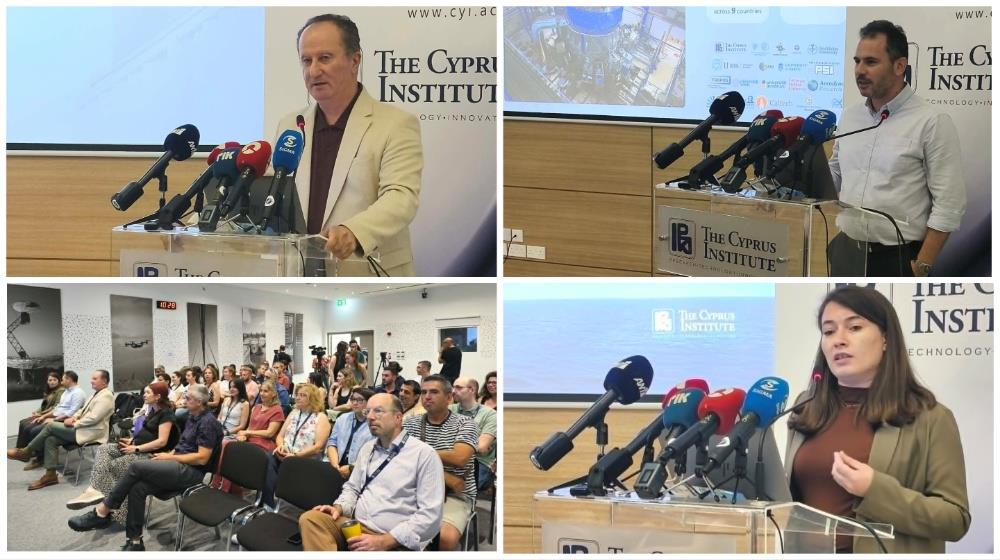
The Cyprus Institute has presented the findings of a new international study expected to significantly advance understanding of the Earth's climate system.
According to the study, published in the leading scientific journal Nature with the significant contribution of researchers from The Cyprus Institute, the oceans influence cloud formation to a much greater extent than scientists had previously understood.
The findings help resolve a long-standing uncertainty in climate science: why atmospheric observations over remote oceans have often differed from climate model predictions. They are expected to improve understanding of cloud formation processes and their representation in climate models, leading to more accurate climate predictions.
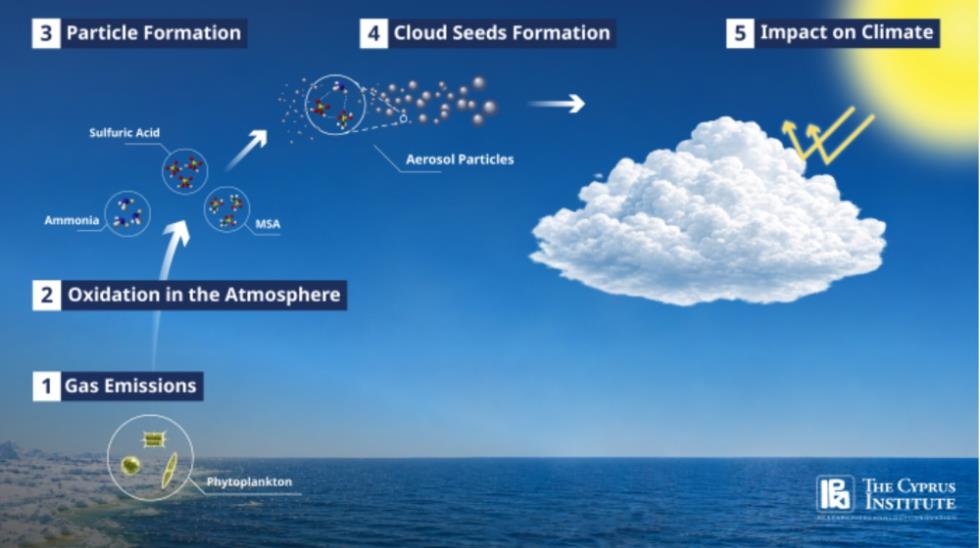
From ocean emissions to cloud particles
The research was carried out at the CERN CLOUD experiment, a leading facility for studying how atmospheric particles and clouds form. Scientists recreated the atmospheric conditions found over remote oceans and investigated how tiny particles form and grow into cloud “seeds” that enable cloud formation.
The process begins with gases released by phytoplankton, microscopic marine organisms. These gases undergo chemical reactions in the atmosphere and are transformed into compounds that contribute to the formation of new particles.
The key role for methanesulfonic acid (MSA)
For decades, scientists considered sulfuric acid to be the primary driver of new particle formation in the atmosphere. However, the new study shows that methanesulfonic acid (MSA), a compound produced from natural marine emissions, plays a similarly important role over remote oceans. The researchers found that MSA is particularly effective at low temperatures and that, when acting together, MSA and sulfuric acid can produce substantially more particles than either compound alone.
The Cyprus Institute’s contribution
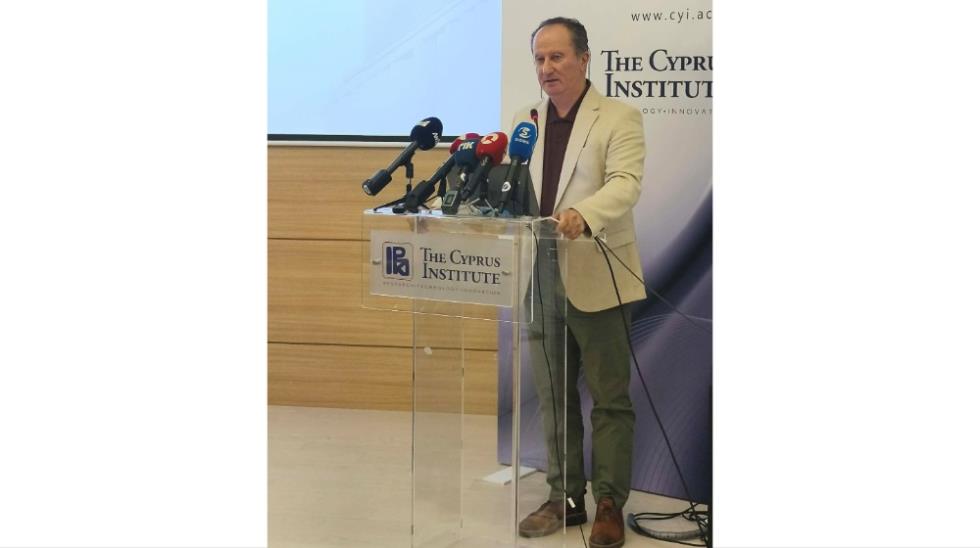
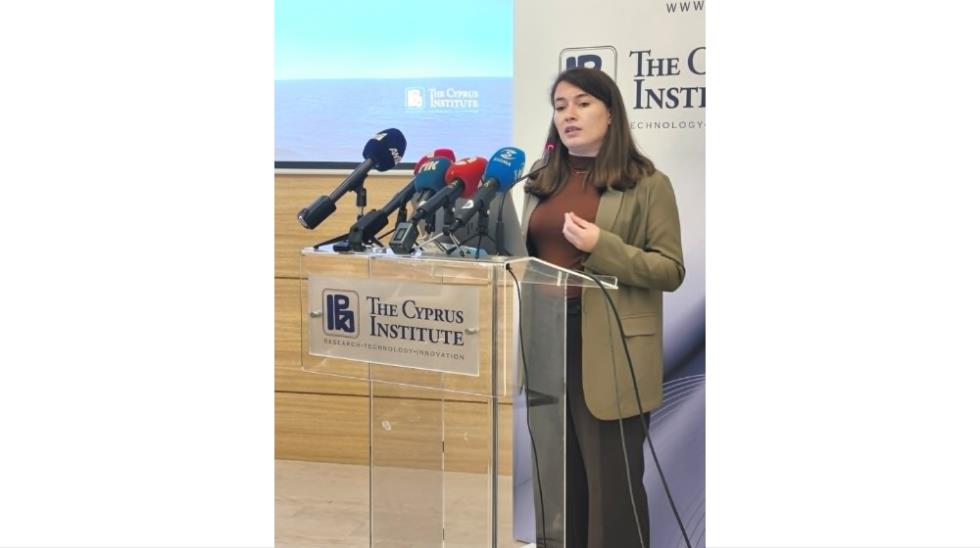
Welcoming the guests at a recent press conference, Dr. Stavros Malas, President of The Cyprus Institute, referred to a significant discovery that highlights the Cyprus Institute as a center of excellence and a leading institution contributing to climate change research. This discovery, Dr. Malas noted, confirms that investment in research and centers of excellence pays off and enhances the quality of scientific work being carried out in our country.
Dr. Theodoros Christoudias, one of the authors of the study, stated that the research concerns emissions from organisms found in the oceans, such as the well-known phytoplankton, and the way in which these, through chemical reactions in the atmosphere, are transformed into substances that contribute to the formation of new particles.
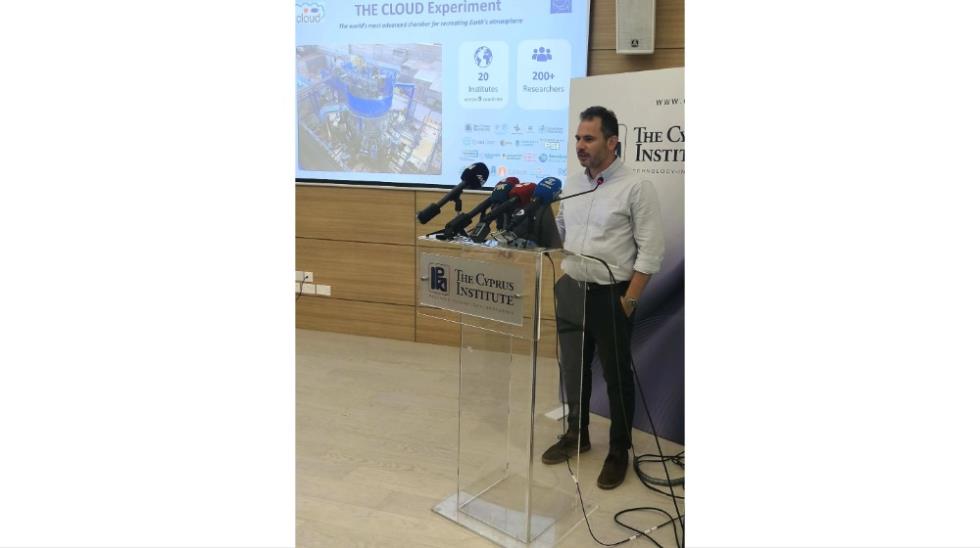
This discovery, Dr. Christoudias pointed out, helps us better understand climate systems and better prepare for the impacts of climate change. Cyprus, he noted, is located in a region that is warming at twice the global average rate and is already experiencing the severe effects of climate change. For this reason, he said, it is essential to adapt to the new conditions while also taking measures to mitigate its impacts.
Dr. Rima Baalbaki, researcher at the Climate and Atmosphere Research Center (CARE-C) of The Cyprus Institute and first author of the study, emphasised that the findings indicate that the oceans influence cloud formation far more than previously estimated. Understanding this mechanism, she noted, allows scientists to gain a clearer picture of how the Earth’s climate system functions, improve the accuracy of climate projections, and more reliably assess the role of human activities in climate change.
Importance for Cyprus and the Eastern Mediterranean
The publication of the study in Nature and The Cyprus Institute's partnership in the CERN CLOUD collaboration highlight the role of Cyprus’ research community in advancing international climate and atmospheric science.
The findings are particularly important for the Eastern Mediterranean, a region widely recognised as one of the world's climate change hotspots, as improving understanding of atmospheric and climate processes is essential for strengthening future climate resilience.
Watch the video on cloud formation HERE.