







Transition to cleaner transport, the future course of decarbonisation of the sector, shipping, as well as the adoption of Council Conclusions on the EU Ports Strategy were on the agenda of the Transport, Telecommunications and Energy Council (Transport) which has concluded in Luxembourg, under the presidency of the Cyprus Minister of Transport, Communications and Works, Alexis Vafeades and the Shipping Deputy Minister, Marina Hadjimanolis.
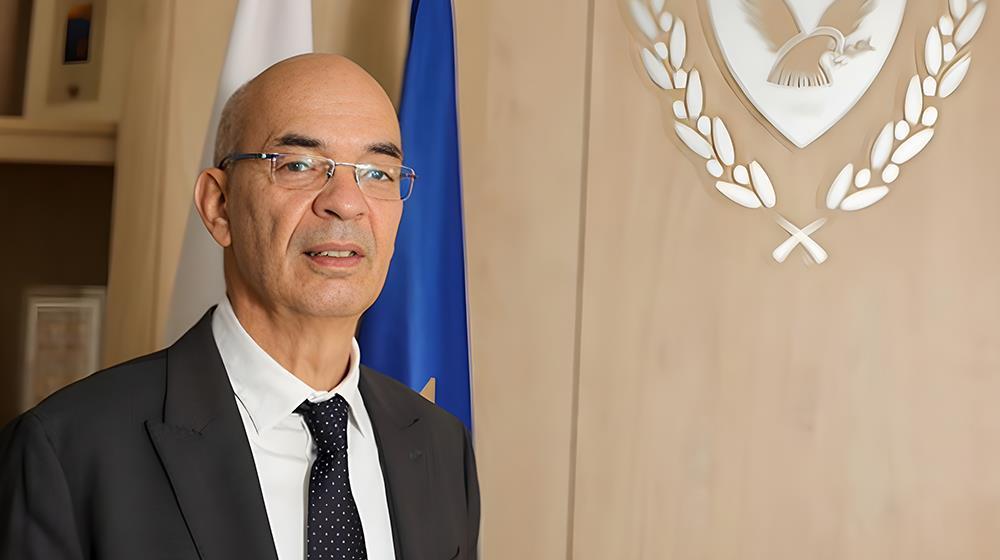
The Minister of Transport (pictured above) said in the press conference on Monday, 8 June that under the Cyprus Presidency emphasis was placed on promoting Europe’s competitiveness, resilience and strategic autonomy across all sectors, including transport.
He pointed out that the discussions highlighted the commitment to promoting cleaner and smarter transport, strengthening strategic connectivity and supply chains, as well as upgrading the role of ports and maritime industries as key pillars of trade, energy, and security.
The Minister also referred to the presentation of the progress Report on the proposal for a Regulation on Clean Corporate Vehicles, which is part of the broader automotive package.
He explained that the proposal aims to accelerate the transition to zero- and low-emission vehicles in corporate fleets, which represent a significant share of new registrations in the European Union.
He noted that the progress Report, reflecting the work carried out under the Cyprus Presidency, will guide the further advancement of the regulation in this important area.
Decarbonisation of the transport sector
A significant part of the work was also devoted to an exchange of views on the decarbonisation of transport beyond 2030. As the Minister stated, the discussion focused on how emissions reductions in the sector can be achieved while ensuring Europe’s competitiveness, affordability, resilience, and security of supply.
He recalled that transport accounts for approximately one third of total greenhouse gas emissions in the EU and that, unlike other sectors, emissions have continued to increase in recent decades.
In this context, he stressed the importance of developing clean technologies, building the necessary infrastructure, and deploying renewable and alternative fuels across all modes of transport.
The Minister also referred to two Commission initiatives signed on the margins of the Council. The first concerns Automated Driving Corridors and Testing Fields, with the participation of 17 member states, including Cyprus, aiming to accelerate the development of automated driving technologies.
The second concerns the European Transport Corridors initiative, supported by 10 Member States, which aims to accelerate the deployment of charging infrastructure for zero-emission trucks along the TEN-T.
At the same time, the Council adopted Conclusions on the EU Ports Strategy. According to the Minister, the decision sends a strong political message on the strategic importance of European ports for the Union’s economy, security, and resilience.
The Minister described the Council as the culmination of the work of the Cyprus Presidency in the field of transport, stressing that over the past six months progress was achieved on issues related to clean mobility, connectivity, transport network resilience, and the development of a strategic vision for European ports.
Shipping Deputy Minister underlines the significance of Nicosia Declaration on Seafarers
On her part, the Shipping Deputy Minister, Marina Hadjimanolis, referring to maritime issues discussed at the Council, said that during the Cyprus Presidency emphasis was placed on strengthening Europe’s competitiveness, resilience, sustainability, and strategic autonomy in the maritime sector.
She recalled the important initiative of the Cyprus Presidency, the “Nicosia Declaration on Strengthening Seafarers’ Education and Training and Promoting Equal Participation of Women in the Shipping Industry”, which was adopted in Cyprus in April by all member states.
She noted that the Declaration is also recognised in the conclusions adopted by the Council today.
As she stated, the Council adopted Conclusions on the EU Maritime Industrial Strategy, which recognise the maritime secto, including shipping, shipbuilding, ports, and related services, as a key element of Europe’s prosperity, security, connectivity, and decarbonisation.
At the same time, Deputy Minister noted that discussions confirmed broad support among Member States for continuing the decarbonisation pathway of maritime transport beyond 2030, with emphasis on the need for regulatory certainty and the promotion of investment in sustainable maritime fuels.
In this context, she also referred to the upcoming revision of the FuelEU Maritime Regulation, as well as the importance of alignment with international developments within the International Maritime Organization.
(Source: CNA)
