







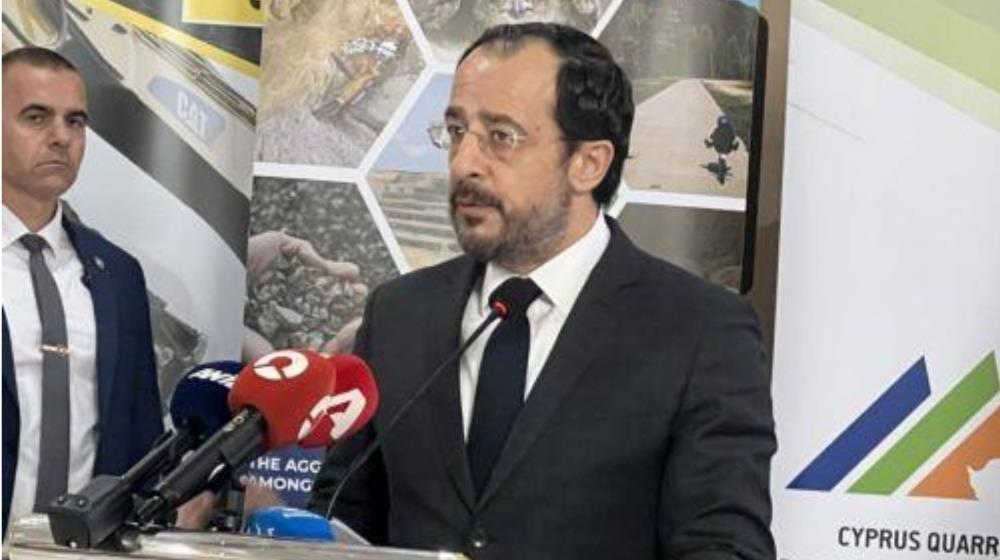
The government places particular emphasis on the responsible development of the aggregates sector President of the Republic, Nikos Christodoulides, said on Friday, addressing the General Assembly of “Aggregates Europe”, organized in Larnaca by the Cyprus Quarries Association. He added that the sector must be developed in a sustainable and environmentally responsible manner to support economic growth, progress and social cohesion.
Christodoulides said that aggregates are becoming critical not only for the European economy, but also for the strategic future of Europe, adding that with cooperation and consensus the sector stands ready to contribute to the resilience, competitiveness and strategic autonomy of Europe.
The President praised the role of the President of Aggregates Europe, Cypriot Antonis Latouros, saying that it is a fundamental role in shaping European industrial policy, a role with great influence in promoting sectors that are important to the economy and society.
Referring to Europe and its path towards its green and digital transition, he said that the importance of raw materials is becoming even more evident as renewable energy infrastructure, transport networks and digital technologies depend on secure and sustainable access to raw materials.
He went on to say that the government is working to improve the efficiency and predictability of licensing procedures, promote the rehabilitation of quarry sites and support the transition to circular economy practices, including the recycling of construction and demolition materials.
The President also said that businesses in Cyprus are investing in innovation, reducing their environmental footprint and collaborating with local communities, adding that these efforts demonstrate that economic growth and environmental sustainability can and must go hand in hand.
He also said that it is important to have secure, sustainable and diversified access to raw materials for Europe’s competitiveness and future resilience. He added that governments, industry and European institutions must work together to address common challenges, relating to access to resources, licensing procedures and environmental issues.
