






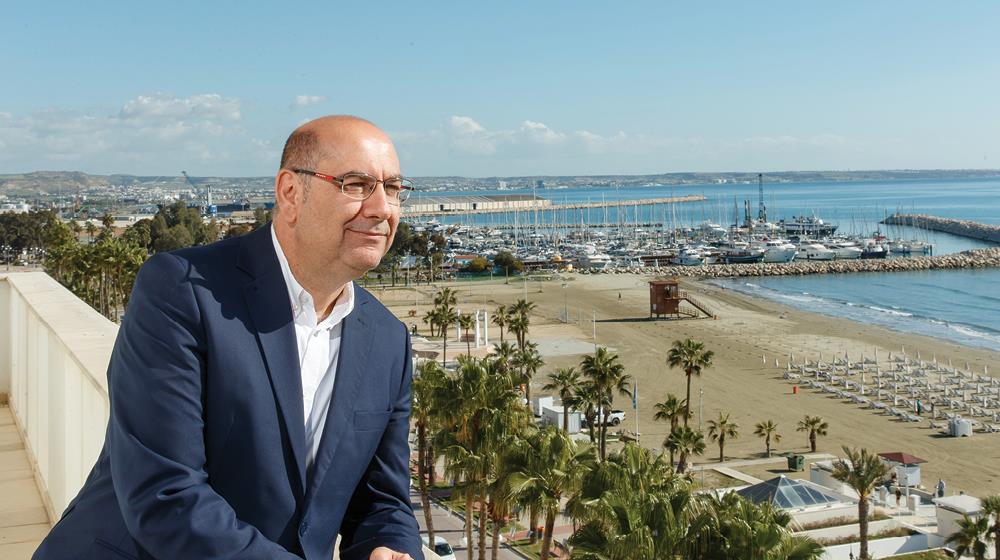
"Larnaca is entering a phase where planning, funding and execution are finally aligned," adding that, "What makes this period particularly important is that we are not speaking about isolated projects but about a coherent set of interventions that collectively redefine how the city functions, how it feels and how it grows," the city's Mayor, Andreas Vyras, suggests.
In a recent interview with GOLD magazine, Vyras talks about how Larnaca is evolving into a modern, resilient destination for investment, talent and everyday living, from mobility reforms to landmark urban projects, while also sharing what he considers to be the most pressing challenges facing Larnaca today and where he is placing immediate focus.
Among other things, he notes that, "In terms of attracting international talent, Larnaca has strong advantages. It offers quality of life, accessibility, a human-scale environment and a growing range of services and amenities. The development of educational and research infrastructure, such as the CUT School, further enhances this.”
The Mayor also discusses how the Sustainable Urban Mobility Plan is seeking to reduce the city’s structural reliance on private vehicles, while also weighing in on the boost in investor interest in the city, the battle to retain international talent, and how to ensure the upswing in real estate development does not impact the city's unique identity.
What are the projects currently in the pipeline that you believe will be truly transformative for Larnaca’s economic and urban landscape?
Larnaca is entering a phase where planning, funding and execution are finally aligned. What makes this period particularly important is that we are not speaking about isolated projects but about a coherent set of interventions that collectively redefine how the city functions, how it feels and how it grows.
Among the projects to be completed within 2026, the Multifunctional Park at Tsiakkilero, which is being inaugurated this month, and the upgrading of the Pattichio Park stand out as critical investments in quality of life. These are not simply green spaces. They constitute urban infrastructure that shapes daily life, encourages social interaction and strengthens the identity of neighbourhoods.
At the same time, projects such as the redevelopment of the Acropolis and Alkis squares and the beautification of the flood channel at Livadia combine environmental resilience with urban regeneration.
However, if we are to speak about a truly transformative impact, we must also look at what is starting in 2026. The implementation of the Sustainable Urban Mobility Plan (SUMP), with 30 km of cycle paths and 11 km of bus lanes, is arguably one of the most strategic interventions. It fundamentally changes how people move within the city and how public space is allocated.
Equally important is the development of the CUT School of Marine Sciences, Technology and Sustainable Development. This project elevates Larnaca’s academic and research footprint and creates a strong foundation for knowledge-based economic activity.
Finally, the relocation of municipal services to the Old Hospital site is more than an administrative upgrade. It creates a new civic centre, revitalises an important urban area and improves accessibility for citizens. Taken together, these projects are transformative, not only because of their scale but because they reflect a shift towards a more sustainable, inclusive and forward-looking city model.
How does the Sustainable Urban Mobility Plan seek to reduce the city’s structural reliance on private vehicles and when can residents expect to see tangible improvements?
The SUMP represents a fundamental shift in how we approach movement within the city. The objective is clear. We must reduce our reliance on private vehicles and create a more balanced system where public transport, cycling and walking play a central role. The introduction of dedicated bus lanes will improve the reliability and efficiency of public transport. At the same time, the development of an extensive cycling network creates viable alternatives for short-distance travel.
Equally important are interventions such as widening pavements, improving crossings and enhancing accessibility for all users, including people with disabilities. Change will not happen overnight. However, residents will begin to see tangible improvements as early as the initial phases of implementation in 2026, particularly in key corridors where interventions are prioritised. The success of the Plan will depend not only on infrastructure but also on behavioural change. Our role is to create the conditions that make sustainable choices the easy choices.
What do you see as the most pressing challenges facing Larnaca today and where is your immediate focus in terms of policy, infrastructure and long-term strategic planning?
Larnaca’s main challenge today is managing growth in a way that remains balanced and sustainable. For many years, the city was perceived as lagging behind. Today, the opposite is true. Momentum is building and this brings both opportunities and pressures.
One of the most pressing issues is infrastructure readiness. As investment increases, the demand for road networks, public transport, utilities and public services grows accordingly. This is why our immediate focus is on upgrading core infrastructure while planning ahead for future capacity.
Another critical challenge is mobility. Just like every other city in Cyprus, Larnaca has historically been heavily dependent on private vehicles. Changing this behaviour requires not only infrastructure but also a cultural shift. The implementation of the SUMP is central to addressing this.
Housing affordability is also an emerging concern. As demand increases, we must ensure that development does not exclude local communities or create social imbalances. From a policy perspective, our approach is structured around three priorities: improving the everyday functionality of the city, strengthening environmental sustainability, and ensuring that growth benefits all residents.
In terms of long-term strategy, the focus is on creating a resilient city. This means investing in green infrastructure, enhancing public spaces, strengthening the economic base and ensuring that planning decisions are coherent and forward-looking.
Investor interest in Larnaca is clearly on the rise. What are investors seeing today that may have been previously overlooked?
What investors are recognising today is something that has always been present in Larnaca but perhaps not fully appreciated. First, there is the city’s strategic location. Larnaca combines proximity to the airport, access to the coastline and connectivity to the capital and the rest of Cyprus. This makes it highly attractive for both business and lifestyle. Second, there is the availability of space and opportunity. Unlike more saturated urban centres, Larnaca offers room for thoughtful development. Investors see the potential to create projects that are integrated, not fragmented. Third, there is a shift in perception. Larnaca is no longer seen as a secondary option. It is increasingly viewed as a city with its own identity and trajectory.
How can the city attract and retain international talent?
In terms of attracting international talent, Larnaca has strong advantages. It offers quality of life, accessibility, a human-scale environment and a growing range of services and amenities. The development of educational and research infrastructure, such as the CUT School, further enhances this. Retention, however, depends on consistency. Talent remains where there is reliability in services, quality in urban experience and clarity in long-term vision. This is where the role of the Municipality becomes critical.
Larnaca is experiencing a notable upswing in real estate development. How do you view the current trajectory of the market and what impact is this growth having on the city’s social fabric?
The current trajectory of the real estate market in Larnaca is positive and, importantly, more structured than in previous cycles. We are seeing a mix of local and international investors, ranging from developers focused on residential projects to those exploring mixed-use and hospitality developments.
What differentiates this phase is that development is increasingly aligned with broader urban planning objectives. There is a greater emphasis on quality, design and integration with the surrounding environment. At the same time, we must acknowledge that rapid growth can have social implications. Rising property values can create pressure on local communities and there is always the risk of uneven development. Our approach is to ensure that growth remains inclusive. This means encouraging developments that contribute to the public realm, enhancing accessibility and maintaining a balance between investment-driven growth and community needs. The goal is not simply to grow but to grow in a way that strengthens the social fabric of the city.
How can you ensure that development does not come at the expense of Larnaca’s identity or lead to the planning imbalances seen in other urban centres?
This is one of the most important questions for any city undergoing transformation. For Larnaca, the answer lies in proactive planning rather than reactive measures. We place strong emphasis on urban design principles that prioritise human scale, accessibility and environmental integration. The expansion of green spaces, the creation of pedestrian-friendly areas and the promotion of alternative mobility options are all part of preserving the city’s character. At the same time, planning regulations and development frameworks are being applied with greater consistency. This ensures that new projects contribute positively to the urban landscape rather than disrupt it. Identity is not something static. It evolves. The challenge is to guide this evolution in a way that remains authentic. For Larnaca, this means maintaining its openness, its accessibility and its connection to the sea, while embracing modernity.
If someone visits Larnaca five years from now, what do you hope will surprise them most?
I hope they will be surprised by how complete the city feels – a Larnaca where public spaces are vibrant and well-used; where moving through the city is easier, more pleasant and less dependent on the car; where neighbourhoods have their own identity, supported by quality infrastructure and green spaces. I hope they will notice the balance. It will be a city that has grown but not lost its character; a city that offers opportunities but remains accessible; a city that feels modern, yet authentic. Most importantly, I hope they will feel that Larnaca is a city designed for people – not just for visitors or investors but for all those who live, work and build their lives here every day. That is ultimately the measure of success.
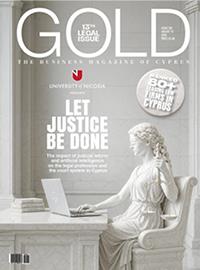
This interview first appeared in the April edition of GOLD magazine. Click here to view it.
