




Larnaca does not compete on scale. It does not overwhelm, nor does it attempt to mirror the sharper edges of Cyprus’ larger cities. For Andreas Karapatakis, Chairman of AEK Larnaca FC and CEO of AJK Wealth Management Group, its strength lies not in a single booming sector or a specific wave of investment but in the steady, cross-sector momentum that is quietly reshaping its future.
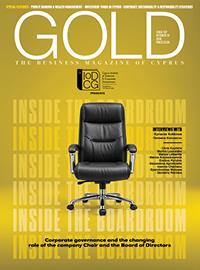
In a recent interview with GOLD magazine, Karapatakis shares his thoughts on the city's current economic positioning within Cyprus and what makes it stand out in terms of investment appeal.
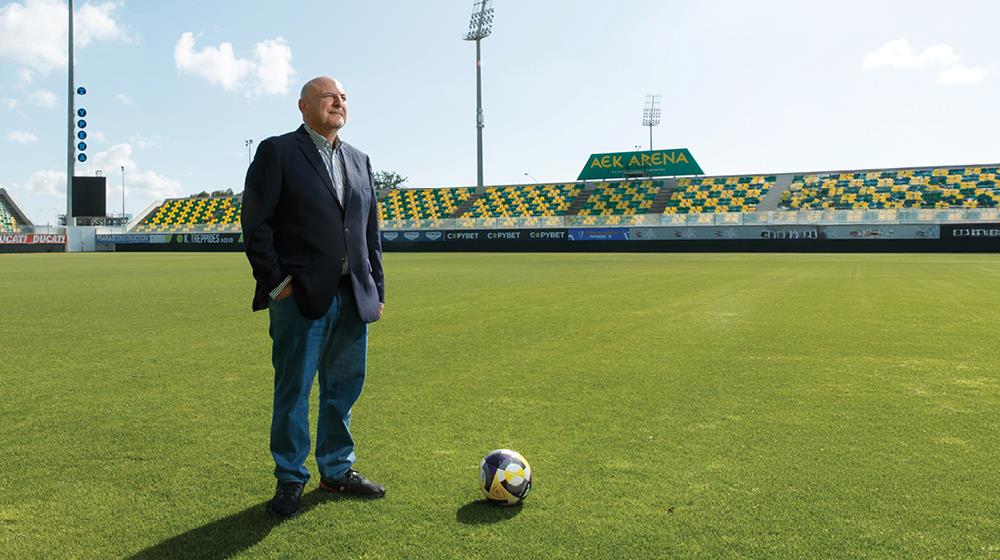
Among other things, he talks about how the success of the privately-led AEK Arena project demonstrates what is possible for Laranca and its potential for investors.
Karapatakis also weighs in on the city’s maturity as a professional services ecosystem and suggests what would it take for Larnaca to become a credible destination for international capital allocation.
In addition to discussing recent investor activity in Larnaca, the expert also shares what he considers to be among compelling untapped opportunities in Larnaca and how he assesses its investment outlook over the next decade.
How would you assess Larnaca’s current economic positioning within Cyprus and what distinguishes it from other cities in terms of investment appeal?
Larnaca remains relatively compact compared with other cities in Cyprus and that is one of its strengths. It is easy to move around, which makes both business and daily life more efficient. At the same time, it offers most of what someone would expect from a larger city, while still maintaining a lower cost base than places such as Nicosia, Limassol or Paphos. There is also still room for further development, which continues to create opportunity.
You are the Chairman of AEK Larnaca FC, whose home ground – the AEK Arena – is widely seen as a successful privately led project. What did it demonstrate about what is possible in Larnaca? Could further investment in sports or cultural infrastructure act as a meaningful economic catalyst?
The AEK Arena showed that projects of this scale can be delivered in Larnaca with local expertise, coordination and commitment. It was completed in record time (Phase 1 in nine months) and at a significantly lower cost than that of similar stadiums, largely with local contractors, which indeed reflects the capability that exists within the city. At the same time, the project was embraced by the community and has become part of the city’s identity. Through AEK, we place strong emphasis on values such as fair play and discipline, and we encourage young people to engage with sport. These elements are just as important as the infrastructure itself. Further investment in sports or cultural infrastructure can contribute both socially and economically, particularly when it strengthens community engagement alongside development.
You are also the CEO of AJK Wealth Management Group, which is based in Larnaca. Would you say that its competitive advantages have often been underestimated? How would you assess the maturity of the city’s professional services ecosystem?
One of Larnaca’s most underestimated advantages is how practical it is. Its compact nature allows people to move efficiently between meetings and commitments, while still offering a high quality of life, with the sea, the airport and key amenities all close by. In terms of professional services, the ecosystem is well established and capable of supporting a wide range of business activity. There is already a solid base in place, which allows companies to operate effectively without unnecessary complexity.
From a wealth management perspective, what would it take for Larnaca to become a credible destination for international capital allocation? For example, can you envisage Larnaca attracting family offices and boutique investment firms?
International capital tends to evaluate the country before selecting a specific city. Within that context, however, Larnaca can play a role given its accessibility, cost structure and ease of doing business. There is also room for further development of higher-quality office space and services that would be suitable for family offices and boutique firms, alongside larger corporates.
How would you characterise recent investor activity in Larnaca?
We have seen considerable activity across sectors such as tourism, hospitality, real estate and professional services over the past couple of years. This suggests a gradual strengthening of the city’s overall profile rather than a single concentrated trend.
Looking ahead, what do you see as the most compelling untapped opportunities in Larnaca and how do you assess its investment outlook over the next decade?
Larnaca has the ability to support a range of sectors while remaining efficient and accessible, which is part of its appeal. Areas such as real estate, hospitality and professional services continue to evolve. Based on current momentum, the outlook over the next decade appears positive, with further development likely to broaden the city’s economic base.
This interview first appeared in the April edition of GOLD magazine. Click here to view it.