






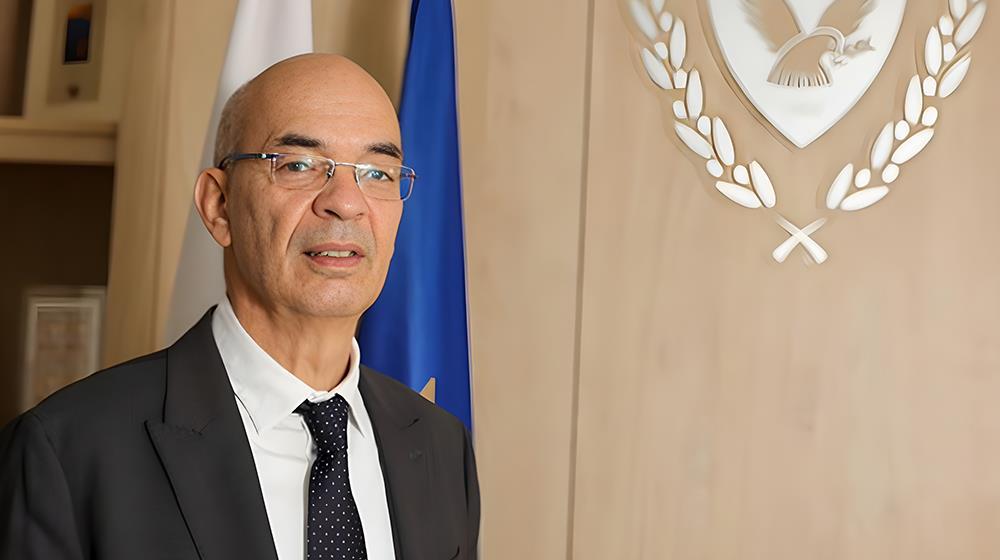
Cyprus has demonstrated in practice its role as a reliable transport hub in the region, Minister of Transport, Communications and Works, Alexis Vafeades said, at the meeting of the ETF Executive Committee, held in Cyprus Workers' Confederation (SEK) offices in Nicosia. The meeting took place under the Cyprus’ Presidency of the Council of the EU.
The Minister said that the ETF, representing more than five million workers across all modes of transport, is a key partner in advancing social rights, fair working conditions, and safety across the sector. “At a time of increased challenges for the transport sector, safety has become a central pillar of policy, requiring coordinated action and continuous adaptation,” he said.
The Minister noted that in Cyprus, the Ministry of Transport, Communications and Works is developing and implementing a coherent regulatory framework to ensure the safe operation of transport across all sectors. This framework covers both infrastructure, such as airports and ports, and the activities of transport professionals, ensuring high safety standards throughout the system.
Through licensing procedures, inspections, and close cooperation with competent authorities, “we ensure that legislation is effectively implemented in practice. At national level, road transport checks are carried out in coordination between the Department of Road Transport inspectors, the Police, and the competent services of the Ministry of Labour,” he noted, stressing that this coordinated approach strengthens enforcement and contributes to improved road safety.
This effort is further reinforced through cooperation with other EU Member States, including the exchange of expertise, know-how and best practices, he added.
At the same time, the Minister pointed out that the government places strong emphasis on ensuring safe working conditions for transport workers across all sectors. The rapid growth of delivery services and new mobility patterns creates new challenges on the road network, highlighting the need to enhance safety and reduce risks faced daily by workers in the sector, he said.
“In a context of increased geopolitical challenges and disruptions in transport, Cyprus continues to ensure the stability and reliability of its transport system. Our airports operate smoothly and in full compliance with international safety standards, ensuring uninterrupted service for passengers and maintaining high levels of trust,” the Minister highlighted.
He also added that Cyprus has demonstrated in practice its role as a reliable transport hub in the region, actively contributing to humanitarian operations, such as the “Amalthia” initiative. “Through such actions, we reinforce both the safety and reliability of transport in a demanding geopolitical environment,” Vafeades said.
He added that “we also closely monitor developments in aviation and actively participate in European processes shaping the future of air connectivity.”
Referring to key policy priorities, the Minister focused on military mobility, saying that “we recognise its strategic importance for the European Union, while supporting a balanced approach that fully respects labour rights and safety standards.”
On crisis management, he underlined that support measures must benefit not only businesses but also workers, through targeted social policies, skills development and job protection.
On enforcement in road transport, “we stress once again that effective enforcement is essential for fair competition and decent working conditions.”
On the revision of the Air Services Regulation, the Minister noted that “we emphasise the importance of connectivity for island Member States such as Cyprus, where access is vital for economic and social cohesion.”
He further added that the Ministry is also mindful of broader challenges, including labour shortages, the need to attract young people and women to the sector, and the importance of ensuring safe and respectful working environments.
At the same time, he continued, the green transition must remain fair and inclusive, ensuring that no worker is left behind.
“Cyprus attaches great importance to social dialogue and constructive engagement with social partners and remains committed to close cooperation with ETF throughout the ongoing Cyprus Presidency of the Council of the European Union, working together to advance key transport priorities,” Alexis Vafeades concluded.
In his address, SEK’s Secretary General, Andreas Matsas, said that Cyprus, chairing the Council of the EU, could serve as a bridge between Europe and the wider Middle East in setting footing and creating the necessary and sufficient conditions to shield the economy and protect workers, speeding up the process in promoting Europe's strategic autonomy.
He added that “it is our duty and aim to work towards the establishment of a stronger Europe that delivers for workers and enterprises in such a way, that economic growth will be the vehicle in reaching social justice and cohesion,” noting that collective bargaining leading to collective agreements should be the mean in reaching dignity in employment, decent working conditions, pay rise, safe workplaces and quality training opportunities.
Matsas also mentioned that the Nicosia Declaration, agreed by the ETUC Executive Committee last month, calls urgently on Europe's leaders to ensure that Europe's economic transformation is also social in its orientation, and it is promoted in a just and fair way.
(Source: CNA)
