








"Our priority is to further strengthen competitiveness through new and upgraded sponsorship schemes, support industry and the internationalisation of Cypriot businesses," Minister of Energy, Commerce and Industry, Michael Damianos has said.
In the context of a recent interview in InBusiness magazine, Damianos also discusses the appropriate and urgent actions being taken by his Ministry. Priorities have been set within his busy agenda, which he lists for us, at a time when the barrage of developments, geostrategic, international or generally Cypriot, imposes additional planning, often decisive for the desired normality of the Cypriot market and economy.
The Minister, in addition, provides information and answers on issues including energy transition and security, investment in extroversion, price control, evaluation, and reacting to events in the Middle East.
Minister, you recently took on one of the most critical portfolios for the country's economy. What are your first main priorities, starting with the energy sector?
The first months of my term are focused on priorities that are directly linked to the resilience and competitiveness of the Cypriot economy. In the energy sector, our main goal is to promote the green transition in a way that simultaneously ensures energy sufficiency and more affordable, predictable prices for households and businesses. Among other things, we are working to reduce cuts from renewable sources, to lift our energy isolation through initiatives for electrical interconnections with neighboring countries, and also to generally accelerate our energy planning, including the utilisation of natural gas.
How are you progressing within the entrepreneurial landscape in general?
Our priority is to further strengthen competitiveness through new and upgraded sponsorship schemes, support industry and the internationalisation of Cypriot businesses. At the same time, we are promoting essential reforms such as the digital modernisation of the Registrar of Companies and the promotion of the identity of Cypriot products through Cyprus Made. We will also work to strengthen consumer protection through modern digital tools, including a new, upgraded electronic platform for monitoring petroleum prices.
First steps for the energy sector
The energy transition is a key European priority. How can Cyprus accelerate the transition to clean energy without increasing costs for households and businesses?
The energy transition can only be accelerated if it is combined with security of supply and affordability for households and businesses. For example, the launch of the competitive electricity market from 1 October 2025, as part of the coherent strategy we are implementing, creates conditions for greater flexibility, more competition and, gradually, better choices for consumers.
At the same time, we are investing decisively in energy storage, grid modernisation and smart meter installation, so that more RES can be integrated into the system, without increasing clean energy cuts. In addition, we are leveraging targeted grant schemes for homes and businesses, enhancing energy efficiency and reducing bills. In any case, the green transition also requires reliable infrastructure, such as the natural gas import and regasification terminal and electrical interconnections, so that Cyprus can acquire a cleaner, resilient and competitive energy model.
What are the next steps for the exploitation of hydrocarbons in the Cypriot EEZ?
Our next steps are focused on accelerating the development of the already discovered fields and their timely commercialisation. I would like to remind you that to date we have six significant discoveries - Aphrodite, Calypso, Glaucus, Cronos, Zeus and Pegasus - with estimated total quantities of natural gas (gas initially in place) of approximately 20 trillion cubic feet (Tcf). Our priority is progress in the Aphrodite and Cronos fields, where substantial steps have already been taken at the level of planning, intergovernmental and commercial agreements, in order to reach production as soon as possible.
Could we have more information about each of these?
For Aphrodite, which is intended for use in the Egyptian market, we expect the licensed consortium to complete the final and detailed engineering design for the development of the field (FEED) by January 2027, with the Final Investment Decision to be taken within the same year. From the Cronos field, the production of the first natural gas from the Cypriot EEZ is expected in 2028, with the consortium's final investment decision to be taken in the coming months. It has been agreed that the gas be liquefied in Egypt and exported to Europe.
What is the significance of this course for the country's energy security?
The importance of this course of action is multifaceted. The exploitation of domestic natural gas reserves strengthens Cyprus' geostrategic position, contributes to the diversification of energy sources in the region and creates prospects for greater security of supply. At the same time, it strengthens our cooperation with neighbouring countries and Europe, offering significant economic and development benefits for the country.
More foreign investment
How can Cyprus attract more foreign investment in high-value-added sectors?
The investment attraction strategy, which the Government has been consistently implementing for the last three years and which is adapted according to the changing conditions of the international investment environment, combines reliability, speed and a clear orientation towards innovation. Based on Vision 2035, our goal is to attract quality and productive investments in high-value-added sectors such as technology, research, the digital economy and the green transition, so that Cyprus can establish itself as a reliable European base for international businesses.
What actions are we taking in this direction?
In this direction, we are leveraging the country's competitive advantages, such as a stable business and tax framework, an enhanced intellectual property regime, the digital upgrading of the state and incentives to attract specialised human resources. At the same time, we are strengthening the innovation ecosystem through strategic partnerships, modern infrastructure and targeted international promotion. The goal is an environment friendly to serious investments, which create quality jobs, transfer know-how and strengthen the long-term competitiveness of our economy.
Vision and strategy of extroversion
The industrial sector of Cyprus is in a transitional phase. How can its competitiveness be strengthened?
Recognising the challenges faced by businesses in the manufacturing sector, our ministry is preparing a strategy and action plan to enhance the competitiveness and internationalisation of Cypriot industry for the 2026-2030 period. The aim is to provide businesses with a clear and stable strategic guidance framework, encouraging them to invest in innovation, technology and their international presence. Particular emphasis is being placed on strengthening export activity, mainly in products with high added value and export potential.
Among other things, the strategy aims to improve the business environment, facilitate the green and digital transition, strengthen human resources, facilitate access to financing and enhance internationalisation.
How are the aforementioned objectives being achieved?
Our ministry periodically implements programmes that aim to reduce the energy costs of businesses, facilitate their digital transition, and enhance their competitiveness. We are currently working on a plan that aims for businesses to install energy storage systems.
The extroversion of Cypriot businesses is a key priority. Which markets do you consider to be offering the greatest opportunities?
Despite the increasing geopolitical uncertainty, the prospects for the extroversion of Cypriot businesses in 2026 remain positive. The greatest opportunities are primarily located in the European Union markets, which constitute a natural growth area for Cypriot companies, but also in the Middle East and Asia, where significant scope is being created for further expansion of our presence.
Which sectors seem to have the best prospects?
In particular, in the services sector, we see strong momentum in sectors such as information and communication technologies, maritime services, higher education, innovation and start-ups, financial services and investment funds. I note in this regard that during the five-year period 2020-2024, services exports almost doubled from €14.9 billion to €29.6 billion, currently accounting for over 80% of total exports and over 70% of GDP.
How do you assess the course of exports of Cypriot products?
The export trend of Cypriot products is positive with significant performances in sectors such as pharmaceuticals and Halloumi. In 2025, domestic exports, excluding petroleum products, amounted to €1.37 billion, an increase of 10.5% compared to 2024. Our aim is to further support this trend, through targeted policies that enhance the competitiveness, quality and international visibility of Cypriot businesses and products.
Evaluating the war
How do the chaotic situation in the Middle East and the closure of the Strait of Hormuz affect the energy and trade sectors?
The unrest in the Middle East inevitably affects, even temporarily, global energy trade and increases volatility in oil and fuel prices. At the same time, it affects freight transport, as it may cause delays in maritime and other supply chains, increased transport and insurance costs, as well as broader uncertainty in the movement of goods.
How is your ministry acting amid these developments?
Our priority is to closely monitor the situation in order to prevent shortages and unjustified price increases. Our ministry is continuously monitoring the supply chain of goods and fuels, while we are in continuous cooperation with the Ministry of Finance to assess the course of prices and, where necessary, to consider targeted support measures.
'Taming' the increases
A high cost of living is a key concern for citizens. What initiatives is your ministry undertaking to protect consumers and ensure the smooth functioning of the market?
As a ministry, we place particular emphasis on consumer protection and the smooth functioning of the market. Especially today, with the developments in our region that have temporarily affected global energy trade, the competent Consumer Protection Service is systematically monitoring the supply chain of goods and fuels in the Republic of Cyprus, with the aim of avoiding shortages and uncontrolled or unjustified price increases. At the same time, as I mentioned in my previous answer, we are in constant communication and cooperation with the Ministry of Finance to monitor the overall course of prices and evaluate potential targeted actions to support citizens, if deemed necessary.
Could you give us specific examples?
We are already working to significantly enhance our fuel price monitoring tools with a new and advanced system, which leverages algorithms and artificial intelligence to identify anomalies in wholesale and retail prices early, so that we can intervene based on evidence. The system is expected to be ready in April. At the same time, we are moving forward with the creation of a single central online platform for non-compliant or dangerous products, enhancing safety and transparency in the market.
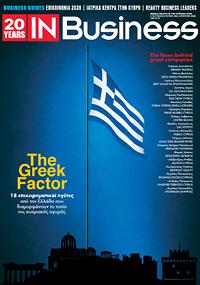
This interview first appeared, in Greek, in the April 2026 edition of IN Business magazine. Click here to view it.
