








On 2 March 2026, the Strait of Hormuz, the world's most critical energy passage, effectively closed. Approximately 20% of global seaborne oil trade has been disrupted. Crude oil has surpassed $100 per barrel for the first time in four years. This is the largest disruption to the energy market since the 1970s energy crisis.
For Cyprus and the broader Mediterranean, this is not just a geopolitical crisis. It is the violent acceleration of an energy transition that many businesses still treat as a future challenge.
The energy tech market is advancing rapidly, but without the time to mature. And this creates a trap that few businesses recognise in time. The geopolitical developments we are witnessing today leave no room for waiting. The transition is accelerating fast and the opportunity for those who move now is unique.
In this context, businesses in the sector follow one of three models.
First, they build a technical product, well designed, but without commercial infrastructure. With the conviction that when the market matures, the product will speak for itself. It won't. A product without trust has no distribution mechanism when the market scales. The customers who should find them first will find someone else, someone who spent these early years building the relationship, not the feature.
Second, they build a "wrapper" brand, without the ability to meaningfully support the product behind it. The external image runs ahead of the reality. This creates a specific kind of failure. The market hears the signal, engages, and then hits the reality. First impressions in premature markets are disproportionately sticky. A trust failure at this stage is significantly harder to recover from than one at growth scale.
Third, they simply wait. They use the complexity of the market, the regulatory frameworks, the multi-layered commercial relationships, the immature consumer base, as a reason to defer the commercial conversation. They watch. They map. They prepare. What they are actually doing is ceding the window to the businesses that have decided complexity is the opportunity, not the obstacle.
There is however a fourth model. And it is the only one that wins.
The businesses that will own this category are running both tracks simultaneously. They build product and trust in parallel, now, before the window closes. They do not treat brand and product as sequential priorities. They treat them as the same investment made in two directions at once. The brand builds the relationships and credibility that make commercial conversations possible. The product builds the delivery infrastructure that makes those conversations credible. Neither works without the other.
This is not a brand strategy argument. It is a commercial timing one.
In the energy tech market, trust is not a marketing variable. It is the product itself. You are asking the customer to hand over their energy infrastructure. Their home, their fleet, their grid connection. That decision is not made on price or features. It is made on trust.
Category leaders are not built when the market matures. They are built in the period before. The trust that leads to winning customers at scale must be built before the mature market arrives. You cannot buy it retroactively.
A business that has not built that trust by the time the market is ready does not have a marketing problem.
It has nothing to sell.
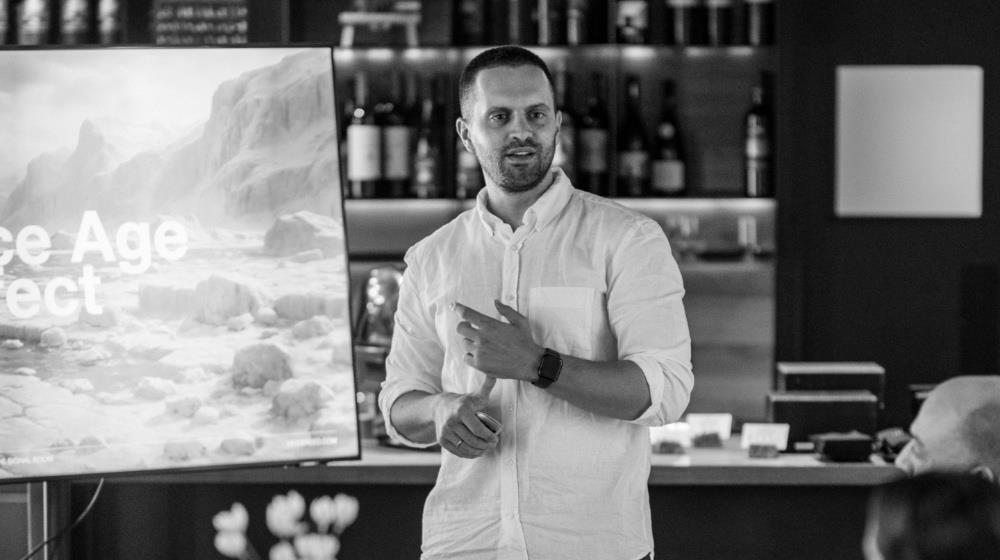
Signal Briefing, 23 April. Closed online session for energy tech founders and operators from the UK, Greece and Cyprus. Free to attend, application required. Limited places.
*Demetris Stefani: Trust Architecture for Growth, Growth Architect & Strategic Advisor, Hivebreed
