








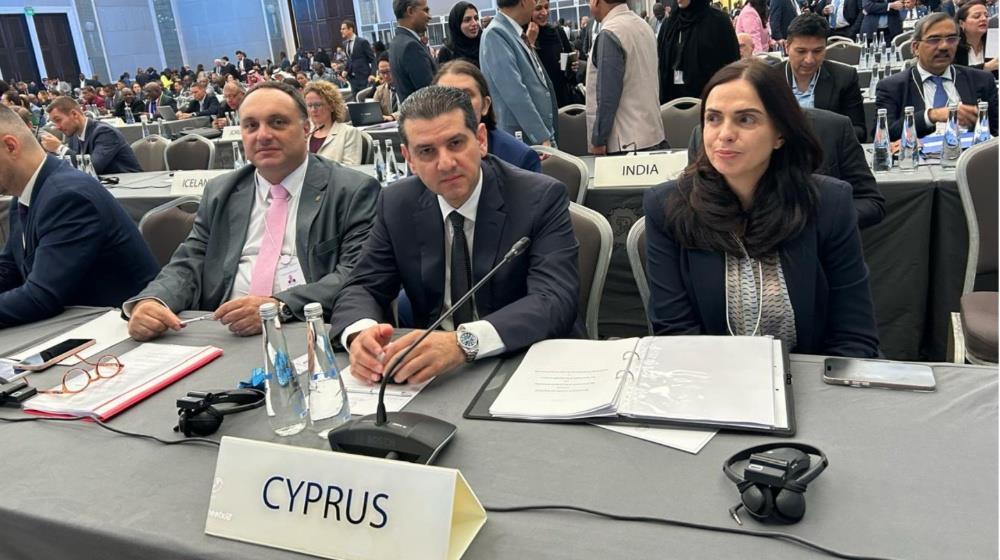
Issues concerning the strengthening of energy networks, the security of energy supply and the progress of the energy transition were discussed at the Transport, Telecommunications and Energy Council of the European Union, which took place in Brussels, under the Cypriot Presidency.
During a press conference following the conclusion of the Council’s proceedings on 16 March, the Minister of Energy, Commerce and Industry, Michael Damianos, noted that the discussions fall within the broader vision of the Cypriot Presidency for a Europe that is competitive, resilient and strategically independent, with energy constituting a key pillar of this effort.
The Minister announced that the European energy networks package was discussed, with Ministers holding a policy exchange of views on the further development and interconnection of electricity networks. The Minister underlined that there was broad consensus among Member States on the need to strengthen interconnected electricity networks, while related work is expected to continue with the aim of reaching a general approach in June.
He described the creation of new cross-border interconnections as vital, as well as the full utilisation of existing energy infrastructure to its maximum capacity.
Damianos added that this will ensure greater energy flows, enhance competitiveness and contribute to addressing the high cost of energy.
The affordability of energy prices
He also pointed out that Ministers discussed the issue of the affordability of energy prices, presenting national measures that have been taken to support households and businesses, while ways to strengthen the Energy Union in both the short and long term were examined.
Accelerating the transition to renewable energy sources, electrification and the development of energy infrastructure, he noted, constitutes the most sustainable approach to reducing energy costs, while at the same time strengthening Europe’s competitiveness and autonomy. “This is even more important during periods of external energy shocks, when we need to intensify our efforts to maintain stability and ensure energy security,” he added.
Reference was also made to the impact of recent geopolitical developments in the Middle East on energy prices, with Damianos noting that these developments heighten concerns and underline the importance of a more resilient and interconnected European energy system.
He added that the EU’s energy transition requires investments of approximately €660 billion annually, while current investments amount to about half of that figure. He stated that investments in clean energy production, energy efficiency and decarbonisation are considered critical for Europe’s energy resilience and its industrial future.
As he explained, public resources alone cannot cover this gap, which is why the mobilisation of private capital through stable long-term financial instruments is crucial. In order to bridge the investment gap, the Minister stressed that a predictable regulatory framework must be created, targeted investment risk-reduction tools must be developed, and private capital must be better linked with energy projects.
Investments in energy infrastructure
At the same time, he noted that Ministers discussed ways to mobilise investments in energy infrastructure, including electricity networks, hydrocarbon infrastructure, hydrogen networks and nuclear capacity.
Damianos also added that an exchange of views took place with Ministers from Ukraine and Moldova. The Minister reaffirmed the solidarity and support of the European Union for the two countries, while condemning attacks on Ukraine’s energy infrastructure. He stated that participants also discussed issues of regional cooperation and energy security, recognising the resilience of Ukraine and Moldova in the face of ongoing geopolitical challenges.
He emphasised that today’s discussions confirmed the commitment of Member States to continue negotiations on solutions that will strengthen the Energy Union and contribute to the security of energy supply and the competitiveness of the European economy.
(Source: CNA)
