




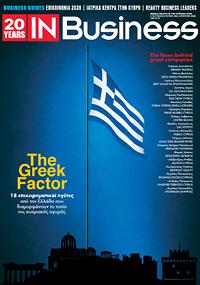




"M&A is particularly compelling when addressing succession challenges in family-owned enterprises – prevalent in Cyprus’ SME-dominated economy – where it facilitates smooth generational transitions, resolves inheritance issues and ensures long-term sustainability and competitiveness," Panikos Teklos, Co-Founder & Senior Partner, XPADIA, underlines.
In a recent interview with GOLD magazine, he also notes that "Considering the prevailing positive indicators, the outlook for 2026 in Cyprus’ M&A market remains positive and is expected to further invigorate activity."
Among other things, Teklos also points out that, "Rapid technological advancements continue to exert pressure on businesses for swift adaptation, rendering M&A a critical “make-or-break” strategy in numerous cases."
2025 was defined by geopolitical conflict, shifting trade policy and market volatility. How did these forces affect deal flow and valuations on the global stage?
In 2025, geopolitical conflicts – including the protracted Ukraine war, escalating US-China tensions and Middle East instability – combined with shifting trade policies and market volatility, created a highly selective M&A environment. Conflicts and protectionist trade policies increased policy risk and reshaped deal geography, whilst market volatility influenced pricing, timing and the structure of transactions. Global deal volume declined significantly, with transaction numbers falling by 9% compared to 2024 (and on track for the lowest annual total in over a decade), as uncertainty prompted caution, particularly in cross-border and mid-market deals exposed to tariffs, supply chain risks, and energy disruptions.
On the other hand, total deal value surged dramatically – up by 15% to a projected ~$4.8 trillion for the full year (second highest on record, +36-41% YoY) – driven by a record wave of megadeals. This “fewer but bigger” dynamic reflected a strategic focus on a transformative scale in resilient sectors like AI-powered technology, defence and infrastructure, where well-capitalised buyers (including PE firms with significant dry powder) pursued high-conviction opportunities amid time delays. Where deals did proceed, valuation negotiations became more complex because buyers and sellers had differing views on risk, often leading to the use of earnouts and flexible pricing mechanisms. Some sectors (e.g., tech with AI leadership) sustained high valuations due to growth prospects, while others (e.g., cyclical consumer or materials) saw valuations pressured by trade exposure and cost uncertainty.
Did Cyprus largely track global M&A trends in 2025 or did local conditions, such as regulation and market depth, drive a different outcome?
2025 was an exemplary year for Cypriot M&A volume, which was higher by 41% relative to 2024, thereby making Cyprus largely diverge from global M&A trends, exhibiting robust, counter-cyclical growth in activity, fueled by local resilience and sector-specific drivers. Local conditions – including recent upgrades of the Cyprus economy by several credit rating agencies, reflecting positive economic performance and fiscal discipline, as well as stable regulation and the business-friendly environment – drove this divergence, enabling a steady domestic and inbound deal flow despite global caution. Cypriot M&A was led by corporates pursuing strategic objectives rather than financial sponsors seeking returns through buyouts, highlighting a local characteristic of deal flow. This indicates both the longer-term horizon behind such transactions as well as the success of the promotion of the country as a reliable and resilient EU hub and gateway.
Which sectors and/or segments in Cyprus emerged as the most active or attractive for transactions and which, if any, look most promising going forward?
Technology, financial services and hospitality were the sectors that dominated local M&A in 2025, aligning them with domestic strengths. Some selected high-profile transactions included major banking deals by Eurobank and Alpha Bank, and significant activity in the insurance sector with deals by Bank of Cyprus, Eurobank, Alpha Bank and Grazer. Other sectors like healthcare, tourism, real estate, education, food, energy, media and retail complemented the picture for 2025. We remain confident for 2026, anticipating a numerical increase in mergers and acquisitions as more Cypriot family-owned businesses turn to M&A to address succession issues, ensure sustainability and enhance competitiveness.
In today’s environment, when does M&A make strategic sense for Cypriot businesses and what benefits does it offer?
M&A is particularly compelling when addressing succession challenges in family-owned enterprises – prevalent in Cyprus’ SME-dominated economy – where it facilitates smooth generational transitions, resolves inheritance issues and ensures long-term sustainability and competitiveness. Further triggers include seeking scale and synergies through sector consolidation, unlocking efficiencies, mitigating rising regulatory, compliance and technology costs, accessing new markets or partnering with strategic investors pursuing growth alliances. Benefits are multifaceted: enhanced competitiveness and market positioning; access to capital and talent/expertise; tax-efficient structures leveraging Cyprus’ benign tax regime; risk diversification; exit opportunities for founders and shareholders; and value creation through portfolio optimisation or legacy preservation as a strategic asset.
Do you expect 2026 to resemble the dynamics of 2025 or is the market entering a different phase? If so, what will be the key drivers of that shift?
Considering the prevailing positive indicators, the outlook for 2026 in Cyprus’ M&A market remains positive and is expected to further invigorate activity. The combination of low borrowing interest rates and the tax efficiencies created by the recent Tax Reform is expected to unlock capital for organic or inorganic expansion, while entities strengthened through RRF funding are anticipated to pursue strategic partnerships for sustained growth.
At the same time, rapid technological advancements continue to exert pressure on businesses for swift adaptation, rendering M&A a critical “make-or-break” strategy in numerous cases. Additionally, interest expressed by major institutional investors in the Middle East (Saudi Arabia, UAE, Qatar) and Asia (primarily India) positions Cyprus as an attractive alternative gateway to Europe. Lastly, the recent resurgence of M&A in Greece acts as a catalyst, making Cypriot companies compelling targets.
This interview first appeared in the January edition of GOLD magazine. Click here to view it.
