




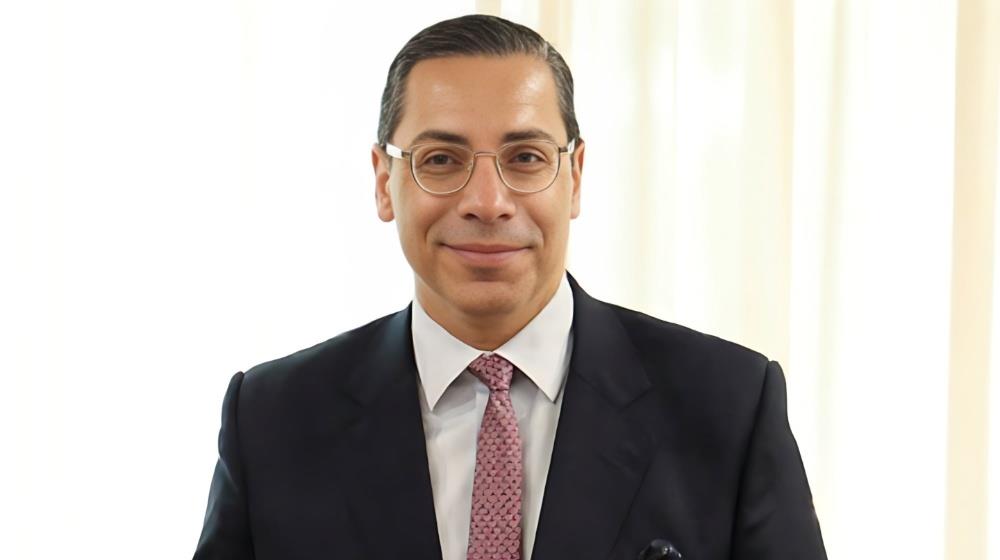
Minister of Foreign Affairs, Constantinos Kombos, has presented the priorities of the Cyprus Presidency of the Council of the EU, in the fields of development cooperation, international partnerships, external financing, and humanitarian assistance, during a session of the European Parliament’s Development Committee (DEVE).
Speaking on 28 January, he stressed that complex fragility must be placed at the heart of the development and humanitarian agenda. He further added that both current circumstances and long-term strategy require promoting a development-centered approach that balances immediate humanitarian needs with long-term structural support.
Minister Kombos emphasised that the Cyprus Presidency begins at a time of deepening crisis and instability, with tightening budgets and rising expectations.
“In such moments, and facing such challenges,” the Minister continued, “strong leadership is what our citizens expect, what the international community needs, and what those suffering deserve.”
He noted that this is a demanding task, one that must be carried out with steadfast commitment to principles. “As the European Union, we are committed to our principles, and we act with principled dedication,” he added.
Minister Kombos highlighted that over two billion people live in fragile conflict-affected areas, noting that poverty, inequality, and instability reinforce each other, transcending borders and affecting regional and global stability, including Europe’s own security.
A strong voice of conscience
Referring to DEVE, the Minister noted that the Committee has long been a strong voice of conscience, advocating development cooperation and addressing fragility. “We fully share this commitment, which can be summarised as follows: the EU must lead by example and also set an example of leadership,” he said.
He outlined the thematic priorities, including water security, resilient health systems, youth opportunities, and women’s empowerment. Through these priorities, the EU’s action will be guided in regions where vulnerability is most acute, including the Southern Neighborhood, the MENA region, Sub-Saharan Africa, and Small Island Developing States, he said.
The Minister also emphasised the importance of local ownership, equitable partnerships, and the nexus between humanitarian aid, development, and peace, ensuring that they reinforce one another. Regarding the amendment of the External Action Guarantee (EAG), he acknowledged the constructive spirit in which the recent trilogue was conducted, which allowed for a provisional agreement. He noted the decisive role played by the European Parliament’s DEVE and AFET Committees in advancing this dossier.
He stated that the objectives remain clear. First, to enhance the efficiency of the EAG. Second, to ensure it continues to serve as a key tool for mobilising investments. And third, to maintain full compatibility with the framework and objectives of the EU’s Neighbourhood, Development, and International Cooperation Instrument—Global Europe (NDICI).
With the compromise now reached, he expressed hope that formal approval by both co-legislators can proceed swiftly. This will allow the amended Regulation to enter into force in time for the next annual budget, ensuring continuity and predictability for partners and implementing bodies.
Global Gateway initiative
Minister Kombos further stressed that the Global Gateway initiative has evolved into the EU’s flagship strategy for sustainable, values-based investment. With more than 306 public-private partnership projects mobilised, the focus now shifts to implementation. He added that the Presidency will promote discussions on governance, transparency, and the role of the Global Gateway Board, emphasising local ownership, private sector mobilisation (including SMEs), and effective measures to address gaps.
“This partnership is essential for delivering transformative, high-standard investments aligned with partner country priorities,” he explained.
He noted that Global Gateway must be based on a 360-degree approach, ensuring that development, economic, geopolitical, and security considerations are integrated coherently and mutually reinforcing, rather than addressed in isolation.
The Minister also welcomed the active role of the European Parliament in Global Gateway, including the ongoing joint AFET-DEVE data update report. He described this as another example demonstrating the strong interest of the EU in shaping the future direction of the strategy. “The future Global Gateway instrument will be one of the central priorities of our Presidency,” he said.
At the same time, he emphasised that the next Multiannual Financial Framework must equip the Union with an external financing instrument that is credible, predictable, and capable of supporting the EU’s strategic ambitions in an increasingly complex world.
He stressed that the goal is to reach a Partial General Approach by June, providing a solid and balanced Council position for interinstitutional negotiations.
He welcomed the appointment of the DEVE and AFET rapporteurs and shadow rapporteurs, expressing the intention to work actively with them as they develop their positions. “This will facilitate that once the Council adopts its Partial General Approach, co-legislators can proceed swiftly and constructively,” he added.
The Minister noted that protracted conflicts, climate-related shocks, and a widening humanitarian funding gap are placing immense pressure on communities, humanitarian actors, and the international system.
“In this challenging context, our work program aims to reinforce the EU’s role as a principled and effective humanitarian actor,” he said, emphasising that a central focus will be the protection of civilians, humanitarian workers, and critical humanitarian infrastructure, thereby securing this essential humanitarian space.
He highlighted that there is currently a cross-border crisis, with serious violations of international humanitarian law, attacks on civilians and aid personnel, the instrumentalisation of aid, and the weakening of established humanitarian structures.
He stressed the need to strengthen the effectiveness and credibility of the humanitarian system through humanitarian diplomacy, ensuring the capability to operate effectively as humanitarian actors.
“Humanitarian Reset” high on the Council agenda
Building on the work of the Trio, the Cyprus Presidency will keep the “Humanitarian Reset” high on the Council agenda, he said.
He added that the Presidency will support EU efforts to improve efficiency, accountability, and local ownership, while safeguarding humanitarian principles and a needs-based approach. “Furthermore, preparedness and anticipatory action are equally essential for a proactive EU, rather than one that only reacts,” he explained.
This will be achieved through investments in risk-informed approaches, early warning systems, and pre-arranged financing, saving lives and ensuring the maximum impact of EU funding, he noted.
Geographically, the Presidency adopts a clear needs-based approach.
Specifically, the Minister referred to Africa—particularly the Sahel, the Horn of Africa, and the Great Lakes region—where conflict and climate-related crises continue to drive some of the world’s most severe and underfunded crises, including in Sudan and eastern DRC. “In this context, sustained EU engagement and a reinforced Team Europe approach are essential,” he noted.
Regarding the Middle East, he emphasised that Gaza remains at the epicenter, while severe humanitarian needs persist across Syria and Lebanon. He highlighted that EU efforts will continue to focus on civilian protection and humanitarian access. He also noted that Ukraine remains, and will continue to be, a point of friction.
In conclusion, Minister Kombos stressed that, through this EU-focused and needs-based approach, the Republic of Cyprus seeks to contribute to a coherent, principled, and effective European humanitarian response. “Always working closely with the European Parliament and our partners around the world,” he added.
(Source: CNA)