






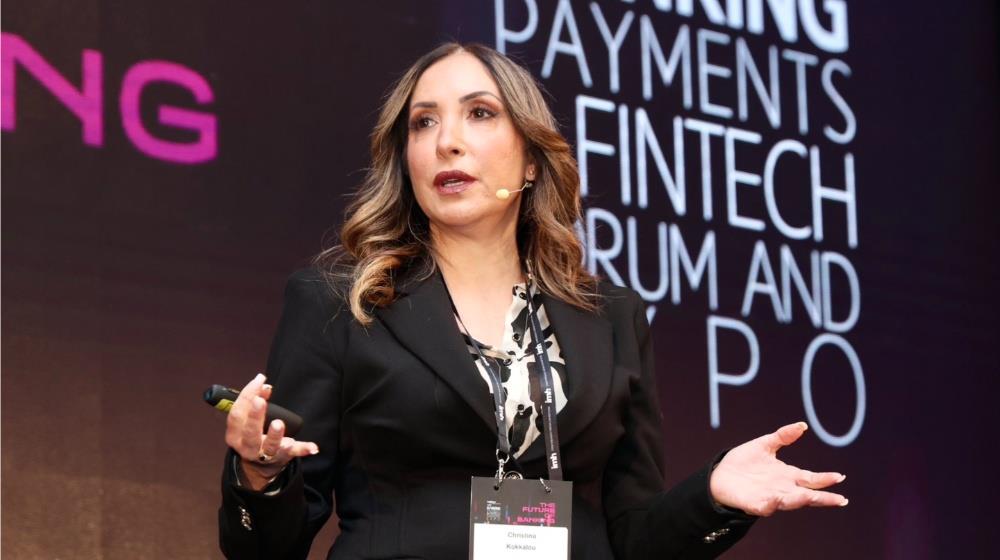
An analytical and data-driven picture of how businesses in Cyprus currently evaluate banking services was presented by the Founder and Managing Director of IMR/University of Nicosia™, Christina Kokkalou, at the 13th Banking, Payments and Fintech Forum and Expo, presented by Logicom.
The Corporate Banking Barometer II clearly demonstrates that corporate banking is in a phase of substantial redefinition, both in terms of the structure of the relationship and the concept of value.
'The Corporate Banking Barometer: Measuring Satisfaction, Expectations, and Future Opportunities' survey was conducted in December 2025 - January 2026, on a sample of 200 CEOs and CFOs, and allows for direct comparison with the corresponding data of 2024. As Kokkalou explained, 2025 was a landmark year for the Cypriot banking sector, with strong market concentration and fewer but larger players.
Fewer banks, deeper relationships
One of the most striking findings concerns multi-banking behaviour. 42% of businesses now report working with just one bank, up from just 13% in 2024, while the percentage of those working with three or more banks has fallen to 45%. This shift reflects both the shrinking choice and businesses’ shift towards more “solid” banking relationships, with an emphasis on efficiency rather than risk diversification.
Gradual improvement in satisfaction but...
Of particular interest is the rise in satisfaction with fees, despite the fact that it remains one of the most sensitive issues. The percentage of corporate customers who declare themselves “very or fairly satisfied” with overall banking fees increased to 23% in 2025 from 15% in 2024. Correspondingly, satisfaction with loan interest rates rose to 16% from 7%, while improvement is also recorded in everyday transactions (18% from 11%).
As Kokkalou noted, these figures do not indicate that the cost issue has been resolved, but that early signs of stabilisation are emerging, in a more mature and concentrated banking environment.
Speed and digitalisation are changing the game
The most impressive improvement is recorded in the speed of response of banks, with the satisfaction rate soaring to 71% in 2025 from 59% in 2024. This development is directly linked to the increased use of digital tools and the pressure exerted by neobanks on the traditional banking sector.
The research shows that neobanks are not gaining ground solely because of lower costs. 56% of businesses identify better digital tools and platforms as their main advantage, 52% faster transaction execution and 48% reduced bureaucracy. On the contrary, the importance of “low cost” as the sole criterion is declining.
The human factor remains decisive
Despite the digital shift, the role of the personal banker remains crucial. 90% of corporate clients have a personal banker, while the majority communicate with them on a weekly or even daily basis. The personal relationship, in-depth understanding of the business and personalised guidance are emerging as elements that no technology has yet replaced.
A look into the future
In terms of future trends, 64% of businesses say they will continue to invest in technology, albeit with a more targeted approach compared to 2024. At the same time, 48% are considering international lending, while 34% are open to exclusive collaboration with EMI/PI providers, indicating further realignment of the financial ecosystem.
In closing, Christina Kokkalou emphasised that the Corporate Banking Barometer highlights a clear message to banks: the value for the corporate customer today is defined by the combination of speed, technology, transparency and human connection. Those who manage to effectively balance these four pillars will be the winners of the next day in corporate banking.
(Source: InBusinessNews)