







The global and European economies are going through a period of turmoil, geopolitical conflicts and instability. In this uncertain environment, the Cypriot economy stands out for its stability, resilience and prospects.
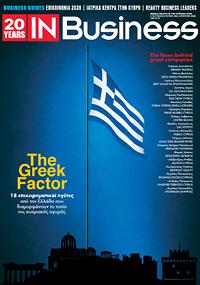
“Nevertheless, constant vigilance, prudent policy and acceleration of reforms are required, which we consistently demonstrate as a Government, in order to ensure the long-term stability of our economy”, notes the Minister of Finance, Makis Keravnos, in an interview on the occasion of the 20th anniversary of IN Business magazine (issue 239). At the same time, he points out the fiscal risks that still exist, answers how the Government will handle them and lists the moves it will make in order to strengthen the competitiveness of the Cypriot economy, addressing any current weaknesses. In short, one could summarise that the powers that be know what's what.
How would you assess the current state of the Cypriot economy?
The global and European economies are going through a period of turmoil, geopolitical conflicts and instability. Within this uncertain environment, the Cypriot economy stands out for its stability, resilience and prospects. Economic growth is maintained at very satisfactory levels, comparing favourably with other European economies.
What performances mainly lead to these favourable conditions?
Employment remains at high levels, with the labour market essentially at full employment, while inflation continues its downward trend.
In terms of public finances, Cyprus is among the EU countries with the best performance. It has high primary surpluses and a significant reduction in public debt as a percentage of GDP - below the 60% threshold by the end of 2025 - and not by the end of 2026, which was the initial target. This remarkable progress is also confirmed by the ratings of international credit rating agencies, since Cyprus is now reclassified to category A after 13 years, with continuous upgrades in the last two.
These strong economic performances allow the Government to implement targeted policies and reforms for the benefit of citizens and society at large.
What are the main structural weaknesses that Cyprus needs to overcome?
In the context of the continuous improvement and development of the economy, the Government is constantly undertaking an effort to promote important reforms. Among the main challenges is the high cost of energy, which is plaguing our economy, affecting both households and businesses over time. In this context, the Government aims to improve the equitable distribution of income through the redistribution of the tax burden for the benefit of the most vulnerable groups of the population.
The current account balance is, of course, a major challenge. What will the Government do about it?
The Ministry of Finance and the Government are promoting a combination of specific policies and measures, which includes, among others, the enrichment of our economic model through the promotion of new sectors of the economy, as well as the strengthening of the export orientation of our businesses. Additionally, in the tourism sector, we are implementing specific policies to strengthen the tourism product and to develop new markets.
There are also constraints in the labour market, such as skills shortages in critical sectors and low participation in training programmes. Challenges still exist in the justice system despite the steps that have been taken, with lengthy procedures affecting the business environment.
What are we doing about bureaucracy? Will we ever be able to tame it?
Despite the actions taken by this Government, there is still bureaucracy in certain areas, which makes it difficult for citizens and the business sector. To this end, the Government is promoting digital transition as an important pillar for improving our productivity and competitiveness.
Addressing the above requires targeted policies and acceleration of reforms, which is a priority for this Government.
The performance of the Cypriot economy is constantly reflected in ratings by international agencies. But what fiscal risks and challenges remain?
The positive assessments of the Cypriot economy by international credit rating agencies reflect its prudent fiscal policy and stable growth path, as well as the confidence shown in the policies and practices followed by the Christodoulides Government in the economy.
Nevertheless, there significant fiscal risks and medium-term challenges remain that are being taken seriously. The main fiscal risks are related to external geopolitical tensions, which may affect energy, tourism and trade with a direct impact on public finances.
Do you consider climate change, with its consequences and what other consequences lie ahead, to be a serious threat?
Of course, there is a possibility of deterioration in the state's finances due to the consequences of climate change, such as natural disasters, the need for compensation in the primary sector and investments in infrastructure and prevention and preparedness projects. At the same time, the potential impacts that may arise in relation to the natural gas terminal at Vasilikos must be managed.
A risk also arises from any burden on public finances from the potential need to finance the deficits of the State Health Services Organisation (OKYpY) for a longer period than the period specified by the relevant legislation, which expires on 31 December 2026 (31/12/2026).
Overall, despite Cyprus's strong fiscal position, continued vigilance, prudent policy and reform determination are required, which we consistently demonstrate as a Government, in order to ensure the long-term stability of our economy.
How can the Cypriot economy strengthen its competitiveness?
Strengthening the competitiveness of the Cypriot economy is a strategic priority for this Government, which is why we are promoting targeted interventions in specific sectors. Among the most important actions are the promotion of the digital transition of businesses, the improvement of human resources skills with an emphasis on the green economy, technology and highly specialised professions, the acceleration of public administration reforms and the reduction of bureaucracy, in order to create a more flexible and friendly business environment.
Also, a very important element for enhancing competitiveness is the promotion of the energy transition, by reducing energy costs through the diversification of the energy mix, and the strengthening of renewable energy sources. Improving our educational system and aligning it with the needs of the labor market is another essential factor for enhancing our competitiveness. Within the same framework, the effort to improve the vocational training of our citizens, so that they can contribute substantially to the labour market, is also included.
How would you briefly describe the contribution of foreign direct investment to economic growth?
Foreign investment plays a crucial role in the development and progress of any country. Especially for small countries with limited resources such as Cyprus, foreign investment can significantly contribute to the economic resilience of the country. These investments simultaneously contribute to the impetus of domestic businesses to increase their productivity and lead to the creation of new jobs. Furthermore, they facilitate the transfer of advanced technologies, expertise and best practices as well as the admission of highly specialised talents.
How can Cyprus attract more and better quality investments?
The attraction of foreign technology companies that we have observed in Cyprus in recent years has strengthened local capabilities, improved productivity and boosted innovation and research. Cyprus attracts foreign investment due to its favorable business environment, strategic location, modern legal framework and high standard of living, but also due to the fact that it is a member of the European Union.
The Government's efforts aim to create a stable economic environment, improve the business environment by simplifying procedures and reducing bureaucracy. Also important is our effort to strengthen the digital transition, as well as the provision of rapid licensing. An important tool towards achieving our goals is the implementation of tax reform.
What priorities do you intend to set in the coming period within the framework of the Cyprus Presidency?
For the first half of the Republic of Cyprus' EU Presidency, as Minister of Finance, I will chair the Council of EU Finance Ministers, known as ECOFIN. There are important issues that the Cyprus Presidency is expected to manage, which include, among others, the EU's multiannual financial framework, the continuation of the European Union's financial support to Ukraine, the integration of capital markets, the promotion of the simplification of EU rules, as well as the digital euro.
(Source: IN Business magazine)
