







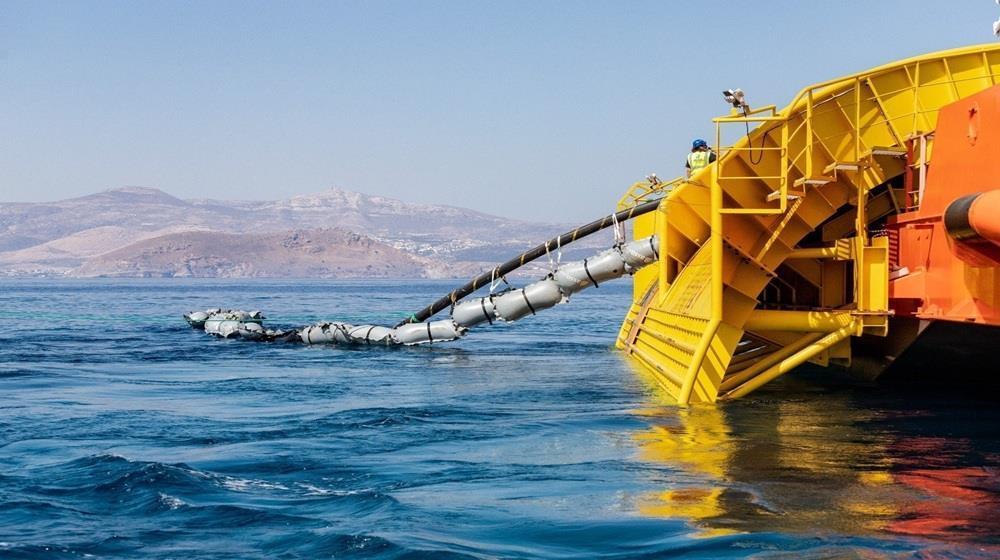
The European Grids Package has been presented by the European Commission with the electricity interconnection between Greece and Cyprus, known as the Great Sea Interconnector or GSI, one of the eight priority projects known as 'Energy Highways' included.
The plan is aimed at "strengthening and accelerating the development of the EU's energy infrastructure" and, as the Commission states, it "forms part of a broader strategy to achieve energy independence, competitiveness, and climate neutrality by 2050."
According to the Commission's official document on 10 December, the "Great Sea Interconnector, the electrical interconnection between Greece and Cyprus, is one of the eight priority projects known as 'Energy Highways.'" As highlighted, "the Great Sea Interconnector will connect Cyprus to continental Europe via Greece and is a project of critical importance, as Cyprus remains the last EU Member State not connected to the European electricity grid."
The Commission emphasises that "this interconnection will enhance Cyprus' energy security and that of the broader Eastern Mediterranean region, while also supporting the full integration of renewable energy sources into the Cypriot energy system."
The document states that "the cable will be nearly 900 kilometers long, making it the longest underwater power cable in the world." Additionally, "the project has already received funding from the Connecting Europe Facility (CEF), including €2.3 million for feasibility studies and €658 million for the construction of the segment between Greece and Cyprus." Finally, "in 2025, the construction of the underwater cable connecting mainland Greece to Crete was completed, marking a significant step toward full interconnection."
According to the Commission's documents regarding the general objectives of the package for the eight Energy Highways, the goal is to strengthen interconnections, with the Union aiming to achieve the 15% interconnection target between Member States by 2030 to improve energy security and reduce energy prices.
Regarding accelerating permitting procedures, the package includes measures to simplify and expedite permitting processes for energy infrastructure projects, which are currently delayed due to bureaucratic obstacles. The Commission also aims to improve financing by proposing new financing mechanisms, including better utilisation of EU funds and attracting private investments.
On enhancing security and resilience, the package includes measures to protect energy infrastructure from physical and cyber threats, as well as to address climate-related risks. It also promotes digitalisation and innovation, with the use of smart grids and digital technologies, which, according to the Commission, will help optimise grid operations and integrate renewable energy sources.
(Source: CNA)