





Artificial intelligence and automation are fundamentally changing the way organisations and their people work.
The 24th Leadership & Human Resource Management Conference, organised by PwC highlighted the need to re-examine the skills required for the jobs of the future and invest in developing continuous learning for staff. Adaptability and flexibility are becoming key characteristics to maintain competitiveness, while leadership is called upon to guide teams in an ever-changing environment.
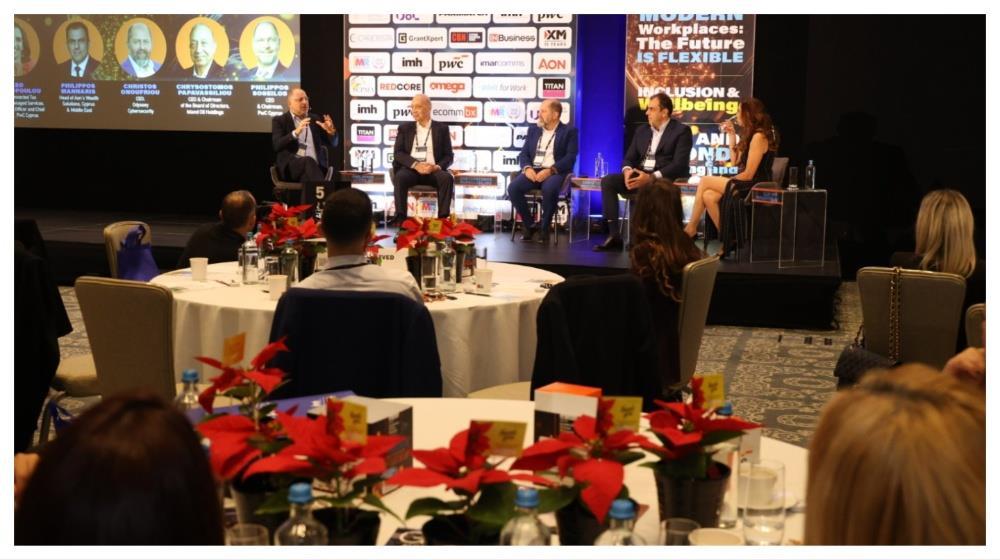
The panel, 'Humans at the Helm: Redefining Work in an AI-Driven Future,' focused on how technology is transforming jobs, skills, and organizational structures. It presented practical strategies for filling skills gaps and embedding adaptability into hiring and development processes.
Philippos Soseilos, CEO & Chairman, PwC Cyprus, highlighted the increased pressure on leadership in an environment of constant change: “Organisations must constantly reinvent themselves, as startups develop faster and more cost-effective ways of operating. If we do not adapt, the entire business is at risk, both in terms of competitiveness and relevance.” Mr. Sosilos underlined that artificial intelligence, such as ChatGPT and other generative AI tools, is rapidly changing the way we work and is a tool that enhances productivity and decision-making ability.
Chrysostomos Papavassiliou, CEO & Chairman of the Board of Directors, Island Oil Holdings, highlighted the transformation of shipping: “Ships have evolved from wooden to high-tech and now autonomous. A ship now operates as a floating office with 24-hour connectivity and full integration of office systems with those of the ship.” He added that the integration of AI tools into the company’s systems has brought excellent results, enhancing collaboration, productivity and team training. Technology functions as a supporting tool for people and businesses.
Philippos Mannaris, Head of Aon’s Wealth Solutions, Cyprus & Middle East, put the demographic challenges in the context of technological change: "In the next three decades, we will experience the largest demographic change in history. The percentage of workers over 65 will double in most developed countries and approximately 50% of children born in 2007 will exceed 100 years of age." He stressed that HR managers need to adapt talent strategies and rewards programs, while artificial intelligence can offer personalized experiences to employees, especially in Generation Z, enhancing engagement and productivity.
Christos Onoufriou, CEO, Odyssey Cybersecurity, pointed out that cyber risk should be considered a business risk: “When a cyber attack disrupts a business, it impacts the entire viability and business model. Organizations must create comprehensive cybersecurity programs that integrate technology, processes and guidance.” Proactive cyber risk management ensures the protection of the business and its team.
The discussion was moderated by Cleo Papadopoulou, Head of Connected Tax Compliance Managed Services, Chief Learning Officer and Chief I&D Officer, PwC Cyprus.
(Source: InBusinessNews)