







Nowadays, pervasive monitoring of gaseous compounds and volatile pollutants is more necessary than ever for a variety of applications. These include air quality monitoring -especially in large urban areas or industrial environments- climate change management, and early warnings for environmental threats. GASPOF could be a promising solution by utilising the underground fibre-optic networks to detect greenhouse and hazardous gases like carbon dioxide (CO2), methane (CH4) and carbon monoxide (CO), while also monitoring temperature, vibrations, and seismic activity that could signal events like volcanic eruptions.
Traditional fibre-optic cables can detect physical changes such as heat and vibrations, but they cannot sense changes in chemical composition effectively. GASPOF bridges this gap by merging advanced optical spectroscopy with innovative sensing nodes, enabling real-time environmental monitoring and gas detection without interrupting standard data transmission.
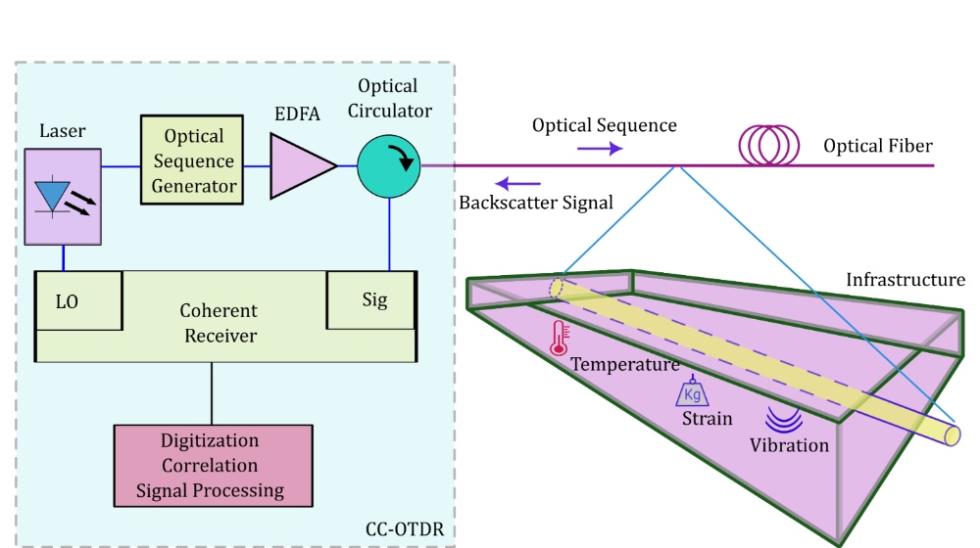
The project, combining cutting-edge sensing techniques such as Photothermal Spectroscopy (PTS), Laser Heterodyne Radiometry (LHR), and Coherent Correlation - Optical Time Domain Reflectometry (CC-OTDR), has entered its second phase. The first PTS and LHR prototypes are complete and ready for preliminary laboratory testing.
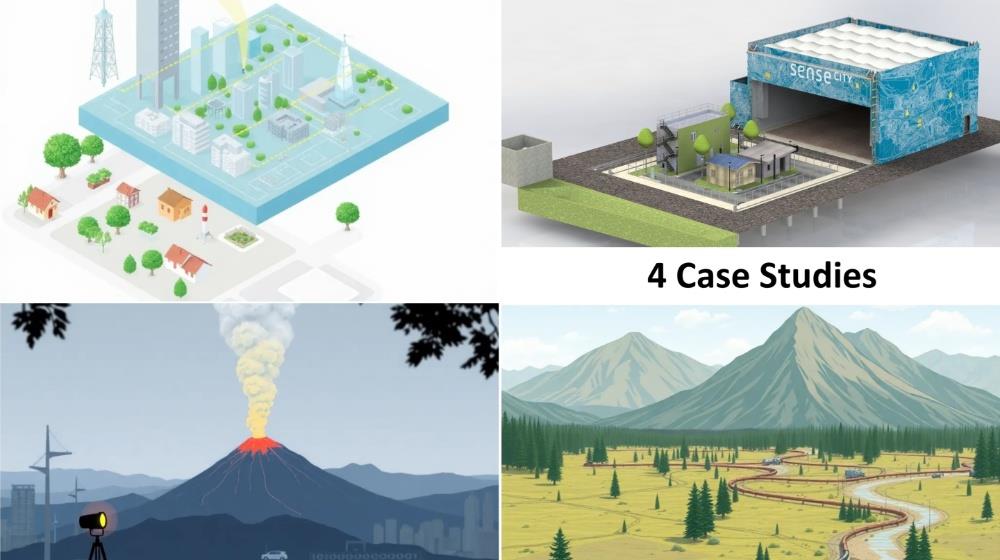
GASPOF sensing technologies will be field-tested in four real-world scenarios throughout Europe:
› Greenhouse Gas Monitoring in Cities – The GASPOF team will provide vital greenhouse gas monitoring in cities such as Barcelona (Spain) and Thessaloniki (Greece).
› Indoor Air Quality – In places like the Sense City climate chamber in France, the GASPOF team will monitor air for pollutants.
› Volcanic Gas and Seismic Monitoring – On the Canary Islands, the project will combine gas detection with vibration and thermal data to improve safety for populations living in volcanic zones.
› Pipeline Safety and Leak Detection – In Greece, the project will monitor natural gas pipelines for methane leaks.
By exploiting the fiber networks already in place, GASPOF aims to present a cost-effective solution that avoids the need for additional standalone sensors, power lines, or extensive maintenance. This approach is also critical in hard-to-reach places, such as volcanic slopes or underwater cables.
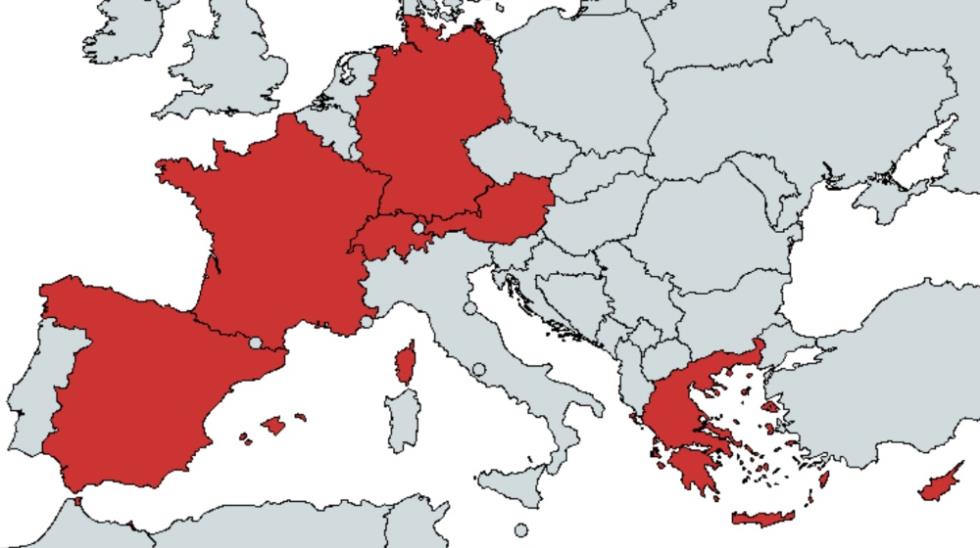
Project partners include: CyRIC - Cyprus Research and Innovation Centre (Cyprus), Technische Universitaet Wien (Austria), Université Gustave Eiffel (France), ADTRAN Networks SE (Germany), Universidad Carlos III de Madrid (Spain), LANCOM (Greece), Universitat Autònoma de Barcelona (Spain), and Spanish National Research Council CSIC.
Funded by the European Union. Views and opinions expressed are, however those of the author(s) only and do not necessarily reflect those of the European Union or of the granting authority. Neither the European Union nor the granting authority can be held responsible for them.