






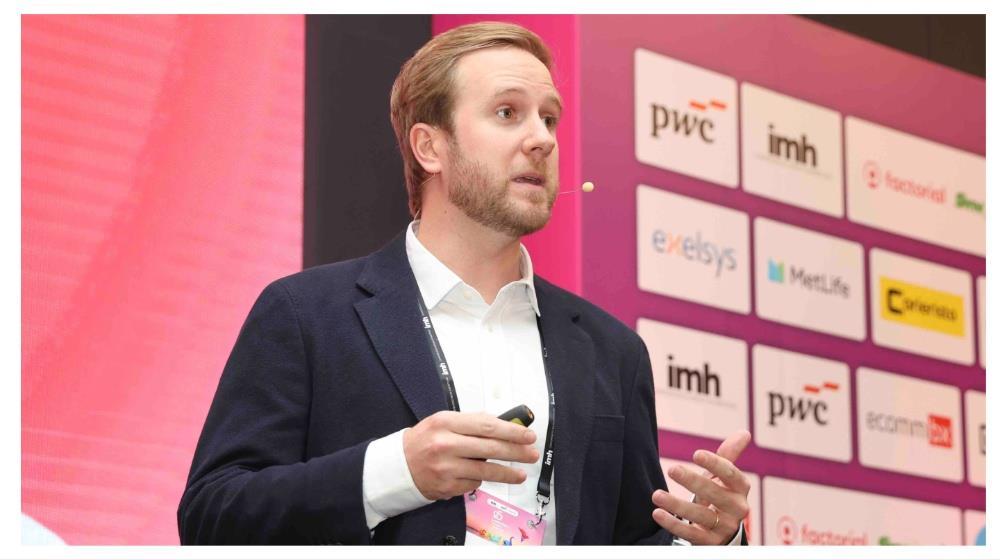
"It's all about people and the culture that we need to manage and cultivate, making sure everyone participates in the company," noted Oriol Pesa, Head of Global Partners at Factorial, in the context of the 25th Leadership & HR Management Conference, organised by IMH and PwC Cyprus.
In his presentation titled 'Scaling People, Not Just Businesses: The Role of Technology in Modern HR,' Oriol Pesa highlighted the gap that still exists between the strategic role that HR is called upon to play today and the daily lives of many professionals in the sector. As he explained, shaping corporate culture, enhancing performance, supporting managers and mobilising employees require time and meaningful engagement with people. However, a significant part of the daily work of HR teams is still spent on repetitive administrative processes.
Drawing on Factorial's experience and its communication with thousands of businesses, the speaker described the practical challenges faced by HR professionals. Approving leave, tracking days of absence and remote work, managing travel expenses, recording working time and preparing payroll are part of a daily routine that often requires a disproportionate amount of time and effort.
A significant part of the problem, he said, is linked to the fragmentation of the systems that companies use. Different tools, manual entries and older technology solutions create multiple data sources, which often do not communicate with each other. As a result, HR teams are required to gather and cross-reference information from different systems in order to gain a comprehensive picture of the company's human resources and operations.
Oriol Pesa also referred to the broader economic cost of low employee engagement, citing Gallup data. According to the data he presented, the global economy loses approximately $9 trillion annually due to limited work engagement, reduced productivity and lower levels of performance.
The key message of the presentation was that technology can significantly contribute to simplifying HR operations, reducing time spent on administrative tasks and fragmented processes. In this way, HR professionals can allocate more resources to what is truly strategic: people, corporate culture, team development and creating an environment that enhances engagement and performance.