


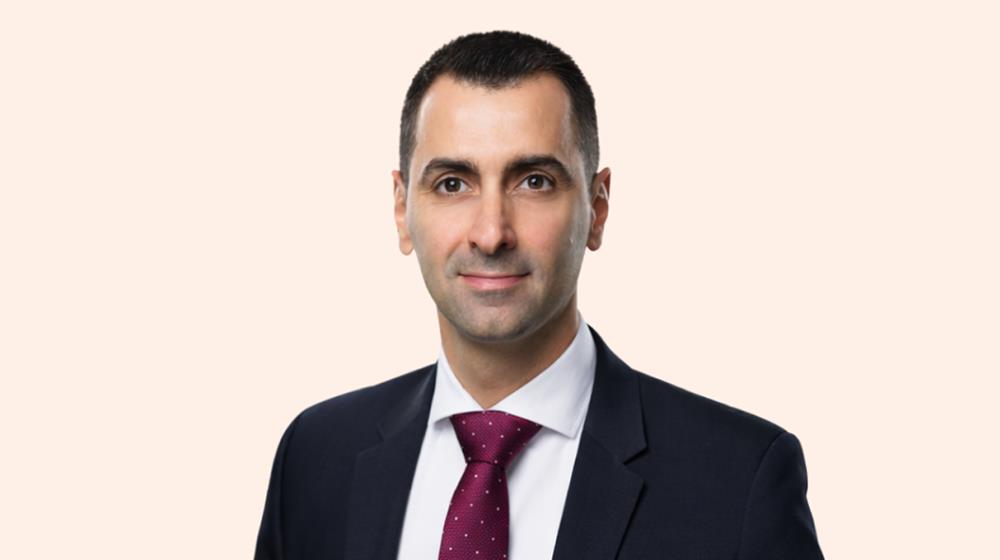
As Ascentium continues to expand its footprint across global markets, we sat down with Theodoros Assiotis, Director and Head of Accounting Services and the Cyprus Fiduciary office, to talk about the business's journey, from its roots within the Harneys law firm to its rebrand and growth as Ascentium.
What emerges is a picture of a business that has grown in scale and capability, while holding on to something it considers non-negotiable: the relationships between its people and its clients. Theodoros reflects on where the business has come from, what's shaping the fiduciary and corporate services landscape today, and the leadership lessons that continue to guide him.
Let's start at the beginning. Where did Ascentium's journey start, and where is the business today?
We came from a strong foundation. Harneys was established in 1974 as a law firm in the British Virgin Islands, and our fiduciary business grew out of that heritage; over fifty years of it. The sale of the fiduciary business was announced in 2023 and completed in 2024, before officially rebranding to Ascentium in 2026, a change reflecting our cross-border service capabilities and long-term commitment to clients.
Ascentium operates as an independent platform with a global footprint, working across markets from Asia to Europe to the Americas, with the same team and same uninterrupted service delivery throughout. The rebrand wasn't just a new name, it was a chance to build an identity that reflects who we have become: a business that has scaled up, but hasn't lost the personal touch that got us here.
How do you stay competitive, and what do you think sets Ascentium apart in a crowded market?
Fiduciary and corporate services can look similar on paper, everyone offers structuring, administration, compliance. What sets us apart is how we deliver it. We combine institutional-grade processes and global reach with the responsiveness of a smaller firm. Clients get a named team who knows their business, not a call centre. The combination of global capability and personal accountability is genuinely harder to replicate than people assume, and it's the thing clients repeatedly tell us they value most.
How important is the global network to what you're able to offer clients?
It's central. Clients rarely operate in one jurisdiction anymore, and their advisers shouldn't either. Having colleagues we trust in other markets means we can move a client's structure, or a piece of their business, without the client having to start a new relationship from scratch every time. It also means we see patterns early - a regulatory shift in one region often tells us something about where another is heading. That's a real advantage we can pass on to clients before they even ask for it.
How does Ascentium support clients as their businesses evolve?
We try to be there for the whole journey, not just the moment they set up a structure. A client's needs at incorporation look very different five or ten years later; different jurisdictions, different family circumstances, different regulatory obligations. Because we work with clients over the long term, we can anticipate those shifts rather than just react to them. That's really the value of a relationship done properly: it should feel less like a vendor and more like a long-term partner.
You've spoken about the connection between people and clients. What does that look like day to day?
Our teams build real relationships, they understand a client's business, their history, sometimes their family. That's what allows us to give advice that's useful, rather than generic. As we've grown, protecting that has been a deliberate choice.. It would be easy to let scale erode it. We've worked hard to make sure it hasn't.
How has the way you serve clients had to change?
Clients expect more transparency and more speed than they used to. They want to see where things stand without having to ask. Regulatory requirements have also become more complex, and clients rely on us to carry a lot of that burden quietly in the background, so they can focus on their own business. So, the relationship hasn't changed, but the standard has gone up.
Where does technology, and AI specifically, fit into that?
Technology lets our people spend more time on the things that actually need a human, judgement, relationships, advice, and less time on repetitive administrative work. AI is starting to help with, particularly around efficiency. But we're clear-eyed about it: technology should enhance our expertise and free up time for the personal side of the service, not replace it. Clients don't come to us for automation. They come to us for judgement.
What trends are you watching right now, and what's keeping clients up at night?
Geopolitical uncertainty is a big one. Clients with exposure to less stable regions are actively looking at where else they could base their operations, and jurisdictions like Cyprus are benefiting from that shift. Regulatory change is constant, and staying ahead of it, rather than reacting to it, is what clients pay us for. And increasingly, we're seeing clients think generationally on succession, family governance, structures built to outlast the person who set them up.
What have clients taught you over the years?
Patience, mostly, and humility. Every client's situation is different, even when the structures look similar on paper, and the moment you assume you already know the answer is usually the moment you get something wrong. Trust is built slowly and lost quickly, so every small thing, returning a call promptly, explaining something clearly, matters far more than it might seem.
Looking ahead, what's your outlook — and what leadership lessons have shaped how you lead?
I'm optimistic. The fundamentals that make Cyprus and the wider region attractive: talent, connectivity, a stable regulatory environment, are strengthening. As for leadership, the biggest lesson has been that growth only works if you protect what made the business good in the first place. Our job is to continue to prove, that even at a bigger scale, you can grow your capabilities and your reach without growing apart from the people you serve.