




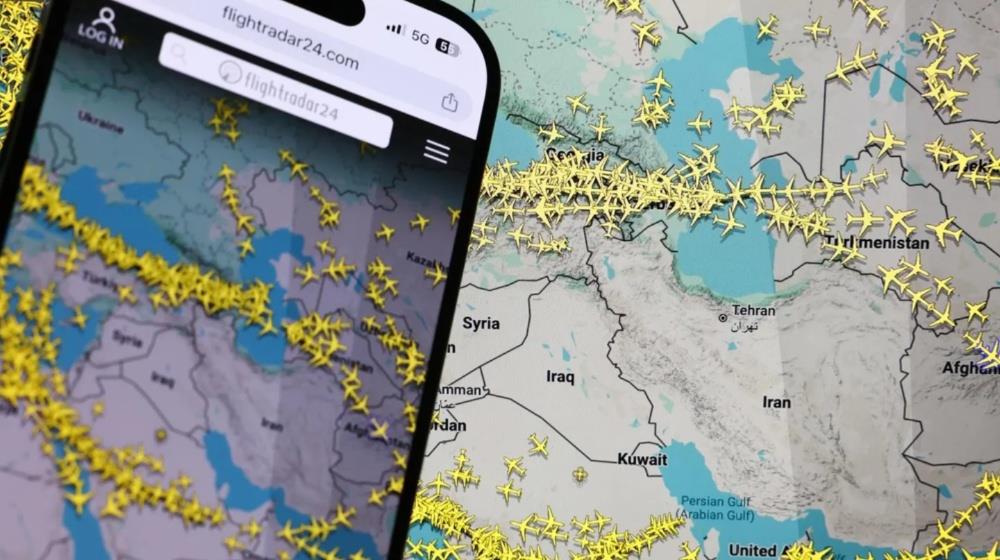
Geopolitical tensions are now affecting the skies as well. When airspace is closed or considered unsafe, airlines are forced to change course, travelling more kilometres to reach the same destination.
The consequences do not end with the duration of a flight. More kilometres mean more fuel, higher operating costs, and greater environmental impact.
What a closed airspace means
Airspace can be closed or restricted for many reasons. Armed conflicts, military exercises, threats from missiles or drones, political tensions, air traffic control strikes, and natural disasters or severe weather can all lead to flights being banned or significantly restricted.
It is also important to clarify that a closure does not always mean that all aircraft are prohibited from flying through. In some cases, restrictions apply to specific airlines or aircraft from particular countries, while airlines themselves may choose to avoid an area based on their own risk assessment.
The impact is particularly noticeable on long-haul routes. For example, after Russian airspace was closed to European Union airlines, Finnair’s flight from Helsinki to Tokyo increased from around nine to 13 hours.
Similarly, developments in the Middle East have led to significant changes to flight routes. Flights to India, Thailand, and Singapore may now take around one to two hours longer, while some connections between India and North America have even required technical stops for refuelling.
Passing costs on to passengers
Longer routes mean greater fuel consumption and higher costs for airlines. In some cases, part of this burden is passed on to travellers through additional fuel surcharges. For example, Air India increased its fuel surcharge on certain flights to North America in March 2026, while similar charges were also applied by ANA (All Nippon Airways). Developments in fuel markets and geopolitical conditions can therefore directly affect the final price of a ticket.
More kilometres, more emissions
The environmental footprint is perhaps the least visible consequence of these diversions. According to EUROCONTROL data cited by Forbes, during the turmoil in the Middle East, approximately 1,150 flights a day had to change course.
In total, aircraft were flying around 206,000 additional kilometres every day, consuming about 602 extra tonnes of fuel and producing more than 1,900 tonnes of CO₂ daily.
To put this into perspective, the daily additional CO₂ emissions from these diversions are roughly equivalent to the annual emissions of more than 400 average cars in the United States.
A new challenge for aviation
The aviation industry has been investing for years in more efficient aircraft, better air traffic management, and technologies that can reduce its environmental footprint.
However, when the shortest routes are unavailable, aircraft are forced to travel greater distances, consuming more fuel and increasing pollutant emissions. Thus, airspace restrictions affect not only flight times and costs, but also the environment.
At a time when the aviation industry is trying to reduce its environmental footprint, geopolitical developments create additional challenges, highlighting how important it is to have safe and efficient air routes available.
This article first appeared, in Greek, in Hermes Airports' online newsletter, Flight Mode. Click here to view it.