





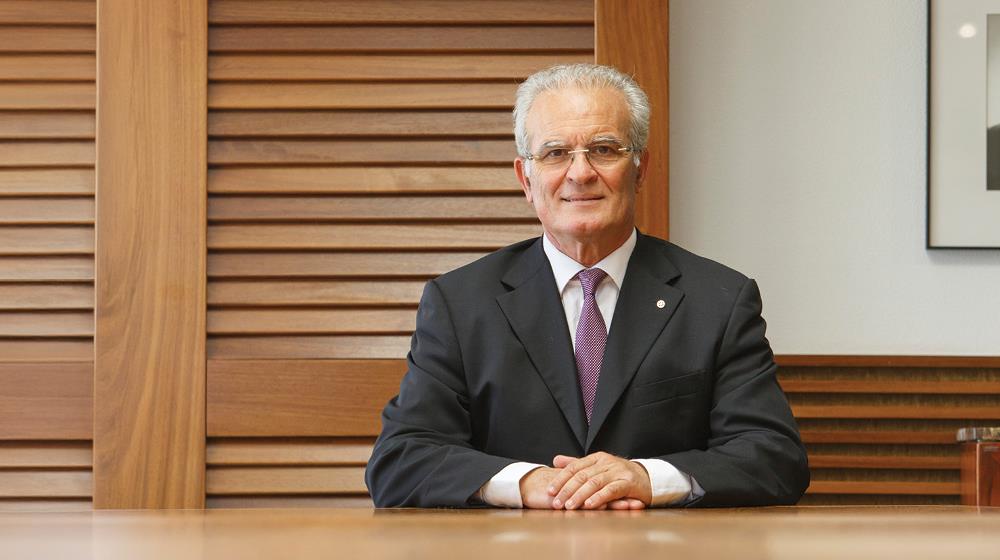
"Looking ahead, my vision is for Limassol to remain an international business centre, to become the financial centre of Cyprus and to be more technologically advanced, greener, better connected and more efficient," Andreas Tsouloftas, President of the Limassol Chamber of Commerce and Industry (LCCI) shares, adding, "We believe that Limassol can secure a place among the top ten European Mediterranean cities and, in time, rise into the top five."
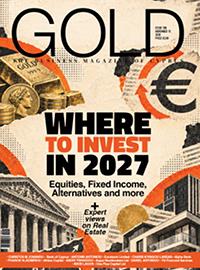
In a recent interview with GOLD magazine, Tsouloftas shares his views on how to maintain Limassol’s growth trajectory and indicates the projects that need to be undertaken if the city is to reach its full potential as an international business and financial centre.
Among other things, referring to the climate-neutral and smart city initiatives underway and their potential impact on business, he notes, "I am convinced that Limassol will be a very different city in five years’ time and, if we manage the transition well, it will be a much better one."
He also shares his vision for the city’s future, revealing, “If we look ahead to ten years from now, my vision is for this zone to become the “Wall Street of Cyprus,” a modern financial district with high-rise buildings that will completely transform Limassol’s skyline and further reinforce its identity as a leading business city.”
How does the LCCI help maintain the city’s business momentum?
The Chamber’s role is to ensure that this success is maintained in a sustainable way. We act as a bridge between business and the Government, identify obstacles to investment and constantly push for more efficient procedures in areas such as licensing, infrastructure, human capital, and overall competitiveness. At the same time, we stress that success cannot be taken for granted. Investors have alternatives, and if Limassol wants to remain attractive, we must provide modern infrastructure, the right skills, high quality of life and efficient public services that meet the expectations of contemporary businesses.
What sets Limassol apart from other cities?
Limassol has become one of the most dynamic business centres in the Mediterranean thanks to sustained investment, a strong culture of entrepreneurship and a robust degree of international connectivity. The city’s business community has shown a consistent ability to adapt to changing global conditions and this has been crucial in building its reputation. One of Limassol’s greatest strengths is its economic diversity: it combines a powerful shipping and maritime cluster with financial and professional services, tourism, real estate and construction, technology, logistics and a fast-growing innovation ecosystem. Limassol also hosts a large international business community, which creates a genuinely multicultural environment and a character that distinguishes it from other Cypriot cities.
What are the main challenges that businesses in the city face today and how are they being addressed?
The most pressing challenge for Limassol today is the traffic problem, which is worsening and is already more severe than in Nicosia. To address this, we have held several meetings with the Ministry of Transport and the Public Works Department, including three meetings in June and July, and we expect another this month to agree on specific timetables for the launch of key projects. We have also written to the new Minister of Transport, Communication & Works, who is from Limassol, seeking a prompt meeting to discuss how she can help accelerate practical solutions.
Another major challenge concerns licensing and building permits. Delays in issuing permits affect the construction sector and many related activities. We have met several times with the President and management of the LDLGO, which is the licensing authority, to explore ways to speed up these procedures. The LDLGO recently hired around 40 engineers and is committed to significantly improving permit processing times before the end of the year. Alongside these efforts, the Chamber maintains regular contact with mayors and Members of Parliament, involving them in resolving the broader set of business-related issues affecting the city.
What is the current status of the long-delayed Pentakomo Technology Park project? How do you plan to move it forward?
The Limassol Chamber has been closely involved in the strategic Pentakomo Technology Park project, which has been under discussion for two decades now. The current Government had asked us to submit a technical and financial proposal on how to make the project more attractive, which we did, and an international tender was launched last year, with submissions received in January 2026. The Government is still evaluating those proposals. It is our view that the selected investor must offer far more than just a competitive financial bid. It must have proven experience in similar technology park developments and be able to add real value from day one, ideally by having successfully implemented at least one comparable project abroad.
I have discussed the matter several times with the competent Minister and her Permanent Secretary and, in our next meeting, we expect to receive a clear update on the outcome of the tender process. If it has not produced a satisfactory result, we will discuss a ‘Plan B’ that will enable us to move forward. We consider this project essential for the economy and, in particular, for the rapidly expanding high-tech sector in Limassol, which is now the leading contributor to the country’s GDP. Our objective is to ensure that, one way or another, the project proceeds on a solid and sustainable basis.
What other new projects are in the pipeline for Limassol and how will they shape the city?
Limassol is experiencing very rapid business growth, supported by significant private investment across multiple sectors. There are important projects in technology, industrial activity, maritime services, tourism, education, and mixed-use commercial developments. This variety reflects the city’s diversified economy and reinforces its appeal to investors from Cyprus and abroad. However, we cannot equate development solely with more buildings and increased economic activity. Infrastructure must keep up with growth if we want to preserve and enhance the city’s competitiveness and quality of life. Roads, public transport, parking, public spaces and amenities all need to develop in parallel with private investment, otherwise problems such as congestion and inadequate public services will undermine the very success we are trying to build.
For this reason, the Chamber has been vocal about infrastructure gaps, especially regarding traffic. Together with the Minister and the mayors, we have identified 16 key infrastructure projects with a combined value of approximately €480 million. We have agreed to form a separate committee for each municipality, led by the Ministry, to manage these projects more effectively. Each committee is working on clear programmes with defined start and completion dates, allowing us to monitor progress and intervene if delays occur. Some of these projects will begin this year and the rest by next year so that infrastructure and business development move forward together.
Is the LCCI helping SMEs adopt AI and digital technologies?
Yes. We believe that artificial intelligence and digital technologies are highly relevant, not only for technology companies but also for traditional SMEs such as manufacturers, retailers, logistics firms and family businesses. Through the European Digital Innovation Hub of Cyprus (DiGiNN), in which our Chamber participates along with the CCCI and other local chambers, any business can access support for digital transformation and the adoption of technologies like AI and cybersecurity.
In 2026, new fast-track services were introduced specifically for SMEs. They are designed to improve a company’s digital maturity through practical, low-risk interventions that can be completed within a few weeks. The LCCI actively promotes these opportunities and we organise meetings with our members to move beyond the hype around AI and focus on real, concrete business applications.
We have created a dedicated Committee and a Vice-Presidency for Innovation and Technology to address high-tech and AI-related issues, and we have appointed a specific staff member to guide members on how to access support from the programme. So far, more than 100 small enterprises have already benefited and our goal is to ensure that all interested SMEs can take advantage of these tools.
How can Limassol businesses be helped to comply with upcoming EU corporate sustainability due diligence rules?
Sustainability is becoming an integral part of how companies operate, finance themselves and participate in global supply chains. For many businesses, and especially SMEs, the main challenge is understanding what the new European requirements mean in practice, collecting the necessary data and embedding sustainability into their everyday operations and supply chains. To make this possible, businesses need access to a supportive ecosystem that offers reliable data, technical expertise, certification, digital tools and affordable advisory services.
There also needs to be strong coordination between public authorities, professional bodies, financial institutions, universities and the business community. Small enterprises cannot reasonably be expected to design and operate complex sustainability systems on their own. The Chamber’s role is to explain what is coming from Europe in clear, practical terms and to connect companies with the right sources of expertise and support. We do this through events, meetings, our monthly newspaper and other communication channels, so that our members are informed, prepared and able to comply without being overwhelmed.
With climate-neutral and smart city initiatives underway, how do you see Limassol’s business landscape evolving over the next five years?
I am convinced that Limassol will be a very different city in five years’ time and, if we manage the transition well, it will be a much better one. The city is part of the European Mission for 100 Climate-Neutral and Smart Cities by 2030, whose goal is to turn climate strategies into concrete, fundable projects rather than just producing plans and targets. For businesses, this means that the green and digital transition will become part of their daily reality, with a greater use of renewable energy, more energy-efficient buildings, electric mobility, smarter infrastructure, more digital public services and a broader use of AI and data-driven decision-making. Our SMEs will have to participate in this transition and, to do so, they will need appropriate financing, access to technology, training and hands-on guidance.
At the same time, we must resolve fundamental infrastructure problems such as traffic, waste management, public transport and building permit licensing. The Chamber has already warned that the traffic problem is becoming serious enough to threaten Limassol’s development and even the ability of high-tech firms to remain and expand. The high-tech sector already contributes nearly 16% of Cyprus’ GDP and has been growing very rapidly in recent years, reshaping the city’s economy and lifestyle.
Looking ahead, my vision is for Limassol to remain an international business centre, to become the financial centre of Cyprus and to be more technologically advanced, greener, better connected and more efficient. We believe that Limassol can secure a place among the top ten European Mediterranean cities and, in time, rise into the top five.
Finally, we see enormous potential in the area between the old port and the new port, which is still largely undeveloped. If we look ahead to ten years from now, my vision is for this zone to become the “Wall Street of Cyprus,” a modern financial district with high-rise buildings that will completely transform Limassol’s skyline and further reinforce its identity as a leading business city.
Our fundamental objective as the city’s Chamber of Commerce & Industry is to ensure that economic growth and quality of life advance together, so that international investors, businesspeople and their families see Limassol not only as a place to do business but as a city where they genuinely want to live.
This interview first appeared in the September edition of GOLD magazine. Click here to view it.