






Bank of Cyprus is seeking acquisitions in Greece, focusing on insurance companies and asset management, 13 years after its forced withdrawal from the Greek market in the midst of the financial crisis.
The group, having left behind the great adventure of 2013, now has the capital strength and liquidity to consider new moves, while it has already developed a significant presence in the financing of Greek businesses.
Mobility is gaining particular interest as Greek banks strengthen their presence in Cyprus and scenarios for a possible acquisition of the Bank of Cyprus by the National Bank are resurfacing. This is a possibility that is being examined in investment house analyses, without there being any confirmed information about negotiations.
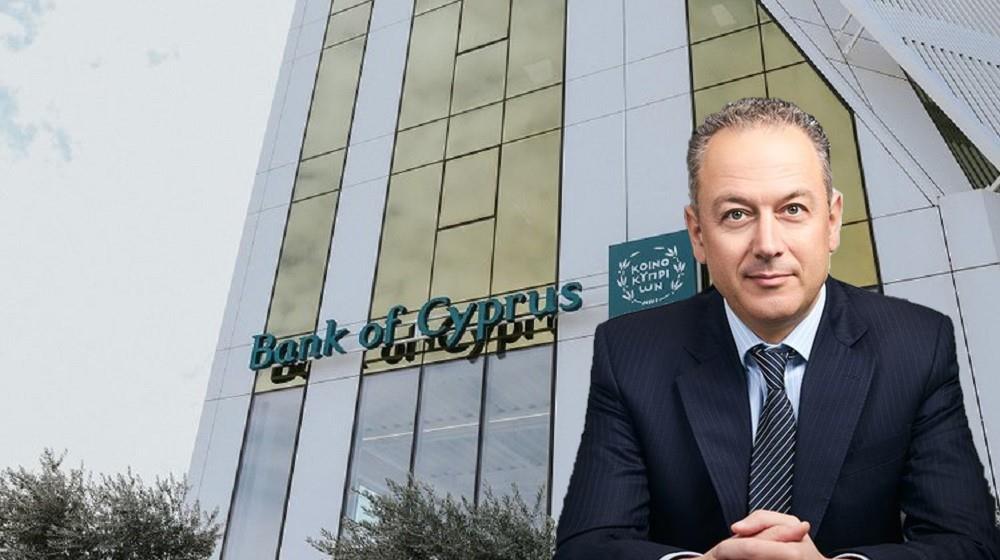
At the same time, the CEO of Bank of Cyprus, Panicos Nicolaou, is promoting his own expansion plan in the Greek market.
Speaking to journalists in Ayia Napa, Panicos Nicolaou confirmed interest in acquisitions, mainly in the insurance and wealth management sectors, while clarifying that the bank will not pursue deals at any price.
As he explained, it makes no sense to pay even 50 times a company's earnings just to grow. Candidate targets should fit the group's strategy, be acquired at reasonable valuations and, especially in asset management, retain the teams that have developed the relevant activities.
The return to Greece, however, will not follow the model of the past. In 2013, as part of the restructuring of the Cypriot banking system, the Greek activities of the Bank of Cyprus were transferred to Piraeus Bank. Currently, there are no plans to re-establish a retail banking network. The emphasis is on large enterprises, project financing and syndicated loans.
Greece is already the group's most important market outside of Cyprus, with a loan exposure of €493 million at the end of June 2026. The total international portfolio of performing loans reached €1.53 billion, up 37% year-on-year.
As for competition from Greek banks, Panicos Nicolaou did not appear particularly worried. As he stated, Greek groups have always had a presence in Cyprus and their strengthening through acquisitions does not scare the management, which believes that it has a strong customer base and significant market shares.
She is more concerned about competition from financial technology companies, such as Revolut, which are claiming an increasingly large share of daily banking activity.
The Cypriot starting point
The expansion plan builds on Bank of Cyprus' strong position in the domestic market, where it is among the two largest players in the banking, insurance and payments sectors. Despite the high shares it already holds, management sees room for growth as the Cypriot economy changes composition and attracts new business activities.
Cyprus has evolved into a business and technology hub for the wider region, with international companies and workers settling on the island, creating additional demand for banking and insurance services, mortgages and investment products. As Panikos Nikolaou pointed out, the expansion of the market itself allows the bank to increase its operations even with the already high shares it holds.
It is noteworthy that the information and communications technology sector now represents approximately 13% of Cyprus' GDP, compared to 7% in 2019, while the direct contribution of tourism is estimated at 6%-7%. The Cypriot economy is expected to grow at a rate close to 3% in 2026, higher than the Eurozone average, despite geopolitical turmoil.
Profits beyond interest rates
Business development is of particular importance in a period of de-escalation in interest rates, as the Bank of Cyprus attempts to offset pressures on interest income with more financing, insurance and investment services, as well as greater payment activity.
In the first half of 2026, net profits increased by 7%, to €252 million, with a return on tangible equity of 18.8%. New loans reached €1.64 billion, while the performing loan portfolio increased by 8%, to €11.4 billion. Deposits amounted to €22.8 billion, up by 9%.
High liquidity, with a loan-to-deposit ratio of around 50%, leaves significant room for further credit expansion. At the same time, the non-performing exposure ratio has been limited to 1%, from around 65% in 2015.
For the period 2026-2028, management aims to maintain a return on tangible equity of around 15%, while on a normalised capital basis, with a CET1 ratio of 15%, the target return exceeds 20%. The difference is due to the fact that the group currently has significantly higher capital than its medium-term target.
Recurring non-interest income increased by 9%, to €132 million, while the net insurance result increased by 35%, to €33 million. The effort to strengthen these activities includes the acquisition of Ethniki Insurance Cyprus, which was completed in July 2025, as well as the investment of €6 million to acquire a 26% stake in Wealthyhood, with the aim of developing digital investment services.
At the same time, the acquisition of a portfolio of performing loans of approximately €150 million and deposits of approximately €500 million from CDB Bank has been agreed, with completion expected by the end of the year, subject to the required approvals.
Digital betting
A large part of the investment is directed towards technology, with planned spending of €240 million for the three-year period 2026–2028. The next phase of the digital transformation focuses on artificial intelligence, aiming at personalised service, process automation and the development of new services.
As explained by the Chief Digital Officer Demetris Nicolaou, the bank's mobile application aims to gradually evolve into a personal banking advisor, which will be able to propose solutions according to the needs of each customer. Towards the end of 2026, the creation of a central infrastructure for the development and control of artificial intelligence digital assistants is planned.
Technological investments are also linked to the effort to contain operating costs. Bank of Cyprus currently has a cost-to-income ratio of 36%, with management seeking to maintain it close to 40% in the coming years, despite increased spending on digital transformation.
As Panicos Nicolaou mentioned, the staff has already been reduced by about a third in recent years, through the simplification of procedures and the reorganisation of operations, without yet taking into account the impact of artificial intelligence. The latter is now the next stage of changes in the way the bank operates.
The digital base is already large for the Cypriot market. The bank has 517,000 active users of digital channels, of which about a third connect daily. Active users of the mobile application reach 488,000 and of QuickPay 259,000.
New products include digital mortgages, which had reached €33 million by the end of June, Fleksy for purchases with later repayment, through which around €8 million in transactions had been made since its launch, and Joey, which has around 13,000 young users.
Jinius holds a special place, with which the Bank of Cyprus is attempting to gain a presence in e-commerce. Panikos Nikolaou compared it to the Greek Skroutz, explaining that the business model is not limited to commissions from sales, but also includes the ability to offer banking products to the same customers.
In the first half of 2026, the value of transactions processed through the platform's business arm reached €1.7 billion, an increase of 58%. Registered businesses are approaching 1,930, while future plans include services for the purchase of cars and real estate, with the possibility of integrating bank financing.
The strategy for 2027-2029 includes further developing digital services for individuals and businesses, strengthening cards and payments, personalisation through artificial intelligence and the use of digital assistants that can process transactions. The aim is also to integrate banking services into commercial platforms so that financing is offered directly at the moment a purchase is made.
The major distributions
The strong capital position allows Bank of Cyprus to combine investments and potential acquisitions with high distributions to shareholders. The CET1 ratio stood at 20.9% at the end of June, against a medium-term target of around 15%.
Total distributions increased from €22 million in 2022 to €305 million in 2025. An interim dividend of €0.24 per share has been announced for the first half of 2026, totaling approximately €105 million, to be paid on October 21.
For the full year of 2026, the total distribution target reaches up to 90% of adjusted recurring profitability, while for 2027 and 2028 it rises to 100% annually. The policy provides for a basic distribution of 70% and the possibility of additional distributions, depending on market conditions and capital position.
The return of the share to the Athens Stock Exchange has also broadened access to institutional investors. According to CFO Eliza Livadiotou, approximately 25% of the share list has changed since the relisting, reflecting the mobility in the group's share base.
(Sources: newmoney.gr, InBusinessNews)