






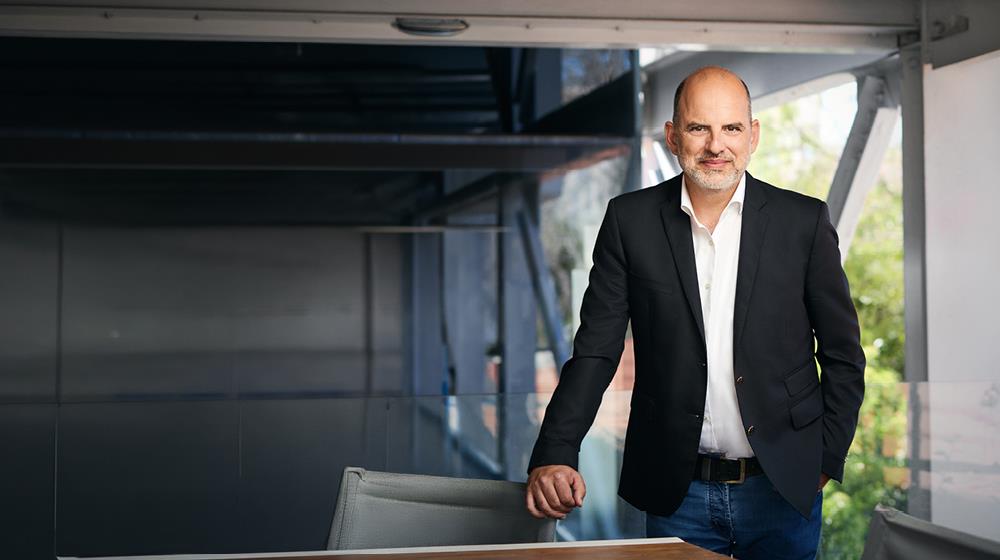
“Preserving heritage is not simply about protecting buildings. It is about giving them new life and integrating them into the everyday life of the city. Our vision is a coherent cultural network for the Limassol of the next decade: an open and creative city, confident in its identity and proud of its history,” suggests the Mayor of Limassol, Yiannis Armeftis.
In an interview with GOLD magazine, Armeftis discusses the goal of making Limassol a smart, climate-neutral, accessible, inclusive, well-connected and affordable city.
Limassol has recently announced a series of infrastructure projects that have sparked debate. How will they affect the city?
Traffic congestion has become one of Limassol’s most significant challenges. Addressing it requires major infrastructure projects alongside sustainable and practical solutions. Our approach is based on two main pillars. The first concerns the commitments made by President Christodoulides regarding key infrastructure projects. These include the Northern Bypass, the start of works on Evagoras Lanitis Avenue in 2027, the advancement of the Agias Fylaxeos road project and the connection of Franklin Roosevelt Avenue with the coastal road. The second pillar concerns what we can do directly as a Municipality. This includes one-way traffic schemes, the expansion of the innovative WeeDrive programme for young people and systematic improvements to the road network. Funding for road resurfacing increased from €1.6 million in 2024 to €13.3 million in 2026, and for pavement restoration from €2.6 million to €5.5 million. We are also continuing with land expropriations, primarily to create new parking spaces. The relevant budget increased from €240,000 in 2025 to €6.1 million in 2026. Three mobility hubs are also moving forward. As for the proposed new mall, although the site is outside the administrative boundaries of Limassol Municipality, it directly affects our city. Our position is clear: we strongly oppose the construction of a mall in this location because we believe that it would further exacerbate traffic congestion.
Limassol has set a goal of becoming a smart and climate-neutral city by 2030. How is this undertaking progressing and what are the most important steps still needed to achieve this goal?
Reaching climate neutrality by 2030 is ambitious and much remains to be done. However, we are making steady progress through international partnerships, European funding and, most importantly, active citizen participation. One of our flagship initiatives is the metaCCAZE programme, which is helping us develop a more sustainable urban mobility model through electric bicycles, the WeeDrive service and a modern multimodal mobility hub at the Tsirio Stadium. We are also investing significantly in green infrastructure. Since July 2024, we have awarded contracts worth more than €5 million for the maintenance and enhancement of urban green spaces, covering approximately 18,000 trees and 3,600 palm trees. The regeneration of Aktaia Odos is another important initiative with a strong environmental impact on the city, with 500 trees already planted in the area. In addition, we are moving forward with the design of a 20-kilometre network of green routes that will connect Limassol’s neighbourhoods and includes the planting of 10,000 trees. Our next priority is to turn our broader vision into mature, fully funded projects that deliver tangible results.
There has been a great deal of discussion about the city’s Sustainable Urban Mobility Plan (SUMP) recently. How is the Municipality addressing people’s concerns?
Whenever changes are introduced to the way a city functions, concerns and different views will naturally arise. However, it is true that the first phase of the implementation of the Sustainable Urban Mobility Plan (SUMP) was problematic and highlighted issues that needed to be addressed. As a Municipality, we raised specific concerns to the Department of Public Works and proposed adjustments to the original plans. This has resulted in significant improvements, particularly where accessibility, parking, road safety and the overall functionality of the road network are concerned. For us successful infrastructure is not measured simply by what we build but by how well it serves the city and its people. That principle guides our approach.
Preserving the city centre’s cultural heritage is also a major topic of discussion. What progress has been made and how is the historical centre being upgraded to attract more people?
Our cultural heritage must be passed on to future generations in ways that are relevant, accessible and meaningful. In that respect, we are advancing important cultural infrastructure projects, including, among others, the Cultural House. At the same time, we want to bring smaller historic spaces back to life. One example is the Polydorides Pavilion, which we aim to restore and transform into a neighbourhood hub for creativity, culture and community life. We have also taken over the Apollon Cinema in the Turkish Cypriot neighbourhood, with the aim of transforming it into a multipurpose cultural venue. Another important example is the successful regeneration of the Papadakis warehouses, which transformed one of Limassol’s oldest industrial structures into the vibrant Limassol Municipal Arts Centre. These projects form part of our broader effort to revitalise the historical city centre as a place where people live, meet, work and experience culture. Preserving heritage is not simply about protecting buildings. It is about giving them new life and integrating them into the everyday life of the city. Our vision is a coherent cultural network for the Limassol of the next decade: an open and creative city, confident in its identity and proud of its history.
Limassol faces significant housing challenges in terms of both pricing and availability. How can these issues be addressed?
This is an issue that concerns us greatly. The housing challenge is driven by several factors, most notably strong demand combined with limited supply. Addressing it requires concrete action. The foundation stone has been laid for the first Affordable Housing Development, with 138 apartments planned in its first phase. We are also moving forward with 20 apartments in the Agia Sophia neighbourhood, while the architectural competition for 80 student residences on Voreiou Ipeirou Street has been completed and the design contracts are progressing. Architectural competitions are also advancing under the “Affordable Housing” programme for municipal land in the Agios Ioannis, Agios Nikolaos and Apostolos Andreas areas. A further competition is underway for a project in Agia Sophia under the New European Bauhaus initiative. These projects will not solve the housing challenge overnight, but they are concrete steps towards increasing supply and creating more affordable options. For us, housing is not simply a real estate issue. It is a matter of social cohesion and quality of life.
How do you see Limassol changing over the next five years and how will these changes be reflected in the daily lives of residents?
Our vision is clear: Limassol must be an accessible, affordable, inclusive, clean and green city for all, with modern infrastructure, better connectivity and high-quality public spaces. The regeneration of Aktaia Odos is a clear example of this vision. Five years from now, we want people to experience a tangible difference in their daily lives: more journeys on foot, by bicycle or on reliable public transport; more green spaces for families; and shaded pedestrian and cycling networks that make the city safer, healthier and more comfortable. These changes will not happen overnight. They require planning, consistency, cooperation and determined work. But this is the direction in which Limassol is moving.
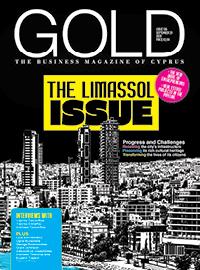
This interview first appeared in the September edition of GOLD magazine. Click here to view it.