







At a time when economic diplomacy, energy and major interconnections are emerging as key pillars of regional strategy, Greece's Deputy Minister of Foreign Affairs, responsible for Economic Diplomacy and Extroversion, Harry Theoharis, speaks exclusively to InBusinessNews about the prospects for deepening economic and business relations between Greece and Cyprus, the pivotal role of the Great Sea Interconnector (GSI), investments, new markets and geoeconomic developments in the Eastern Mediterranean.
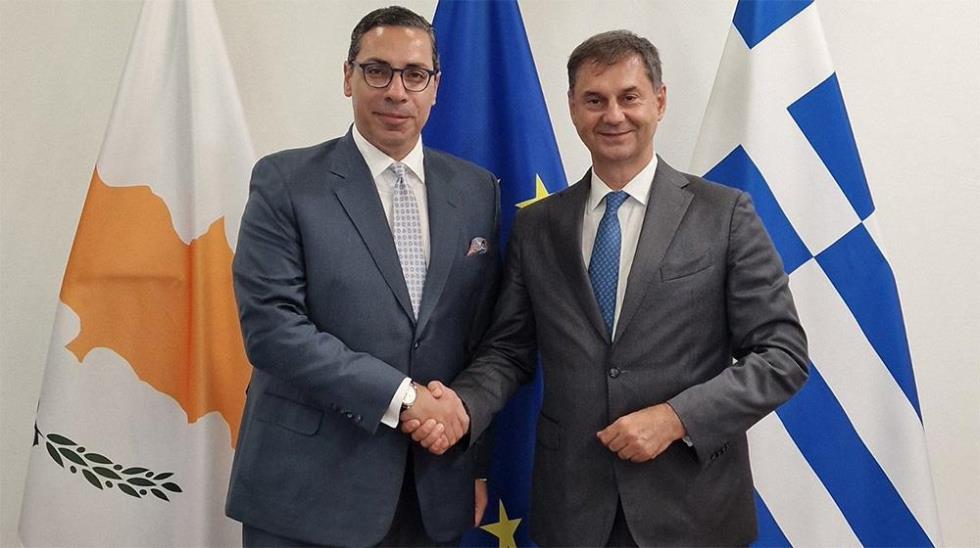
During his visit to Cyprus, Theoharis has already had meetings with the Minister of Foreign Affairs Constantinos Kombos and the Minister of Energy, Commerce and Industry Michael Damianos while a wide range of contacts with the business community and Greek business bodies will follow.
In his interview, Theoharis highlights the strategic importance of the GSI, which he characterises as a "game changer" for the region's energy security and connectivity, while describing the shared vision of Greece and Cyprus to develop into a regional hub for energy, investment, technology and supply chains, taking advantage of the new geopolitical and economic balances in the Eastern Mediterranean.
If we are not mistaken, this is your first visit to Cyprus as Deputy Minister of Foreign Affairs of Greece. What was the occasion of this visit and what contacts have been made so far?
The relations between Greece and Cyprus are close and multi-layered and extend to a wide range of bilateral activities and multilateral cooperation. At the same time, the scope of bilateral cooperation is gradually expanding to new areas, responding to technological and international developments and the contemporary needs of the two countries. Of course, there is always room for intensification of cooperation, and this is the reason for my visit.
Trade in goods between Greece and Cyprus has been at high levels over time. I would like to point out that in 2025, Cyprus was the third most important destination for Greek exports. The same applies to the investment sector, where Cyprus has always been one of Greece's main partners.
Regarding contacts, I had meetings with the Minister of Foreign Affairs, Constantinos Kombos and the Minister of Energy, Commerce and Industry, Michael Damianos, while the programme includes very important meetings with His Beatitude Archbishop of Nova Justiniana and All Cyprus, Georgios, the CEO of Invest Cyprus, Marios Tannousis, the President of the Cyprus Chamber of Commerce & Industry (CCCI), Stavros Stavrou, as well as the President of the Cyprus-Greece Business Association, Iosif Iosif. Finally, I will participate in an event of the Association of Greek Professionals of Cyprus on Greek business. I think the circle of contacts is quite broad and I am confident that very positive results will emerge, for both sides.
The Cyprus issue is once again at a critical juncture. What should Greece's strategy in the coming period be and what do you believe can be done to create the conditions for a meaningful resumption of negotiations?
As you know, Cypriot and Greek diplomacy have made systematic efforts to create the conditions for the resumption of substantive talks, with the aim of finding a just, functional and sustainable solution to the Cyprus issue on the basis of the agreed framework, under the auspices of the United Nations and in line with the European acquis, the principles and values of the EU.
Greece remains committed to the sovereignty and territorial integrity of Cyprus and supports a mutually acceptable solution for a reunified Cyprus, free from foreign troops and the anachronistic system of guarantees, on the basis of a Bizonal, Bicommunal Federation with political equality, one international personality, one sovereignty and one citizenship, in accordance with the relevant United Nations Security Council Resolutions.
Last July, the visit of the United Nations Secretary-General to Cyprus, for the first time in 16 years, demonstrates that the Cyprus issue remains high on the United Nations agenda.
I reiterate that Greece is working and will continue to work constructively and in full coordination with the Republic of Cyprus to resolve the Cyprus problem.
A just and sustainable solution to the Cyprus problem is important for the security and stability of the wider region.
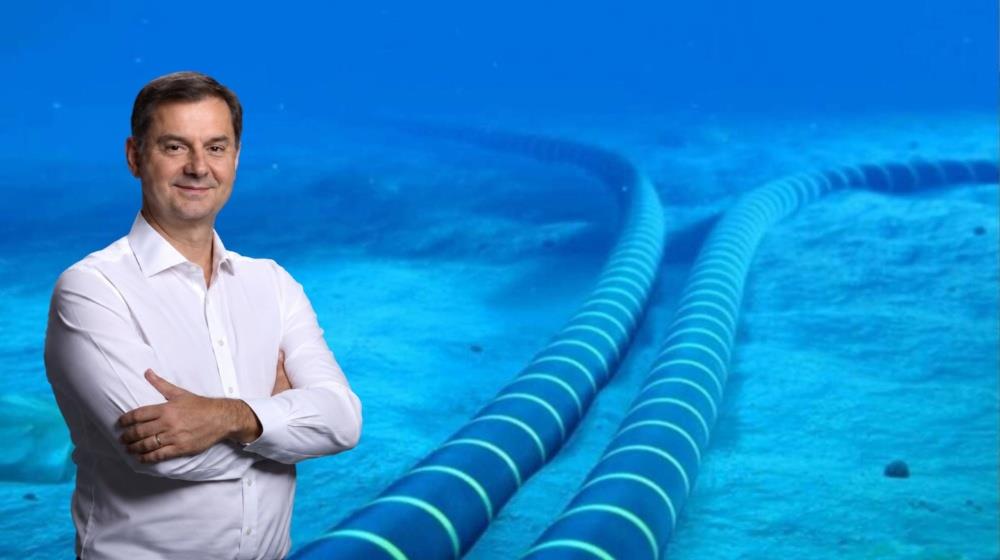
How critical do you consider the next period to be for the implementation of the GSI (Great Sea Interconnector, electrical interconnection between Greece-Cyprus-Israel) and what do you consider to be the benefits for Greece and Cyprus from this project?
The project has now entered a new phase from an investment and financial perspective. Therefore, the next period is particularly important for the implementation of the GSI. Meridiam's entry as a majority shareholder creates a new dynamic. Why do I consider the importance of the GSI to be high and multidimensional? First of all, because it will contribute decisively, as a "game changer", to the lifting of Cyprus' energy isolation, to the strengthening of security of supply and to the better utilisation of RES. As far as Greece is concerned, the completion of the GSI will strengthen our country's role as an energy hub and gateway of the Eastern Mediterranean to Europe, while creating, at a later stage, the prospect of connecting Israel to the European electricity market. Therefore, the GSI is important from an energy, economic and geostrategic point of view.
The entry of Meridiam with a majority stake, as well as US support, reinforces the French, European and international dimension of the GSI. What impact do you foresee these developments will have on the implementation of the project?
As I said, the entry of Meridiam as a majority shareholder is an important development because it changes conditions. I am confident that Meridiam will bring new investment and financial momentum to the GSI. At the same time, French involvement and US support, among others, within the framework of the 3+1 scheme, combined with EU support for the project, strengthen the European and international dimension of the project and create more favorable conditions for its promotion.
The trilateral Greece-Cyprus-Israel now has a strong strategic basis. How can this relationship be translated into specific joint economic and investment projects? The same applies to other trilaterals with Arab countries.
Within the framework of the trilateral cooperation schemes of Greece and Cyprus with Israel, but also with Arab countries, such as Egypt and Jordan, cooperation mechanisms have been developed in a wide range of sectors. I mean in sectors such as energy security, cybersecurity, cooperation between ports, tourism, the environment and civil protection. At the same time, the cooperation of Enterprise Greece, i.e. the body responsible for attracting foreign direct investment in Greece and promoting Greek exports, is developing with its counterpart bodies in Cyprus, Egypt and Jordan. Our goal is to develop business synergies and promote joint investment opportunities.
Cyprus is the third most important destination for Greek exports and Greece is the largest supplier to the Cypriot market. Where do you see the greatest untapped potential for further deepening economic cooperation between the two countries today?
The excellent level of relations between Greece and Cyprus is undoubtedly reflected in the economic sector. The ties that traditionally unite our businessmen, as well as the common European framework within which they operate, constitute solid foundations for the development and deepening of cooperation between the two sides.
The prospects for further strengthening economic relations between the two countries extend to a wide range of activities and production sectors. Traditional sectors such as agri-food continue to maintain their momentum, while correspondingly, opportunities and interest in cooperation are presented in the sectors of cosmetics, pharmaceuticals and construction materials. In the services sector, tourism has long been one of the main axes of cooperation. At the same time, Greece and Cyprus maintain a strong presence in shipping, a sector with a long tradition and a significant contribution to the economies of the two countries. The health sector, where significant synergies have been observed in recent years, the construction sector which records stable dynamics in Cyprus are some other examples.
At the same time, mutual interest in creating new synergies in modern and rapidly developing sectors, such as information and communication technologies, is growing, offering opportunities to attract investment, develop innovative applications and transfer know-how. The parallel exploitation of both traditional advantages and new development opportunities forms a broad and multi-level framework of economic cooperation, which can constitute a strong basis for further development.
Prospects for collaboration can also arise through the utilisation of the network and comparative advantages of companies from Greece and Cyprus in Southeastern Europe and the Middle Eastern markets, contributing to the further development of businesses in the two countries.
Greece has attracted significant US investment, particularly in sectors such as technology and energy. How is this relationship evolving? And can Greece act as a bridge for US investment not only to the Balkans but also to Cyprus and the wider region?
Very correct. Indeed, Greek-US relations are at an all-time high and this has already translated into enhanced cooperation and investment in the energy and technology sectors. In the energy sector in particular, the vertical corridor, the Revithoussa and Alexandroupolis natural gas infrastructures and the Greece-Bulgaria interconnector make Greece a gateway for US LNG. In the case of the Balkans, therefore, we must now speak of a reality and not a mere possibility.
The strengthening of Cyprus' relations with the US inevitably creates a new dynamic for Greece-Cyprus synergies. Greece and Cyprus can leverage their position and the comparative advantages of their economies, such as their high-level and specialised workforce, and become reliable partners in an unstable region and in a period of major geopolitical realignments.
What is Greece's strategy when it comes to artificial intelligence, data centres, cybersecurity, and cutting-edge technologies? And what could Greece and Cyprus do together to attract greater investment, so that they can develop into a regional hub?
The strong institutional cooperation that the two countries already enjoy in the areas of digital governance and cybersecurity, including cooperation on projects such as AI Factories, is set to enhance technological competitiveness and attract high-value-added investments in both countries. Moreover, the technology and innovation ecosystems, both in Greece and Cyprus, are distinguished by their impressive performance and strong, robust momentum.
How do you currently assess the level of economic and investment cooperation between Greece and Cyprus, and what are the possibilities for further strengthening it?
In recent years, the economies of Greece and Cyprus have demonstrated a remarkable growth rate, while following sound and effective fiscal management policies, attracting significant investment flows from abroad. This dynamic is evident, among other things, from the increasing number of Greek companies choosing to invest in the Cypriot market, in the sectors of retail, services, technology, energy, health, education. But also vice versa, in Cypriot companies developing their activities in Greece.
Strengthening the presence of banking institutions from Greece in the Cypriot market can be a springboard for further strengthening business relations, both in the two countries and in third markets.
A decisive role in strengthening bilateral economic relations is played by intergovernmental initiatives and the broad network of cooperation that has been developed, both at bilateral and regional levels through trilateral cooperation schemes. The Greece-Cyprus Intergovernmental Summits, through which new areas of cooperation are highlighted and joint initiatives are promoted, highlight the importance of policy coordination in areas such as digital transformation, innovation, infrastructure and energy, housing policy, water resources management, etc.
I would also like to add that, within the framework of the implementation of the Strategic Plan for Extroversion 2026-2030 of the Ministry of Foreign Affairs, which we are implementing, there is scope for undertaking joint actions to jointly approach third markets. Initiatives have already been undertaken at the level of national participations, for our presence at international exhibitions, in order to further strengthen synergies between Cypriot and Greek businesses.
How does the geopolitical situation in the Middle East affect Greece's economic diplomacy planning towards the region?
Geopolitical instability in the Middle East inevitably affects our planning, as it has a decisive impact on trade flows, energy costs, shipping and supply chains. And, of course, it inevitably increases investor caution. The answer, of course, cannot be our withdrawal from the region. On the contrary, Greece can and must, as a pillar of stability in an unstable corner of the world, constitute a reliable hub towards the Middle East and towards Asia.
In any case, we do not treat the Middle East as a single market, but we prioritise countries and sectors differently, based on the conditions and comparative advantages of Greek businesses. We are deepening our relations with important partners, such as Egypt, the United Arab Emirates and Saudi Arabia. At the same time, we also utilise European tools such as the Global Gateway, which allows and strengthens the participation of Greek companies in major regional projects.
Which target markets – such as India, China, the Arab world and Africa – do you consider a priority, and what synergies could be created within the framework of this strategy?
Our government, with the continuous efforts of the Minister of Foreign Affairs Giorgos Gerapetritis, but also with the international prestige that he has restored for Greece, Prime Minister Kyriakos Mitsotakis, thanks to the diplomacy that he himself exercises at the highest level, has undertaken important initiatives in this field. The Strategic Plan for Extroversion of the Greek Ministry of Foreign Affairs 2026-2030 prioritises and distributes the policies and actions of extroversion, identifies geographical and sectoral priorities with favorable prospects for Greek exports, by creating an environment friendly to the import of foreign capital. At the same time, the Plan for Extroversion sets quantitative targets and highlights the appropriate tools and the required institutional interventions to achieve the goals that I have just mentioned.
Thus, with regard to foreign direct investment, the need to target actions to attract foreign direct investment in markets where higher potential returns and emerging opportunities are presented emerged as of primary importance. Markets with these characteristics and with increased prospects for attracting foreign direct investment in Greece are the USA, Germany, Switzerland, Japan, China, Luxembourg, the United Kingdom, the Netherlands, Canada, France and Singapore, while the remaining markets around the world are categorised accordingly.
Accordingly, during the process of preparing the Strategic Plan, appropriate strategic directions were identified for the penetration of target markets, as well as sectors, that present stronger opportunities and prospects for expanding the export footprint and attracting foreign investments. In particular, the markets with stronger prospects for targeting actions to promote Greek exports include the following countries: Germany, USA, Cyprus, United Kingdom, Italy, China, France, United Arab Emirates and the Netherlands.
At the same time, other markets around the world are also being assessed for priority for implementation of actions. In addition, we are considering the possibility of differentiating interventions by sector, in order to achieve better and faster results.
Regarding the synergies between Greece and Cyprus in this specific sector, it is worth mentioning the India-Greece-Cyprus Business and Investment Council (IGC), in which Enterprise Greece and Invest Cyprus participate, among other entities. This is an extremely important initiative to strengthen economic cooperation between the three countries.
Banking institutions have also recognised the potential that arises from the cooperation between Greece and Cyprus in third markets.
What do you consider to be the biggest obstacle today to strengthening Greece's economic extroversion, and how do you intend to overcome it?
In extroversion and attracting investment, the Mitsotakis government has made a huge qualitative leap. And not only for the present, but mainly with an eye on the future. Of course, speaking, inevitably, about the past, the biggest obstacle in Greece was the lack of a central strategy, a deficit that led to overlaps and fragmentation of effort. We cured this deficiency with the new National Extroversion Strategy approved by the Government Council for Economic Policy.
This Strategy introduces, for the first time, a comprehensive plan for exports, investments and international cooperation. In this context, we have established the Government Committee for Extroversion, so that all actions are centrally coordinated, with clear objectives and measurable results. As I have already mentioned, the transformation of Enterprise Greece into an integrated extroversion hub was recently approved. We are also moving forward with the reform of Export Credit Greece, so that it provides modern guarantee and insurance capabilities, as well as financial tools that reduce risk and facilitate international trade.
How do global trade tensions – such as US tariffs, supply chain reshuffles, geopolitical fragmentation – affect the design of Greek economic diplomacy?
It is obvious and self-evident that rising geopolitical tensions are significantly changing the environment in which the global trading system operates. We observe that international trade is increasingly determined by power relations, practices of economic nationalism and the use of economic instruments to achieve geopolitical and geo-economic goals, transforming traditional economic dependencies into geopolitical vulnerabilities. Uncertainty and broader geopolitical tensions limit the predictability of global trade and reinforce the need for greater resilience and diversification.
Inevitably, the Greek economy is also affected, while economic diplomacy planning is adapting to this new environment. Even if the direct exposure of the Greek economy, for example to US tariffs, is relatively limited, the indirect effects through a slowdown in the European economy, lower external demand and increased uncertainty for investment can be significant.
Greece, as an EU Member State, actively contributes to the shaping of the EU's common commercial policy - which is an exclusive competence of the Union - in order to promote the key objectives of competitiveness, security and sustainability. The common commercial policy is a key tool for the EU and its Member States to manage risks, to be strategic resilient and to exercise international influence. In the Roadmap "One Europe, One Market", trade policy, which diversifies partnerships and reduces strategic dependencies, is one of the three mutually reinforcing pillars of Europe's economic strategy, together with the single market and industrial policy. In this context, the promotion of a strong trade pillar constitutes one of the strategic components on the basis of which the relevant actions are structured. Actions that in this case concern, on the one hand, trade negotiations and, on the other hand, legislative acts related to trade and economic security.
In this context, we seek greater geographical diversification of markets for Greek exports and investment relations, as well as of our country's sources of supply, leveraging the new EU trade agreements and developing stronger relationships with dynamic markets.
At the same time, economic diplomacy is now taking on a stronger dimension of economic security. Promoting exports is not enough. At the same time, it is necessary to ensure reliable supply chains, access to critical raw materials and energy, as well as attracting investment in strategic sectors. For Greece, this also creates opportunities, as its geographical location, ports, shipping, as well as energy and transport infrastructure can strengthen its role as a hub connecting Europe with the Eastern Mediterranean, the Middle East and Asia.
The planning of Greek economic diplomacy therefore moves in parallel with the broader directions of European economic diplomacy and becomes more proactive, diversified and strategic.
What is the role of the Eastern Mediterranean, and Greece and Cyprus in particular, as an alternative supply chain hub, in the context of the rearrangement of global supply chains?
The Eastern Mediterranean is gaining increasing strategic importance as geopolitical tensions and disruptions to traditional sea routes have highlighted the need for safer, more resilient and more diversified routes between Asia, the Middle East and Europe. The India-Middle East-Europe Economic Corridor (IMEC), which combines transport, energy and digital infrastructure, fits into this context.
Greece, due to its geographical location and its port, energy and digital infrastructure, seeks to emerge as one of the main European gateways of IMEC. The ports of Greece can connect the flows reaching the Eastern Mediterranean, with the networks of the Balkans, the Black Sea and the rest of Europe. But Cyprus, due to its pivotal position between Europe and the Middle East and its close relations with the countries of the region, can also play an important role in the broader connectivity architecture of the Corridor. However, our strategic pursuit remains the future integration of Greece and Cyprus into IMEC, of course when the conditions become favorable for the next phase of enlargement. In this context, the 'Friends of IMEC' initiative is of particular importance, which was launched by Cyprus during its Presidency of the Council of the EU in the first half of 2026, as an informal coordination scheme, aiming to formulate common European positions and develop synergies between IMEC and European initiatives, such as the Global Gateway, TEN-T and the Pact for the Mediterranean.
Greece and Cyprus can therefore play a complementary role in connecting IMEC to Europe, while contributing to the diversification and resilience of European supply chains and strengthening connectivity between India, the Middle East and Europe.
Which new free trade agreements or strategic partnerships - EU with India, Mercosur, etc. - do you consider most critical for Greek extroversion in the coming years?
It is certainly difficult to prioritise different markets, and that is precisely the spirit of diversifying trading partners. Each new market, whether it is a market we are gaining access to or a market where access conditions are improving, has a different specific weight and offers different opportunities.
India, for example, is a case of particular strategic interest. It is an extremely protected market, which until now has been largely closed de facto. With the Free Trade Agreement, although we have not achieved everything we would like as Greece and as the EU, it is envisaged that tariffs will be abolished or reduced on over 96% of European exports. This is a huge and rapidly growing market, with particular interest for Greek agri-food products, medicines, services and technology, but also for shipping. At the same time, India is becoming increasingly important for the diversification of European supply chains. We therefore expect the Free Trade Agreement to enter into force and we estimate that significant new opportunities will almost automatically be created. Unfortunately, I must admit that it was not possible to complete the negotiations on the Agreement on the Protection of Geographical Indications and the Agreement on the Protection of Investments in parallel. The completion of these agreements could also create additional opportunities for our country.
Similarly, the Agreement with Mercosur, which has been provisionally applied since 1 May 2026, creates a very large free trade area between the EU and Argentina, Brazil, Paraguay and Uruguay. This is a huge market with significant potential and new opportunities for European and, by extension, Greek businesses.
Australia, on the other hand, is a smaller market, but high-income and with a very strong presence of the Greek diaspora. The relevant negotiations were completed in March 2026 and the Agreement provides for the elimination of over 99% of tariffs on European exports. For Greece, it is of interest, among other things, for branded agri-food products, wine, high-value-added foods and services. In addition, the Agreement also has a strategic dimension, as it strengthens the EU's access to critical raw materials.
Finally, we should not forget the Gulf Cooperation Council countries. Both the Free Trade Agreement under negotiation with the UAE and the trade pillar of the Strategic Partnership Agreements with Gulf countries are of particular interest. The importance of these countries goes beyond that reflected in the current volume of trade. For Greece, they are particularly important from a geostrategic perspective, due to their geographical proximity, but also to the significant prospects they present in the sectors of investment, energy, infrastructure and shipping.
(Source: InBusinessNews)
