






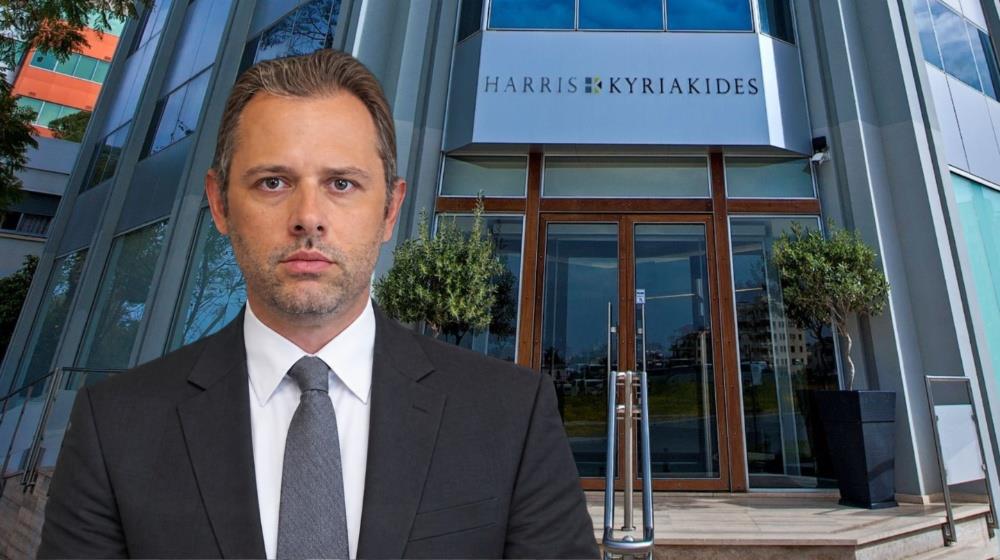
“Law firms that have invested in technology, specialisation and their international reach now enjoy a clear competitive advantage,” Michael Kyriakides, Partner at Harris Kyriakides, tells InBusinessNews and CBN, adding that “for Cyprus to establish itself as a leading international business centre, we need a judicial system that guarantees speed, consistency and legal certainty.”
How do you assess the performance of the Cyprus economy and your sector during the first half of 2026? Which developments stood out, whether positively or negatively, and to what extent were the expectations you had at the beginning of the year borne out or disproved?
I think the Cyprus economy remained broadly stable, without any significant fiscal surprises, which is certainly positive. At the same time, the crisis in the Middle East confirmed something that I believe we all recognise: Cyprus remains particularly vulnerable to geopolitical developments in the region. Even though the escalation of the conflict was relatively short-lived, its effects were nevertheless felt in economic activity, particularly in tourism. This demonstrates that crisis management alone is not enough; what is required is proactive, long-term strategic planning. Beyond this, and particularly as regards the legal sector, developments are especially interesting. Law firms that have invested in technology, specialisation and their international presence now enjoy a clear competitive advantage. At Harris Kyriakides, we see on a daily basis that artificial intelligence is materially improving the quality and speed of legal research, strengthening internal processes and enabling lawyers to devote more time to providing strategic advice to clients. This is particularly important in matters involving complex legal and cross-border issues, where commercial judgement and experience remain the most important sources of competitive advantage. For Cyprus to establish itself as a leading international business centre, we need a judicial system that guarantees speed, consistency and legal certainty.
What are your expectations and priorities for the second half of 2026? Where do you see growth opportunities, and what challenges do you believe will shape the market through to the end of the year?
Provided there is no further major external crisis, I expect the economy to remain on a stable trajectory. The greatest challenge, however, continues to be strengthening the country’s competitiveness. In the field of justice, the recent reforms are moving in the right direction, and this is something we should acknowledge. However, for Cyprus to establish itself as a leading international business centre, we need a judicial system that guarantees speed, consistency and legal certainty. These are factors that investors and international businesses assess on a daily basis. In periods of uncertainty, the value of high-quality legal advice becomes even more apparent.
To what extent have geopolitical developments, and particularly the crisis in the Middle East, affected the economy more broadly and your sector in particular? Have they created greater risks, shifts in the market or perhaps new opportunities?
The crisis in the Middle East served as a reminder that Cyprus operates within a particularly sensitive geopolitical region. While I believe that, from a foreign policy perspective, the country handled the situation responsibly, I cannot say the same about the way Cyprus’s image as a safe and stable destination was managed. For the legal sector, developments of this kind increase demand for specialised advisory services. Businesses increasingly require guidance on regulatory compliance, sanctions, corporate restructurings, risk management and cross-border transactions. In periods of uncertainty, the value of high-quality legal advice becomes even more apparent. Cyprus needs greater integration of public-sector systems, the automation of processes wherever feasible, and better use of data in decision-making.
If you could identify one intervention, whether by the state or the market, that would strengthen the resilience of the economy during the second half of the year, what would it be?
I would choose a comprehensive digital transformation of the state, with meaningful use of artificial intelligence. Cyprus needs greater integration of public-sector systems, the automation of processes wherever feasible, and better use of data in decision-making. Such a reform would significantly improve the business environment, reduce bureaucracy, increase transparency and make the country more competitive. In today’s international environment, the quality of institutions and the speed with which the state responds are competitive advantages and as important as our tax and regulatory frameworks.
