




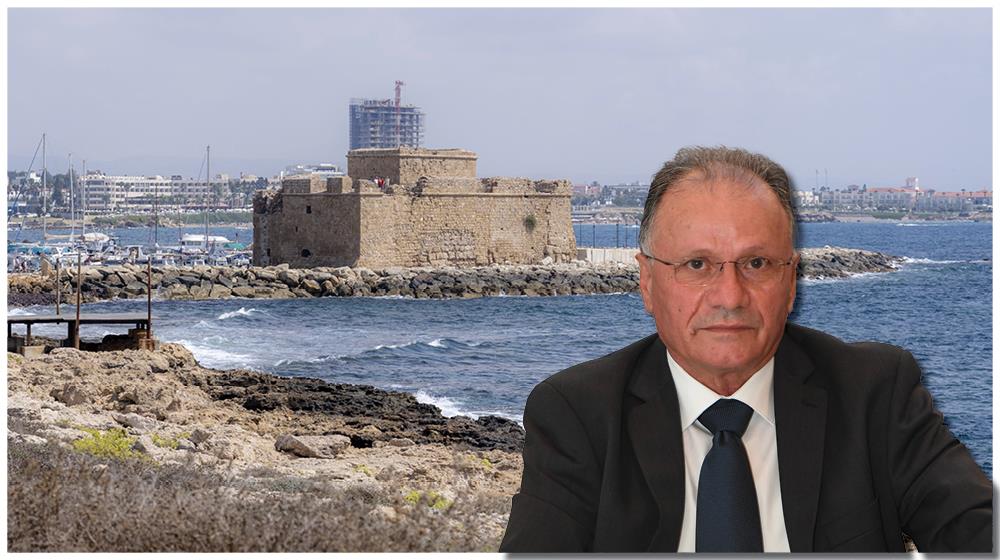
"Paphos is increasingly becoming an attractive option for companies wishing to establish themselves in Cyprus. This is not accidental. The city offers a combination of advantages that many businesses and professionals are looking for," George Mais, President of the Paphos Chamber of Commerce and Industry, suggests.
In a recent interview with GOLD magazine, Mais shares his views on the city’s current progress and the changes that are expected to shape the future of the whole district.
Among other things, he notes, "Paphos will certainly change significantly over the next five years. We are already seeing continuous improvement in the built environment, with new investments and a more modern urban image."
He also weighs in on the importance of digitisation, maintaining a quality tourism product and encouraging cooperation between stakeholders, underlining, "For the business community, stability, speed of implementation and cooperation among the municipality, the state and organised stakeholders are essential."
Upgrading works are planned for Kato Paphos Harbour, along with several other projects in the city. How do you expect them to change Paphos and how will they help the business community?
Work at Kato Paphos Harbour has not yet begun but there are plans by the Cyprus Ports Authority to improve the existing facilities and to construct a breakwater, with the aim of enhancing the safety of boats using the harbour. This is a very important project because the harbour is one of the most recognisable landmarks of Paphos. It is not only a place for boats; it is part of the city’s identity, its tourism product and its commercial life. Restaurants, leisure businesses, boat operators and many other activities depend on the area’s attractiveness and proper functioning.
Once implemented, the planned improvements will strengthen the image of Kato Paphos, improve the visitor experience and create better conditions for businesses operating in the area. More broadly, such projects form part of the wider effort to modernise public spaces, improve infrastructure and make the city more functional and competitive. For the business community, better infrastructure means more activity, better services, increased visitor satisfaction and, ultimately, more opportunities for growth.
How has the digitalisation process been in Paphos and how do you look to further upgrade the technological advantages of the city?
Digitalisation should not be seen merely as a local or technical issue. In my view, it must be treated as a national objective and I believe the state is increasingly approaching it in that way. At the same time, local authorities are also taking initiatives and this is both necessary and welcome. Municipalities can play a very important role in making services faster, more transparent and more efficient for citizens and businesses. However, we must be honest. Despite the progress made, we are still far from the desired level.
Digitalisation in Cyprus needs to move faster, with better coordination and with a more practical approach to implementation. The solution is to allocate targeted funds for this purpose and to purchase specialised services from reputable international firms with proven experience. We do not need to reinvent the wheel. Other countries that have successfully digitalised public and municipal services and we should adopt their best practices, adapted to our own circumstances.
For Paphos, digitalisation can become a real competitive advantage by improving licensing procedures, traffic and parking management, public services, tourism information, infrastructure monitoring and the day-to-day operation of businesses. A city that works digitally and efficiently is more attractive to residents, investors and visitors.
Many international companies have been looking to relocate to Paphos in recent years. How is this trend progressing and what can be be done to make Paphos the destination of choice for more companies?
Paphos is increasingly becoming an attractive option for companies wishing to establish themselves in Cyprus. This is not accidental. The city offers a combination of advantages that many businesses and professionals are looking for. First, Paphos offers lower costs compared with other major urban centres in Cyprus, both for office space and housing. This is a significant advantage for companies relocating staff or seeking a better balance between cost and quality of life. At the same time, Paphos offers a safe and comfortable living environment. It has foreign-language schools, access to secondary and university education, an excellent climate, beautiful beaches and a remarkable countryside that offers authentic experiences. For internationally active companies, air connectivity is a key factor and the city benefits from its international airport, which provides strong connectivity with many European destinations and beyond.
In addition, Paphos has qualified human resources, with strong academic backgrounds and professional skills. This is essential for companies operating in services, technology, education, finance, real estate and tourism. To strengthen this trend further, we need to continue improving infrastructure, accelerate licensing procedures, create more modern office spaces and promote Paphos more systematically as a serious and competitive business destination.
Tourism is one of the main pillars of the local economy. How is the product being upgraded further and where do changes need to be made?
Tourism is indeed one of the main pillars of Paphos’ economy – perhaps the most important one. The district has a strong tourism product, based on history, culture, natural beauty, beaches, hospitality, quality hotels and a wide range of experiences.
The standard of tourism services is already quite high. However, we cannot afford to be complacent. Competition is intense and other destinations are constantly investing, upgrading and diversifying their product. Improving tourism does not only mean improving hotels. It concerns the entire chain of services and experiences: public spaces, cleanliness, traffic, signage, beaches, restaurants, gastronomy, culture, countryside experiences and customer service.
Paphos must invest more in authentic experiences. Today’s visitor is not looking only for sun and sea. Visitors also want culture, local food, nature, wine routes, walking trails, sports activities and quality entertainment. We also need to focus on extending the tourism season. Paphos has all the conditions to operate as a year-round destination, particularly if we further develop special-interest tourism – conference, sports, culture, wellness and medical tourism and nature-based activities. The objective must be continuous improvement. We need to upgrade infrastructure, enrich the visitor experience and ensure that every visitor leaves Paphos wanting to return.
There have been many changes to the city this year on a local government level. Have they affected to the way its projects and other developments are progressing?
When we speak about municipalities, we must remember that their progress should not depend on one person alone. A municipality is governed by its council, led by the Mayor, and supported by its officers and services. Institutional continuity and proper planning are essential. Of course, a capable and visionary Mayor can push a municipality forward, accelerate procedures and provide direction. But beyond individuals, a city must have strategy, continuity and stability.
I am pleased to see that our municipality continues to work towards improving people’s quality of life, while remaining business-friendly. This is very important because development is not only about infrastructure; it is also about creating the right environment for citizens, professionals and businesses. Most of the major development projects of recent years have either been completed or are at an advanced stage. The next priority must be the preparation and maturation of new projects, such as Apostolou Pavlou Avenue, new school buildings and other projects related to mobility, urban improvement and our citizens’ daily lives. For the business community, stability, speed of implementation and cooperation among the municipality, the state and organised stakeholders are essential.
How do you see Paphos changing over the next five years?
Paphos will certainly change significantly over the next five years. We are already seeing continuous improvement in the built environment, with new investments and a more modern urban image. Several major infrastructure projects will reshape the district. The upgrade of Paphos International Airport is of great importance, as it will strengthen connectivity and support both tourism and business activity. The development of the Paphos Marina will also be a major addition to the district’s tourism infrastructure. It can enhance Paphos’ attractiveness as a high-quality destination, support maritime tourism, attract new investment and create further opportunities for local businesses and employment.
Equally important is the road connection between the airport and the Paphos–Yeroskipou tourist area, as well as the reconstruction of the road from the Tombs of the Kings to Peyia. These projects will improve accessibility and the overall visitor experience. The western bypass will help reduce traffic congestion in the city centre, while the completion of the Paphos–Polis motorway will be a major project for the entire district, opening up new prospects for balanced economic and social development. Provided that these projects progress properly and are combined with digitalisation, improved public services, tourism upgrades and support for entrepreneurship, Paphos can become a more modern, functional, and competitive city. The key is vision, cooperation and consistency.
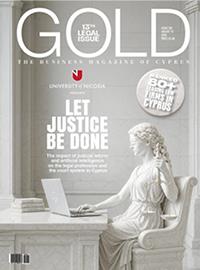
This interview first appeared in the August edition of GOLD magazine. Click here to view it.