







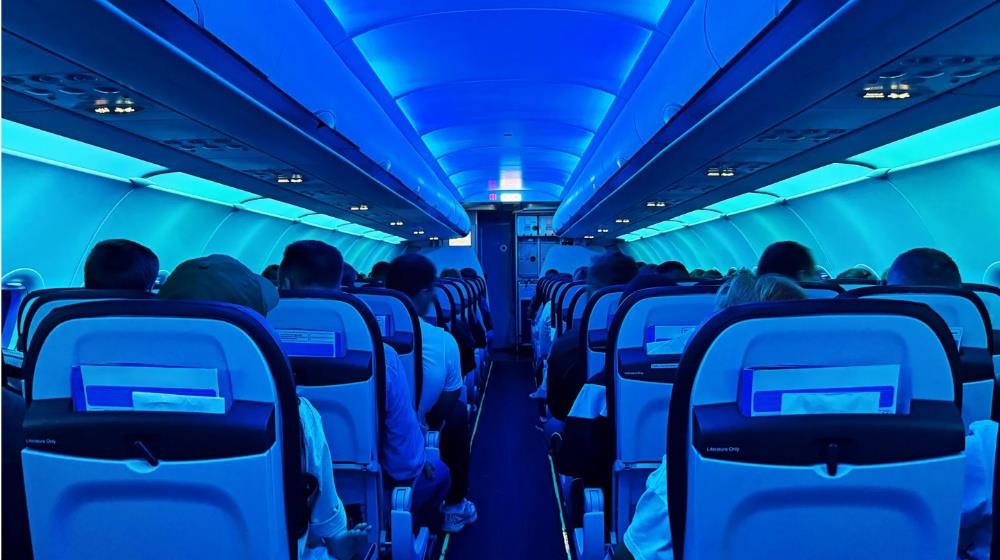
Few passengers are aware that dimming the cabin lights shortly before takeoff and landing is not for comfort or ambiance reasons. It is a standard safety procedure, systematically implemented by airlines around the world, and can prove crucial in the event of an emergency.
Takeoff and landing are considered the most critical moments of any flight. For this reason, the crew follows specific protocols aimed at ensuring the maximum possible preparedness of both themselves and passengers. Dimming the lights is one of these measures, although it often goes unnoticed or is simply considered part of the travel experience.
The main reason for dimming the lights is to help the vision adapt to the outside environment, especially during night flights. When the eyes are already accustomed to the low light, passengers and crew can react more quickly if they need to leave the aircraft. At the same time, illuminated exit signs, escape routes and safety instructions become more visible, saving valuable time in a possible evacuation.
Also, flight attendants have better visibility to the outside of the aircraft, which allows them to detect smoke, fire or any other potential hazard in time before or immediately after landing. Although this process only takes a few minutes, it is another example of how even the smallest details in air travel are designed with the safety of passengers and crew in mind.
(Source: cntraveler)
This article first appeared, in Greek, in the most recent edition of Hermes Airports' online newsletter Flight Mode. Click here to view it.