






The goal of further reducing non-revenue water, which is currently at around 19%-20% - the lowest by far compared to other districts and below EU average - is among the issues the Nicosia District Local Government Organisation (NDLGO) will seek assistance from Israel’s National Water Company Mekorot, NDLGO President Constantinos Yiorkadjis has said.
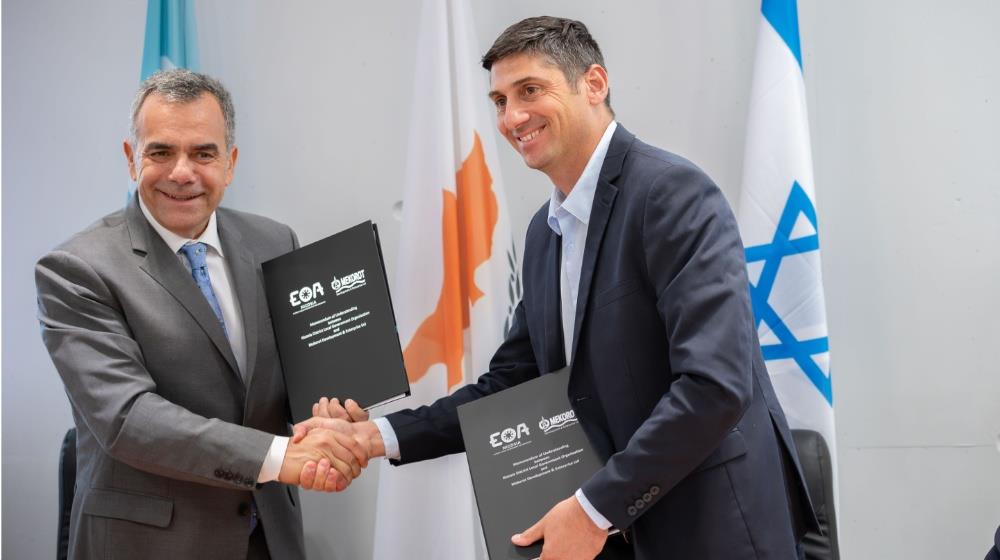
He was speaking at the Memorandum of Understanding signing ceremony between NDLGO and Mekorot on 4 August, which is aimed at promoting the exchange of expertise and best practices in sustainable water resources management.
The MoU was signed by Yiorkadjis, on behalf of NDLGO, and by Barak Graber, CEO of Mekorot Development & Enterprise, in the presence of Israel’s Ambassador to Cyprus Oren Anolik, officials of the two organisations and of services of the Cyprus government.
“This partnership brings together two organisations that operate in water-scarce environments and, as one would expect, share the same mission, the sustainable, efficient, and innovative management of water resources”, Yiorkadjis said in his speech. He referred to Mekorot’s decades-long experience and global expertise in desalination, water reuse, smart water system networks, and advanced water technologies.
“Climate change moves across borders, affecting water abundance and water scarcity in similar, if not identical, ways”, he also said, adding that its protection becomes “a shared responsibility for countries across our region”. At the Nicosia-based local government organization, he said, “we continue to invest in modern infrastructure, digital transformation, and innovation to ensure reliable, high-quality, and sustainable water service for our citizens.”
Sharing knowledge, experience, and expertise
He noted that, through this cooperation, the two organisations would be joining forces in sharing knowledge, experience, and expertise, creating a platform that will allow the exchange of best practices, strengthening both organisations, “and, hopefully, giving better service to all citizens.”
Graber, in his own speech, noted that the two countries share “not only the climate, but we are also sharing the responsibility of providing water to the inhabitants of the island and the State of Israel, and also share the resources in the Mediterranean, which is a very unique league in providing water for the island and for Israel.”
The experience gained in Israel by Mekorot in the past 90 years, he said, was at the disposal of this agreement, and that they put to this test the best practices, “the best engineering, and the manpower we have to support this responsibility we share.”
Anolik said that the partnership between Israel and Cyprus continues to grow across many fields and that water is one area where cooperation can make a real difference in people’s daily lives. Israel and Cyprus, he said, are both part of a region where water scarcity is one of our greatest challenges, stressing the need to find smarter, more innovative solutions.
“This is not only an environmental challenge. It's also an economic one and a strategic one”, he said, noting that, over the years, “Israel has developed unique expertise in water management”, making “every drop count”, and that this experience is highly relevant to the needs of Cyprus. “This is why cooperation between our two countries is so valuable”, he said.
He added that Mekorot’s expertise “is already well known here in Cyprus”, as, it has contributed to major water projects on the island, among them the desalination plants in Larnaca and in Limassol, which helped strengthen Cyprus’ water security, Anolik said. “Today’s agreement builds on this successful cooperation, and it also opens the door to new opportunities”, he noted.
The Director of Cyprus’ Agriculture Ministry’s Water Development Department, Iliana Tofa, expressed satisfaction with the cooperation between the two organisations, being forged through the MoU.
She added that the Water Development Department has been partnering with Mekorot since 2015 under the desalination plants, noting that “it was a very difficult starting period” and that the company “supported us the best they could.”
An agreement that represents an initial understanding
Replying to a question about the benefits for Cyprus from this MoU, Yiorkadjis noted that this agreement represents an initial understanding and that they will begin by exchanging views to determine the key issues and challenges on which they should focus. As this is essentially an exchange of information, he said, “we may also be able to provide assistance in certain areas.”
He said that the NDLGO identified the reduction of non-revenue water resulting from leaks as one of its main priorities, noting that they estimate that non-revenue water in the Nicosia district is around 19–20%. “This is the lowest level recorded among the districts of Cyprus, by a considerable margin, and is also below the European Union average. Nevertheless, as we have set ourselves very ambitious targets, one of our primary objectives - and an area in which we will be seeking the company's support - is to achieve a further reduction in non-revenue water”, he added.
The second priority, he said, is the management of the sewerage network, particularly in addressing potential problems that may arise during periods of flooding.
Garber also said that the signing of the MoU is the beginning of this relationship, and that the two organisations would work together to identify the problems and prioritise to see what needs to be handled and to tailor a suitable solution in a holistic approach.
(Source: CNA)
