








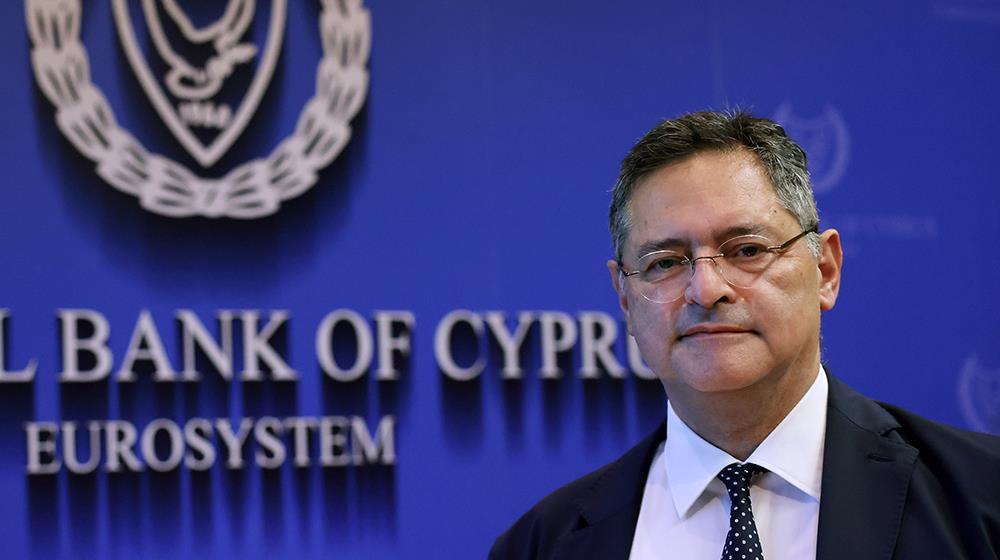
Interest rates are where they are supposed to be, Governor of the Central Bank of Cyprus (CBC) Christodoulos Patsalides said in an interview with Econostream, adding that the current monetary policy of the European Central Bank (ECB) is neutral to restrictive, and underlining the importance of acting pre-emptively, especially as long as the energy crisis persists.
Asked what convinced the ECB Board to keep interest rates unchanged last week, the Governor said that there was no evidence that would have supported a rate hike. "Second-round effects are not evident; expectations are anchored. So far, inflation is more or less in line with its expected path. In fact, the last figure came out a bit lower," he said.
However, he pointed out that, given what is going on with energy prices, inflation risks are on the upside. "We are worried and need to monitor developments diligently and in depth," he said, noting that currently we are closer to the ECB's baseline scenario.
Asked on what evidence could lead to a different direction in September, he answered "evidence of second-round effects, naming the price of oil affecting goods derived from oil, the extent that those goods find their way into input prices, and whether those effects feed through to consumer goods and consumer expectations, and later into wages.
Describing the situation today, he said that the price of oil has gone up and so have the prices of oil-related products, costs, and the PMI (Purchasing Managers' Index). "That is where we are. But this is static; it is what we observe today. On that basis, one must assess the impact in relation to our medium-term target," he noted.
Patsalides highlighted that the value of being pre-emptive is shifting as the risk rises. "Αs more time passes without a resolution of the situation, and prices remain elevated, being pre-emptive gains in importance," he underlined.
Asked whether the ECB's monetary policy now is restrictive, he said "I would say neutral to restrictive", adding that interest rates are where they are supposed to be, given the latest situation, information and assessment.
"Tomorrow may be a different day. But, again, as time passes, given the energy crisis and the natural propagation process, the risk of inflation is higher every day," he concluded.
