







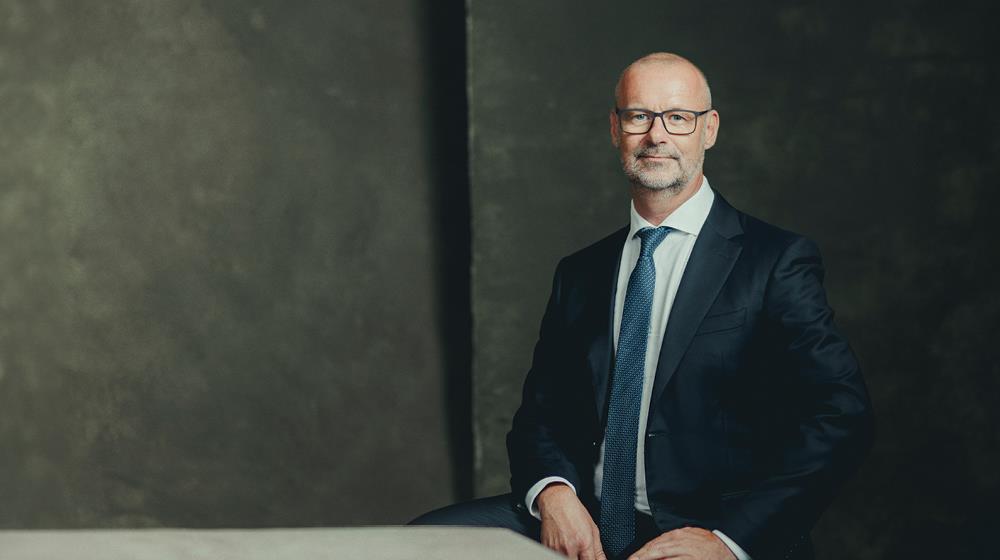
“The shipping industry is constantly evolving, being shaped by new environmental regulations, new technologies, AI, politics and geopolitical changes. At the Hartmann Group, we see these developments not simply as challenges but as opportunities to strengthen our position and deliver greater value. Our focus has always been on building a resilient, future-ready business, and we do this by investing in technology, digitalisation and operational efficiency,” suggests Niels Hartmann, CEO of Hartmann Group, following the company’s recognition at the 14th International Investment Awards, organised by Invest Cyprus and hosted by GOLD magazine.
In an interview with GOLD magazine, Hartmann discusses the Group’s long-term investment in the island and how it has remained flexible, so as to navigate the evolving maritime landscape.
The Hartmann Group has been actively investing in the Cypriot market for many years. How has it grown since that first investment in Cyprus?
Since establishing a small office in Cyprus nearly 40 years ago, the Hartmann Group has grown its presence across multiple locations and expanded into a wide range of specialised maritime sectors. In the course of this journey, Cyprus has evolved into the Group’s central hub, supporting its global businesses and enabling the continued growth and diversification of its fleet. Today, the Group’s headquarters in Cyprus is responsible for shaping its strategic direction, coordinating investments and defining its long-term vision and objectives.
Why did you choose to invest in Cyprus and how would you assess the country’s business landscape?
Back in the ‘80s, Cyprus already offered a number of advantages – most notably its strategic location at the crossroads of Europe, the Middle East and North Africa – making it an ideal base for companies like ours that operate across multiple regions. The country provides access to a highly skilled maritime workforce, professional services of a high standard and a well-developed shipping ecosystem that supports shipowners, managers, charterers and maritime service providers. At the same time, being a Member State of the European Union further enhances Cyprus’ profile, guaranteeing acceptance and recognition. Overall, Cyprus combines business opportunities with political and economic stability, making it an excellent base for maritime professionals and companies seeking long-term growth.
How has Cyprus changed since you first came here and how would you like to see the local shipping industry grow further?
Over the years, Cyprus has established itself as one of the world’s leading maritime centres and one of Europe’s most important shipping hubs. The island has developed a strong maritime cluster that brings together shipowners, ship managers, ship financiers, maritime lawyers, insurers, classification societies and a wide range of technical service providers. The establishment of the dedicated Shipping Deputy Ministry has been instrumental in consolidating Cyprus’ position as an advanced maritime cluster. Its presence demonstrates the country’s long-term commitment to the maritime sector and provides a strong institutional partner for the industry. Continual upgrading and modernisation of the structure and procedures of the Deputy Ministry will ensure the safeguarding and further development of Cyprus shipping as a safe, socially responsible and sustainable industry.
Shipping companies are currently having to deal with regulatory changes, political upheavals and rapidly evolving technology. What does the future hold for the Hartmann Group in this changing environment and what will be your next steps?
The shipping industry is constantly evolving, being shaped by new environmental regulations, new technologies, AI, politics and geopolitical changes. At the Hartmann Group, we see these developments not simply as challenges but as opportunities to strengthen our position and deliver greater value. Our focus has always been on building a resilient, future-ready business and we do this by investing in technology, digitalisation and operational efficiency. For decades now, we have been driving sustainable technology development through innovation in ship design and propulsion. We pride ourselves on being a forward-looking company. What really sets us apart is our willingness to invest early in technologies and next-generation vessel designs, rather than waiting for regulations to drive change. We see this as a strategic opportunity to help shape the future of maritime transport and at the same time remain flexible so as to navigate the evolving maritime landscape.
The Invest Cyprus International Investment Award recognises not only the Hartmann Group’s success but also its commitment to Cyprus. What does this award mean to the company and why is it important to your long-term vision?
This award is a huge compliment for the Hartmann Group, recognising both our growth and our long-term commitment to Cyprus. It validates our strategy of sustainable business development and, more importantly, it reinforces our responsibility to continue creating value for our people, our partners and the wider community. As we look ahead, this recognition motivates us to expand our impact and pursue growth that ensures the success of the Group for future generations.
The Hartmann Group is an independent, family-owned shipping company with a global presence. Its operations are built on five core pillars: ship owning, technical ship management, commercial ship management, crewing and in-house training. With a diversified fleet of approximately 100 vessels, it ranks among the world’s leading shipping groups, serving a wide range of maritime markets. Founded by Capt. Alfred Hartmann as a single-vessel operation in 1981, the company has grown into a group of specialised maritime businesses. Cyprus’ strategic location makes it an ideal base for companies serving multiple regions and, for the Hartmann Group, the dedicated Shipping Deputy Ministry was an important factor in its decision to make the island its headquarters.
This interview first appeared in the July edition of GOLD magazine. Click here to view it.
