







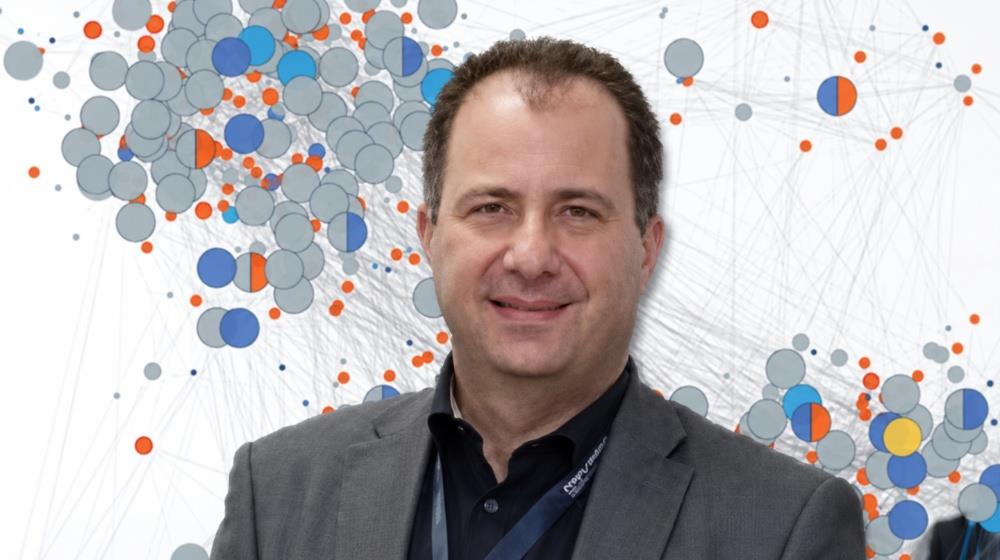
Biological mechanisms and genes that appear to be consistently affected by microgravity, in space, were identified through a research conducted by a team from the Cyprus Institute of Neurology and Genetics, (CING) led by Professor George Spyrou, Bioinformatics ERA Chair, Head of the Bioinformatics Department at the Institute.
As human presence in space will become increasingly long-term, CNA spoke with Spyrou about his team's research. Our research, he added, focuses on understanding how the space environment affects the human body at the cellular and molecular level.
The computational approaches they used to identify potential therapeutic interventions, he went on to say, suggest possible directions for future research, although these ideas will require substantial experimental validation.
Spyrou said that together with Cyprus Space Exploration Organisation (CSEO), they built a bridge between space science and biomedical research, with the goal not only of improving our understanding of astronaut health, but also of gaining insights that may ultimately benefit human health here on Earth.
In addition, his team developed an open-access online database and analysis platform that brings together data from space biology studies and allows researchers to explore and analyse these data more efficiently.
Collaboration of CING with CSEO
Asked about the collaboration of the Bioinformatics Department at the Cyprus Institute of Neurology & Genetics (CING) with the Cyprus Space Exploration Organisation (CSEO) he said that this took place on the initiative to establish the Cyprus Space Research and Innovation Centre (C-SpaRC) following an invitation by President of CSEO George Danos.
Spyrou noted that C-SpaRC is “a pioneering initiative aimed at establishing Cyprus as a leading hub for space research and innovation, addressing the need for dedicated space infrastructure in Cyprus to support the growing space ecosystem and the Cyprus Space Cluster.”
The project, he added, secured competitive funding under the Research and Innovation Foundation’s (RIF) Strategic Infrastructures call and was placed under the auspices of the Committee on Space Research (COSPAR) as an International Space Innovation Centre — a first-of-its-kind initiative designed to foster international collaboration in space research and exploration.
Space, a demanding environment for humans
Spyrou told CNA that space is an “extremely demanding environment for the human body.”
He explained that “the absence of gravity, increased exposure to cosmic radiation, and intense cellular stress can trigger biological changes that we are still working to fully understand.”
“This is where our team was able to contribute, through advanced bioinformatics and the analysis of large-scale biological datasets, helping decode these changes at the molecular level” he pointed out.
Spyrou said that together with Cyprus Space Exploration Organisation (CSEO), “we built a bridge between space science and biomedical research, with the goal not only of improving our understanding of astronaut health, but also of gaining insights that may ultimately benefit human health here on Earth.”
Research on space travel and human biology
Asked about his team’s research on human biology and space, he said that “our research focuses on understanding how the space environment affects the human body at the cellular and molecular level.”
He stressed that “although we have known for years that spaceflight influences human health, the precise biological mechanisms behind these changes are still not fully understood.”
In our work, he added, “we used bioinformatics approaches to analyse large biological datasets, including gene expression data from human cells exposed to microgravity conditions. Our goal was to identify which genes change their activity, which cellular functions are affected, and which biological mechanisms appear to play a central role in the body’s response to spaceflight.”
Through this approach, Spyrou told CNA, “we examined mechanisms related to oxidative stress, inflammation, cardiac function, and the cellular defense systems that protect against damage. At the same time, we used computational methods to investigate whether existing drugs might potentially be repurposed to counter some of these effects.”
In addition, his team developed an open-access online database and analysis platform that brings together data from space biology studies and allows researchers to explore and analyse these data more efficiently.
“Our aim was to create an infrastructure that supports research and helps accelerate new discoveries related to human health in space” he went on to say.
Research shows space affects the human body on the level of cells
Asked about the conclusions of their research, he noted that one of the main conclusions of the research is that the space environment “appears to affect the human body more deeply than we may have previously thought, causing changes not only at the physiological level, but also at the level of cells and gene regulation.”
“Microgravity, increased radiation exposure, and oxidative stress seem to create a biological pressure to which cells must adapt” he pointed out.
Spyrou told CNA that “through our analyses, we identified specific genes and molecular pathways that are consistently affected, particularly those involved in cardiovascular function, inflammation, cellular repair, and the body’s natural defense mechanisms against stress.”
Another interesting finding, he continued, “is that some of these biological changes appear to persist even after returning from spaceflight conditions, suggesting that the effects of the space environment may leave a longer-lasting biological footprint than previously assumed.”
Of course, Spyrou said, these findings are based mainly on computational analyses and available experimental datasets, so further research and experimental validation are needed.
“Nevertheless, we believe they provide a useful foundation for understanding how the human body responds to the challenges of spaceflight and which biological mechanisms deserve closer investigation in the future” he pointed out.
Conclusions of research contribute to human health in space and on Earth
Asked how their findings can contribute to human health in space and on Earth, Spyrou said that “our findings add a small but meaningful piece to the broader effort to better understand how the human body responds to the demanding conditions of space.”
He explained that “through our analyses, we identified biological mechanisms and genes that appear to be consistently affected by microgravity, particularly in processes related to cardiovascular health and the immune system.”
This knowledge, he added, may help guide future strategies for monitoring and protecting astronaut health, especially as human presence in space becomes longer in duration.
At the same time, Spyrou continued, “the computational approaches we used to identify potential therapeutic interventions suggest possible directions for future research, although these ideas will require substantial experimental validation.”
Regarding Earth, he said that many of the biological mechanisms they studied — including inflammation, cellular stress responses, and cardiovascular dysfunction — are also involved in common diseases here on Earth.
“For this reason, studying these processes in the extreme environment of space may offer useful insights into the biology of human disease more broadly” he went on to say.
Spyrou said that “if there is one broader lesson from this work, it is that by studying the human body under extreme conditions, we may gain a deeper understanding of how it functions under normal conditions as well — and, over time, that knowledge may contribute to improving human health both in space and on Earth.”
The Scientific Publications from his team related to this theme are the following:
Tomazou M, Bourdakou MM, Nicolaidou E, Georgiou G, Savva K, Athieniti E, Menelaou S, Afxenti S, Spyrou GM. H-SPAR DB: human spaceflight platform for analysis and research-an integrative omics database for space health. Database (Oxford). 2026 Jan 15;2026:baaf083. doi: 10.1093/database/baaf083. PMID: 41537191; PMCID: PMC12805116.
Bourdakou MM, Loizidou EM, Spyrou GM. Plasticity of Gene Expression in Spaceflight and Postflight in Relation to Cardiovascular Disease: Mechanisms and Candidate Repurposed Drugs. Proteomics. 2025 Jun;25(11-12):e202400241. doi: 10.1002/pmic.202400241. Epub 2025 Apr 14. PMID: 40223711; PMCID: PMC12205274.
Galčenko K, Bourdakou MM, Spyrou GM. Exploring the Impact of Microgravity on Gene Expression: Dysregulated Pathways and Candidate Repurposed Drugs. Int J Mol Sci. 2025 Feb 2;26(3):1287. doi: 10.3390/ijms26031287. PMID: 39941055; PMCID: PMC11818396.
(Source: CNA)
