







Data on transport and tourism in Cyprus are included in the Commission’s report titled Transport and tourism in the European Union – Current trends and issues, which presents recent developments in the two sectors at EU level and by Member State.
For Cyprus, the report records that in 2023, 83.5% of inland passenger transport was carried out by passenger cars, compared with 82.0% in the EU, while 16.5% concerned buses and coaches, compared with 8.2% in the EU.
The report also records that greenhouse gas emissions from transport, including international maritime and aviation bunkers, accounted in 2023 for 37.9% of Cyprus’ total emissions, or 3.9 million tonnes of carbon dioxide equivalent. In the EU, the corresponding share was 31%, or 1,039.3 million tonnes of carbon dioxide equivalent.
In the road sector, the report states that Cyprus ranked 8th among the 27 EU countries based on the lowest number of road fatalities per million inhabitants in 2023, with 36 deaths per million inhabitants. It also ranked 14th in terms of the lowest number of deaths per kilometre, with 46 deaths per 10 billion passenger-kilometres.
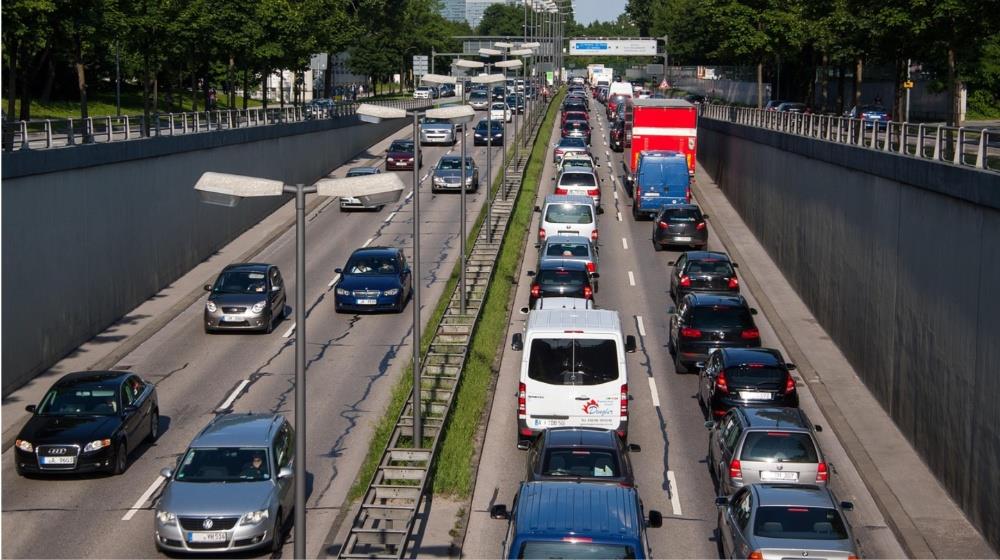
At the same time, the average peak-hour delay per driver in Cyprus stood at 40.2 hours in 2023, above the EU average of 28.6 hours.
For charging infrastructure, the report records that Cyprus’ power output target under the Alternative Fuels Infrastructure Regulation was 608 kilowatts, while the total power output in Cyprus amounted to 15,472 kilowatts.
In air transport, Larnaca airport appears as the busiest in Cyprus in 2024, with 8.876 million passengers. The total for Cyprus amounted to 12.514 million passengers, representing 0.8% of the EU total. In air freight, Larnaca recorded 30.6 thousand tonnes, almost the entire 30.7 thousand tonnes recorded for Cyprus.
In maritime transport, the port of Limassol is recorded as the largest in terms of passengers in 2024, with 9 thousand passengers, corresponding to the entirety of Cyprus’ port passenger traffic. In terms of freight, Vasiliko is recorded as the most important port, with 4.212 million tonnes, or 47% of Cyprus’ total, which amounted to 8.945 million tonnes.
(Source: CNA)