








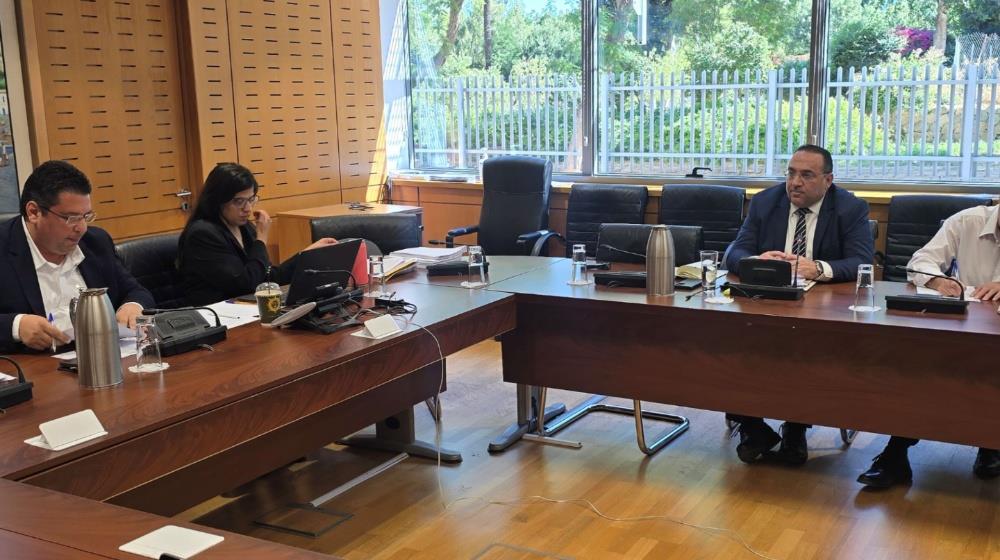
May and June figures show that Cyprus tourism is back on a stable path, Deputy Minister of Tourism Kostas Koumis told the House Commerce Committee during a discussion on the impact of regional instability in the Middle East on the domestic tourism industry and support measures for those affected.
“Under the circumstances, and taking into account the severe shock suffered by the tourism economy, the losses, as shown by the May statistics, have been contained to a very large extent,” Koumis said, speaking on 30 June.
He said the most important point was that Cyprus tourism was back on track, that the measures taken appeared to be working and that the country’s tourism economy was once again showing resilience.
Koumis noted that 2026 could certainly not be described as a record year, as “significant losses were recorded in March and April”. However, he added that May limited the decline in tourist arrivals to 4.9% compared with May 2025, while arrivals were up by 8.1% compared with 2024.
He said January and February 2026 were the best months in the history of Cyprus tourism, showing that the year had started strongly after a record 2025.
According to Koumis, arrivals in January and February combined were up by 9.1% compared with the previous year, by 25.9% compared with 2024 and by 27.9% compared with 2023.
January recorded an increase of 8.5% compared with January 2025, 38.3% compared with 2024 and 34.3% compared with 2023. Compared with 2022, the increase reached 176%. February arrivals were up by 9.5% compared with 2025, 17.2% compared with 2024 and 23% compared with 2023.
Passenger arrivals
Referring to passenger arrivals, not tourist arrivals, for June, Koumis said that from June 1 to 22 there was a decline of 4.3% compared with the previous year, but an increase of 7.1% compared with 2024 and 12.8% compared with 2023.
The Deputy Minister said Cyprus tourism had “paid a heavy price” because of the conflict in the Middle East, with thousands of bookings lost and a long period during which new bookings were frozen.
He said this translated into revenue losses for both the state and the industry, but added that it had been unavoidable, given developments in Cyprus, culminating in the strike on the British sovereign base areas on March 1.
Koumis referred to the “significant cancellations” recorded in March and April 2026 compared with previous years, as well as negative reports suggesting that Cyprus was not a safe destination, which caused disruption.
He said the 1 March strike resulted in strong negative publicity and other developments that undoubtedly affected Cyprus tourism.
“Overnight, a large part of the country’s flight schedules was lost,” Koumi said, noting that several airlines suspended their flight programmes indefinitely.
However, he said that within two to three days, during the international tourism fair in Berlin, agreement was reached for “the return of all airlines”, which resumed flights within about a week, although with reduced frequencies.
Tourism crisis
Koumis said that from 1 March the Deputy Ministry of Tourism began handling the situation as a tourism crisis, on the basis of clear written and detailed instructions, but added that this was not communicated publicly because the word “crisis” always has a cost in tourism.
He also said the Deputy Ministry worked with a public relations firm contracted by the Republic of Cyprus to restore the country’s reputation, focusing mainly on the message that Cyprus was and remains a safe destination.
Addressing the Committee, Director General of the Cyprus Hotel Association Christos Angelides said the association took action from the outset and ran a hotel bookings model which showed a 20% decrease so far.
Angelides said the association submitted proposals to the Council of Ministers, with efforts focusing on supporting employment.
He expressed the hope that payments under the Special Scheme for Supporting Employment in the Hotel Sector would be made in the coming days, adding that mechanisms must be built to predict or deal with crises.
Secretary General of the General Confederation of Professional Craftsmen and Shopkeepers of Cyprus Stefanos Koursaris said the rest of the tourism sector had not been financially supported by the Government and called for support for small and medium-sized enterprises.
Secretary General of the Leisure and Entertainment Establishment Owners Association Phanos Leventis said there was a need to create a crisis management mechanism with the participation of all stakeholders, adding that no decision had been taken on financial support for leisure centres.
A representative of the Cyprus Association of Tourism Enterprises said the association, together with the Cyprus Hotel Association, had contacted the competent authorities from the first moment to convey their concerns, adding that tourism had not yet returned to normality.
The representative said that in the first five months there was a 13.3% decline, occupancy was down by up to 20%, and tourist spending had also fallen.
The association had requested a crisis management mechanism to strengthen cooperation between the state and the private sector, the representative said, adding that increasing the Deputy Ministry’s budget for the promotion and advertising of Cyprus tourism should also be examined.
A representative of the Association of Cyprus Tourist and Travel Agents also expressed the need for a crisis management mechanism, as well as for Cyprus to have public relations firms in key foreign markets.
(Source: CNA)
