

As global financial markets enter a new era of digital transformation, tokenisation is emerging as one of the most significant shifts in the evolution of capital markets.
The current crypto market represents approximately US$3 trillion, while traditional global investable assets represent an estimated US$600+ trillion opportunity spanning stocks, bonds, real estate, gold, commodities, and other financial assets. Yet today, only a small fraction of these assets have moved on-chain, highlighting the scale of opportunity ahead.
As this transition accelerates, the focus is shifting from simply creating digital assets to building regulated infrastructure that can connect traditional finance with the next generation of global markets. Recognising its role in this transformation, Blockmaze was recently named Global Fintech of the Year at the UF Awards, which celebrate excellence across the online trading and fintech industries and recognise the companies, brands, and innovators raising standards worldwide.
Blockmaze is one of the largest regulated ecosystems for tokenised assets, providing ready-to-launch solutions for issuers, institutions, brokers, exchanges, and financial platforms looking to participate in the next era of regulated digital finance.
Built for compliant players, by compliant players, Blockmaze combines technology, licensing, compliance and regulatory capabilities across payments, investment services and digital asset infrastructure to bring traditional assets on-chain in a trusted and compliant way. More than US$2 trillion worth of assets could move on-chain by 2030, according to McKinsey.
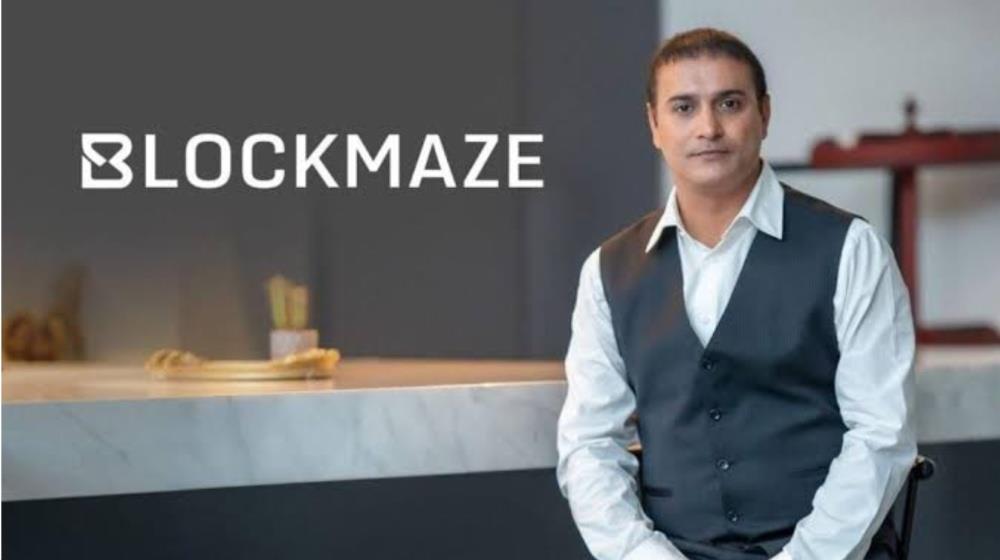
Tajinder Virk, Co-Founder and CEO, Finvasia Group and Blockmaze, says, “The next wave of financial adoption will not be defined only by new digital assets. It will be defined by how much of the existing financial world can be brought on-chain in a trusted, compliant, and accessible way.
“As AI becomes a larger participant in the global economy, financial infrastructure will also need to evolve. The future will depend on how real-world assets are bought, sold and exchanged digitally — supported by tokenised assets that are verifiable, liquid and accessible.”
“Tokenised RWAs are creating a new paradigm. Today, only a very small portion of the US$600 trillion opportunity has been tokenised — with less than 0.01 percent penetration. Almost the
entire market is still ahead of us. But the future of tokenisation is not about creating more tokens — it is about creating assets that represent real ownership, regulatory trust and long-term value.”
RWA tokenisation has the potential to significantly expand investor participation as corporates and asset owners bring traditionally restricted or illiquid assets onto regulated digital infrastructure. Through fractional ownership, improved liquidity and cross-border access, tokenisation can reshape how investors interact with global markets.
Puneet Mangla, Chief Operating Officer of Blockmaze, says, “At the core of Blockmaze’s infrastructure is verifiable ownership — ensuring tokenised assets are connected to a real asset, real issuer, real jurisdiction and real rights. Blockmaze’s Proof of Reserve (POR) framework verifies tokens against their underlying assets, creating confidence that every token represents something tangible and enforceable in the real world.
“The future of tokenisation cannot only depend on technical validation — it requires legal recognition. Blockmaze is designed to build this bridge between Web2 and Web3 finance by combining blockchain infrastructure with regulatory alignment and institutional governance.”
For traditional financial institutions, tokenisation creates the opportunity to expand market access by adding global assets, improving liquidity, enabling fractional ownership and creating new digital investment experiences for clients.
“Fractionalisation removes minimum ticket sizes that price out retail investors; instant settlement eliminates the two-day clearing lag that ties up capital; and 24/7 markets create new opportunities beyond traditional exchange hours — these changes can transform how global assets are accessed and traded,” Puneet Mangla adds.
Beyond issuance, Blockmaze supports the complete lifecycle of tokenised assets through compliance workflows, custody support, audit reporting, payments, liquidity access and exchange infrastructure — creating the foundation needed for regulated real-world asset tokenisation to scale globally.
Its recognition as Global Fintech of the Year reflects the increasing importance of infrastructure providers that are not only driving innovation, but also building the regulatory foundations required for institutional adoption of digital assets.
Highlighting the broader market shift, Tajinder Virk says, “Tokenisation is no longer a future concept — it is becoming a structural transformation in global finance. Institutions that combine innovation with regulatory readiness will be best positioned to participate in the next evolution of capital markets.”
As tokenisation moves from early adoption towards mainstream finance, the next phase will not be defined by who creates tokens fastest — it will be defined by who creates assets that are trusted, legally recognised, and built to last.
Puneet Mangla concludes, “For tokenisation to reach institutional scale, trust will matter more than technology alone. The winners will be the platforms that can connect innovation with regulation, compliance and investor protection.”