






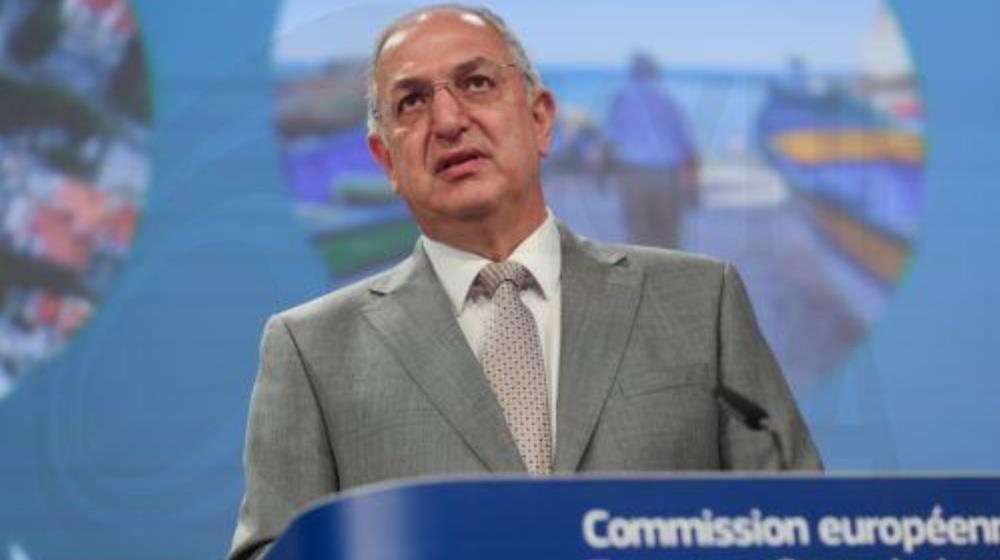
European Commissioner for Fisheries and Oceans, Costas Kadis, outlined the European Union's vision for a sustainable blue economy and ocean protection from Mombasa, Kenya, during the official launch of the Sustainable Western Indian Ocean Programme (SWIOP), held on June 18, in the framework of the Our Ocean Conference 2026. At the same event, Kadis announced, on behalf of the European Commission, new funding amounting to €338.35 million to support ocean conservation, sustainable fisheries and maritime security worldwide.
According to the Commission, the funds will be directed towards combating marine pollution, tackling illegal fishing, expanding marine protected areas, strengthening scientific research and safeguarding marine biodiversity, reaffirming the European Union's leading role in global efforts to protect and sustainably manage the world's oceans.
In his address, Commissioner Kadis stressed that the European Union is delivering on its commitments under the European Ocean Pact and its strategic partnership with Africa. “Our cooperation with Africa on the blue economy is not optional. It is strategic for stability, prosperity and resilience on both continents,” he said.
The Commissioner noted that the protection and sustainable management of the oceans constitute a central pillar of the EU's international partnerships. Through its Global Gateway investment strategy, the EU promotes an integrated approach that addresses the drivers of ocean degradation while linking food security, nutrition and livelihoods with the preservation of natural resources. In this context, Kadis announced that the European Union is investing €300 million in regional ocean and coastal programmes across Sub-Saharan Africa. “Our programmes combine ocean governance, the fight against illegal, unregulated and unreported fishing, sustainable blue economy development, and ecosystem restoration and conservation,” he stated.
The Commissioner also highlighted the importance of strengthening scientific knowledge and ocean observation capabilities. He pointed to the EU-supported OPERA programme, which aims to enhance ocean monitoring and forecasting capacities in Africa within the framework of the United Nations Decade of Ocean Science. At the same time, he underlined that the EU will continue investing in emerging technologies and innovative applications for ocean observation and data management, with greater involvement from the private sector, research institutions and start-ups in both Europe and Africa.
Referring to international cooperation on the protection of the high seas, Kadis noted that the EU has adopted, for the first time, a €40 million global programme supporting the implementation of the BBNJ Agreement on biodiversity beyond national jurisdiction. The programme includes technical assistance for ratification and implementation of the agreement, as well as mapping key high-seas areas for marine mammals and other migratory species.
On fisheries and aquaculture, the Commissioner stressed that both sectors are crucial in addressing malnutrition. “Fisheries and aquaculture are essential in fighting malnutrition, as aquatic foods are key sources of protein and micronutrients,” he said. He added that the EU supports two flagship initiatives: Fish for ACP, with a budget of €40 million, and NAVAC, with €20 million, aimed at strengthening fisheries and aquaculture value chains across countries in Africa, the Caribbean, the Pacific and Latin America.
Kadis also underlined the importance of mobilising sustainable investments through the Global Gateway strategy, which supports financing for climate-resilient and low-carbon ports, maritime transport, coastal protection, climate adaptation, marine biotechnology, sustainable fisheries and aquaculture.
Furthermore, he highlighted the growing role of innovative financing mechanisms such as blue bonds, blue carbon credits and blue nature credits, which are expected to help unlock the funding required for marine conservation and sustainable blue growth. Concluding his speech, Commissioner Kadis called for a comprehensive international approach to ocean governance and protection.
“In the face of unprecedented challenges to the ocean, a fragmented approach is no longer enough. Only an integrated strategy, combining strengthened ocean governance, the development of a sustainable blue economy and the active preservation of marine and coastal ecosystems will achieve the objective of a sustainable ocean,” he noted.
He stressed that all EU regional ocean programmes are designed to advance this vision by promoting sustainable marine resource management, decarbonised transport, blue value chains that benefit local communities and greater socio-economic resilience in coastal regions.
The Commissioner’s remarks coincided with the European Union's announcement at the Our Ocean Conference 2026 of €338.35 million in new commitments for ocean protection, sustainable fisheries and maritime security, reinforcing the EU's ambition to lead global efforts for a healthy, resilient and sustainably managed ocean.
