






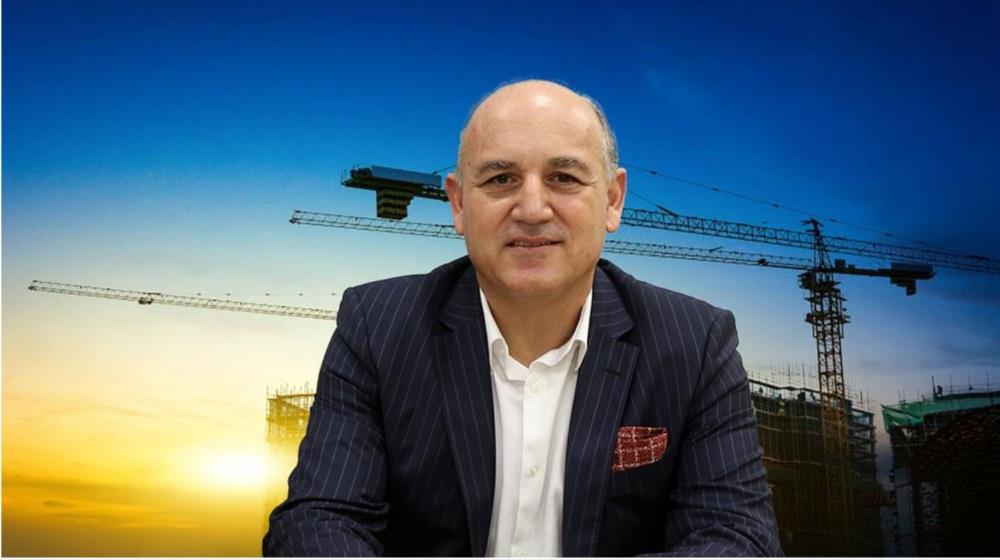
The cost of building materials has risen by 10% over the past two months, while the total increase over the past five years stands at 35%, according to Stelios Gavriel, President of the Federation of Building Contractors Associations of Cyprus (OSEOK).
In statements to CNA, Gavriel noted that the increases are attributed both to geopolitical developments in Iran and rising energy prices, as well as to the increased cost of emissions allowances borne by raw material production industries. As he noted, the increases primarily affect materials such as iron, aluminum, and steel.
As Gavriel said, construction costs started to rise since the crisis from the war in Ukraine, the consequent energy crisis and continued with the war in Iran and the increase in the price of oil. "These do not help to reduce costs but instead keep costs up," he said. He explained that the final footprint on construction costs, and therefore the price of the property, is proportional to the material in which the increase is observed, adding that "if iron increases, because it is used a lot in construction, construction costs increase."
Construction activity at high levels
However, despite pressures on construction costs, activity in the construction sector remains at particularly high levels, in both public and private projects.
According to Gavriel, OSEOK data as well as market indicators point to continued growth in the sector during the first months of 2026.
Regarding real estate sales, the largest increase is recorded in Larnaca, which shows a rise of approximately 40%, while Nicosia also records a significant increase of around 30%. At the same time, Limassol and Paphos continue to follow a steady upward trend, maintaining their momentum in the real estate market.
President of OSEOK noted that the increase recorded in Nicosia is mainly due to demand from domestic buyers, but also to the growing interest of foreign investors and companies who view the capital as an attractive option, due to “the affordable cost of living”, as well as the concentration of administrative and business activities.
At the same time, he noted that the real estate market is adapting to the new circumstances, with increased demand for smaller homes and apartments, as rising construction costs and new energy standards make it more difficult to develop and acquire large homes.
(Source: CNA)