







Enterprise AI assistants are reshaping how organizations operate. Workflows accelerate, information becomes more accessible, and teams can do more with less effort. For many organizations, the productivity gains are already visible.
But there is one detail that tends to be underestimated, and it matters more than most realize.
AI Works With What Already Exists
AI tools do not grant users permissions they didn't already have. They operate within existing access structures. The data they surface, process, and redistribute is the data that was already there.
This is precisely what makes the risk subtle. When nothing appears to change on the surface, it is easy to assume nothing has changed at all.
But something has changed: the ease and speed at which data can be found, processed, and reused.
When Access Meets Scale
Even within a single organizational tenant, risk does not disappear with AI adoption, it evolves.
Personal and sensitive data that was technically accessible but rarely touched becomes easy to surface. Classification systems that were adequate for human-paced access may be insufficient when AI can process the same information in seconds. Policies that relied on user discretion now face a different reality: users will naturally use AI to work faster, often without fully considering the sensitivity of the data involved.
This is not a question of intent. It is a question of design.
Under GDPR, the issue is no longer simply who can access data. It becomes how that data is being processed, by what means, and at what scale. Processing sensitive data through enterprise AI tools can be compliant, but only when the underlying access controls and governance structures are built for that level of use.
"AI doesn't create new risks- it accelerates the ones that already exist. The organizations that understand this early are the ones that will adopt AI on their own terms."
George Sylaides, Manager of Solutions, Odyssey Cybersecurity
The Gaps That Scale
Several specific challenges tend to emerge as organizations move from AI pilots to broader adoption:
Existing exposure becomes visible.
Information that was accessible but rarely used becomes easy to surface and act on. An employee using an enterprise AI assistant may unintentionally surface HR records, financial forecasts, or legal documentation that were technically accessible through inherited permissions but were previously difficult to locate manually. Overprovisioned access, which may have posed limited risk in a manual environment, becomes a meaningful liability.
Classification is missing.
Without data classification, AI systems cannot distinguish between sensitive and non-sensitive information. They process what they can reach, not what they should.
Policy is not enforcement.
Acceptable use policies depend on user behavior. In a fast-moving AI environment, that is not sufficient control. Without technical guardrails, even well-intentioned users can introduce risk.
Processing risk is underestimated.
The GDPR question is not only about access. It is about processing, how data is handled, transformed, and potentially redistributed through AI-generated outputs.
What Readiness Actually Looks Like
Training raises awareness, but it cannot replace governance. Organizations that will benefit most from AI adoption are those that have already established control over their data environment, clear classification, appropriate access boundaries, and technical controls that do not depend on users making the right decision every time.
The organizations that have not yet addressed these foundations are not simply behind on AI adoption. They are at risk of scaling their existing vulnerabilities faster than they can respond.
AI will deliver value. The question is whether the data environment beneath it is ready for that level of access and processing.
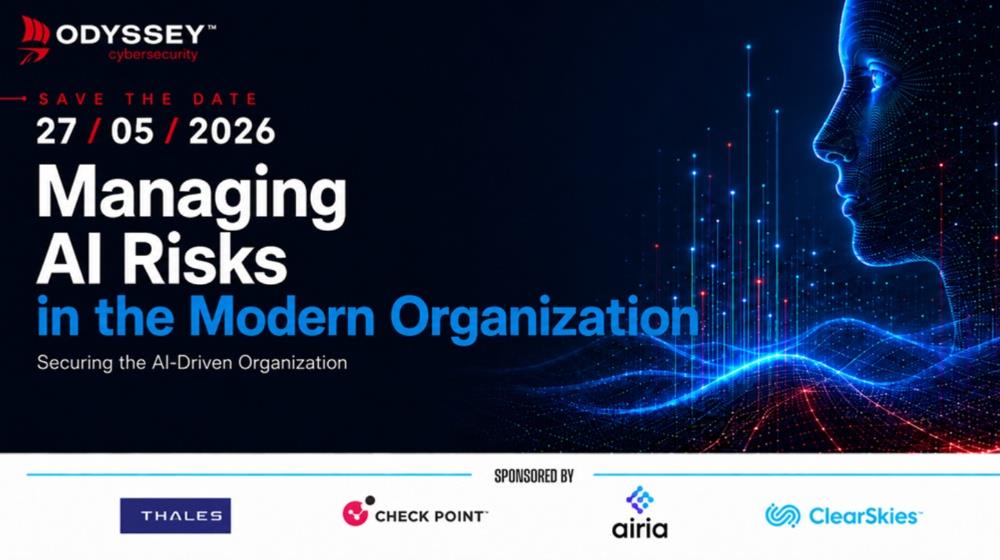
This question is at the center of Managing AI Risks in the Modern Organization, an executive briefing hosted by Odyssey Cybersecurity on May 27, 2026, at the Landmark Hotel, Nicosia. The session is designed for leaders navigating AI adoption decisions, with a focus on governance, compliance, and practical risk management. For more information and registration, visit here.