








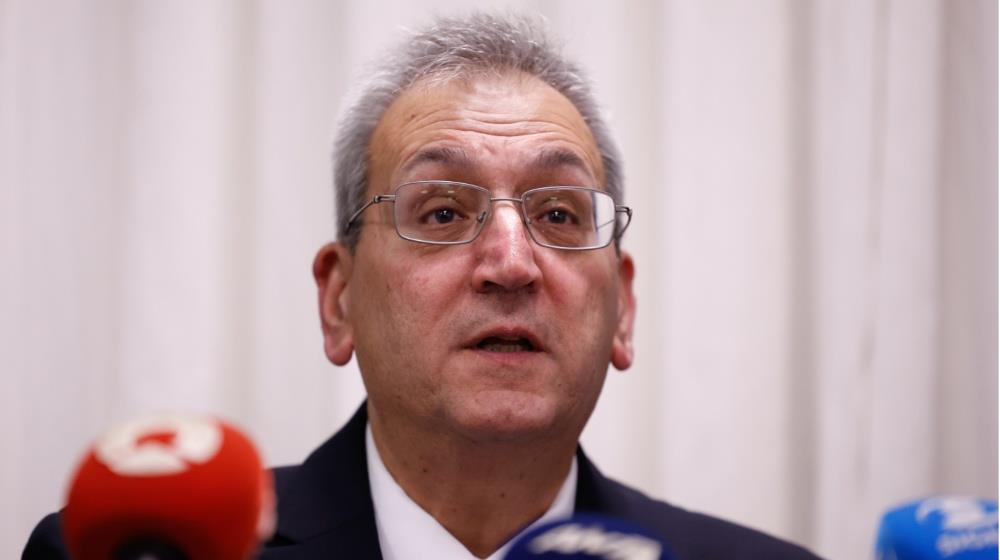
There's a margin of 40 years, from 2026 until 2066 for the repayment of the Social Insurance Fund's loan Minister of Labour and Social Insurance, Marinos Moushouttas has said.
In statements about the investment policy of the Social Insurance Fund that was discussed within the Labour Advisory Body at the Ministry of Labour on 14 May, the Minister said "that the long-standing practice of the State borrowing from the Social Insurance Fund is being ended" and explained that all future surpluses of the Fund will be put into the fund for investment purposes.
"These surpluses are currently estimated at around €800 million per year," he said, while the current debt amounts to 12 billion euros.
He also said that the fund will have a reserve beyond the €12 billion up to €50- €60 billion" explaining that it will come from surpluses and debt repayment and stressed that "that is why it is even more necessary that this fund be managed in the best way, based on European standards", adding that this is what will preserve the sustainability of the social security fund over time".
As such, Moushouttas said it is expected that a separate independent entity will be set up on the basis of international governance standards for purposes of good governance of the fund's investments, citing the model for the management of the hydrocarbon fund. "Something similar that is meant exclusively for the Social Security Fund," he said.
With regard to the settlement of the existing debt, the Minister said it would be repaid in stages with an instalment that could be in the order of 3% of GDP each year. "Today this amount translates into €100-€120 million. So, the €100 million plus the surplus, these two amounts will go directly into the social security fund account."
In this way, the debt will be gradually reduced, since, as the Minister explained, any surpluses will go into the fund. "It is something that is welcomed by the partners and it was and is the intention of the government that this long-standing process that has been followed since 1960 until today with the Fund and borrowing should be stopped."
Moushouttas said repayment of the instalments would be linked to public debt however safeguards would be applied "because none of us want the fund to be very positive but the economy to falter. So there will be some safeguards in emergency situations that may diversify this element."
He added that the state's installments would be transferred annually into the account, with transfers beginning immediately upon the establishment of the entity or agency, which is expected to be implemented in 2027.
"So we believe that around the end of 2027 the surpluses and the year-end tranche can be put in," he said.
The aim is to submit the pensions bill to Parliament by 15 July
In today's meeting, the first pillar of the pension reform was also discussed and will be discussed further in the Technical Committee, as the Minister said, as well as clarifications in relation to the 12% cut-off and questions regarding the pillar zero. "Pillar zero is the social policy that exists today and we are talking about the small cheque, the social pension which is money that is given by the state and not by the fund," the Minister explained.
Moushouttas reiterated that the effort is to submit the bill to Parliament before it closes on 15 July, 2026, so that discussions start in September. It was noted that the next meeting of the Labour Advisory Body is on 25 May and the Technical Committee on 28 May.
(Source: CNA)
