






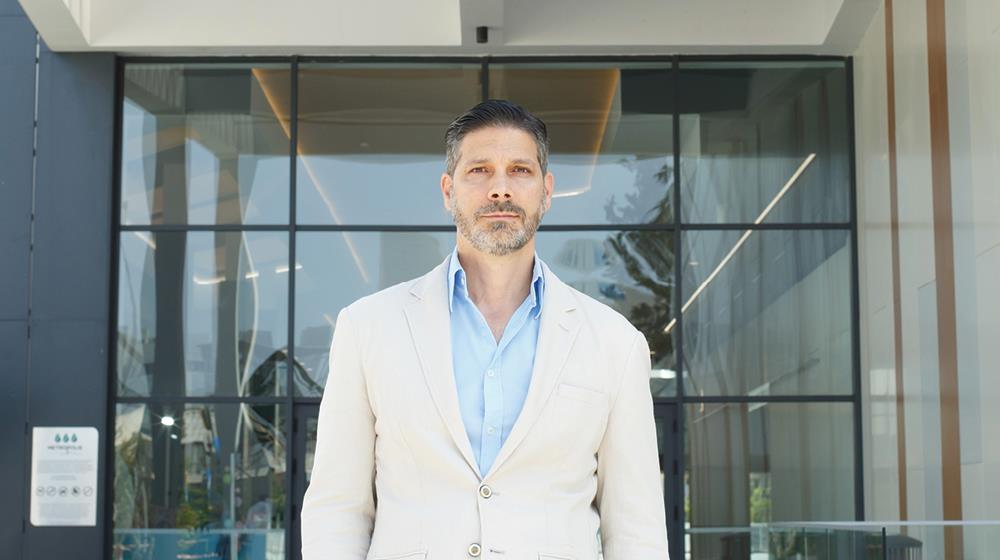
“We don't view ourselves just as a shopping centre but as a community destination where commerce and leisure converge. The competition is no longer just about product availability; it is about the "stay" factor – convenience, shopping, dining and entertainment,” says Dimitri Thomas, the Operations Director at Acsion Ltd.
Five years ago, Larnaca was the only city in Cyprus without a shopping mall. But Acsion Ltd decided that it was time to transform the retail scene. Founded in 1981 by Kiriakos Anastasiadis, Acsion is a successful property developer and property holding Group, listed on the Johannesburg Stock Exchange (JSE) since 2014. Its investment portfolio consists of strategically located retail properties in South Africa and an international retail property in Cyprus – Metropolis Mall, Larnaca.
In an interview with GOLD magazine, Thomas expands on Larnaca’s potential as an attractive retail and investment hub.
Acsion built its entire portfolio in South Africa, yet Larnaca became the company’s first international project. How significant were its Cypriot roots in shaping that decision to enter a market that appeared to have been overlooked by other investors?
Our South African success was built on identifying and executing high-growth opportunities but our Cypriot and Greek heritage was genuinely formative. Our foreign-market experience, coupled with our local heritage, provided us with a unique perspective during due diligence. While others overlooked Larnaca, we saw a city with a central location, a growing population and a significant under-supply of modern retail brands. Larnaca was not overlooked because it lacked potential; it simply required the right kind of developer. Our South African experience in "value engineering" allowed us to approach this market with confidence. We recognised that Larnaca wasn't just a transit point for the airport but a burgeoning hub poised for a fifteen-year growth cycle. Our heritage gave us the cultural fluency and patience to navigate the local business environment in Cyprus.
The success of Metropolis Mall, across all ages and demographics, indicates that Larnaca was, indeed, undersupplied in the retail sector. Since opening in 2021, how has the Mall changed the competitive scene for the city’s retailers? Metropolis Mall has fundamentally shifted the retail landscape from fragmented high-street shopping to a consolidated, experiential destination. By introducing over 200 brands and 145 shops – including first-to-Cyprus names like Decathlon and Kiabi – we have raised the benchmark for variety. Historically, a large component of the retail spend of Larnaca residents was drawn to Nicosia but, with the advent of Metropolis Mall, we have managed not only to retain this spend in Larnaca but also to draw new spend from Nicosia and other cities. The impact has been structural: retailers that once treated Larnaca as a secondary market are now present and committed, and the catchment area has expanded well beyond the city boundaries to include Famagusta, the Nicosia corridor and coastal resort towns. Critically, we have also created around 1,100 new jobs, which has had a real multiplier effect on local spending power. The Mall has not simply aggregated existing demand; it has expanded the market itself.
While online shopping has squeezed physical retail across Europe, Cyprus has traditionally had a high-trust, tactile retail culture – people want to see and handle what they’re buying. Is that still true or are Cypriot consumer behaviours converging with broader trends?
Although e-commerce is growing, Cyprus does retain a stronger in-person retail culture than most of Northern Europe and we see that reflected in our footfall consistency across all age groups. However, it would be naïve to suggest that the shift toward e-commerce is not accelerating. Our response has been to ensure that Metropolis Mall offers something that the online environment cannot: genuine experience, where the Mall serves as a vital "third space" between home and work. We don't view ourselves just as a shopping centre but as a community destination where commerce and leisure converge. The competition is no longer just about product availability; it is about the "stay" factor – convenience, shopping, dining and entertainment.
Larnaca is now attracting a new resident and visitor profile, from international professionals to cultural tourists and a growing expatriate community. What impact is this growing audience having on the retail sector?
The demographic shift underway in Larnaca is significant and, for retail, largely positive. International professionals and expatriates typically bring higher disposable incomes and expectations shaped by retail environments in London, Dubai or Johannesburg – cities with a strong mall culture. This raises the bar for quality and tenant mix, which aligns precisely with our strategy. It also accelerates demand for brands that were previously considered too niche for Cyprus. Larnaca's tourism profile is also evolving: the proposed marina development and the pipeline of premium residential and hotel projects on the coastline are positioning the city for a more upmarket visitor, one who shops deliberately rather than incidentally. This demographic shift is also driving our expansion plans surrounding the Metropolis Mall, where we are currently developing a new economic hub featuring showrooms, offices, medical facilities, university campuses and student accommodation, to cater to this international audience.
What has Acsion’s investment experience in Larnaca been like and what would you advise other investors considering the city?
Our experience has been broadly positive and we remain firmly bullish on Larnaca's trajectory. The city has tangible advantages: a central location, the international airport, improving infrastructure and a local authority that has been genuinely supportive. The honest challenge for any international investor in Cyprus is the approval and licensing process, which can be protracted. My advice would be to plan for that, to engage early with all relevant authorities and build local partnerships. Focus on inclusivity – the market responds well to projects that provide genuine community value. For those willing to take the long view, the fundamentals are strong. Larnaca is not a speculative bet – it is a city in structural transition and the window to position early remains open.
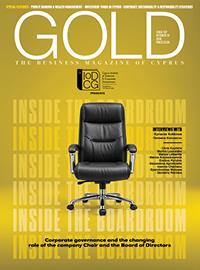
This interview first appeared in the April edition of GOLD magazine. Click here to view it.
